Home

EV Charger Installation

  • Level 1 vs Level 2 Home Charging: Which One Fits Your Life Better? Level 1 vs Level 2 Home Charging: Which One Fits Your Life Better?
    Nov 26, 2025
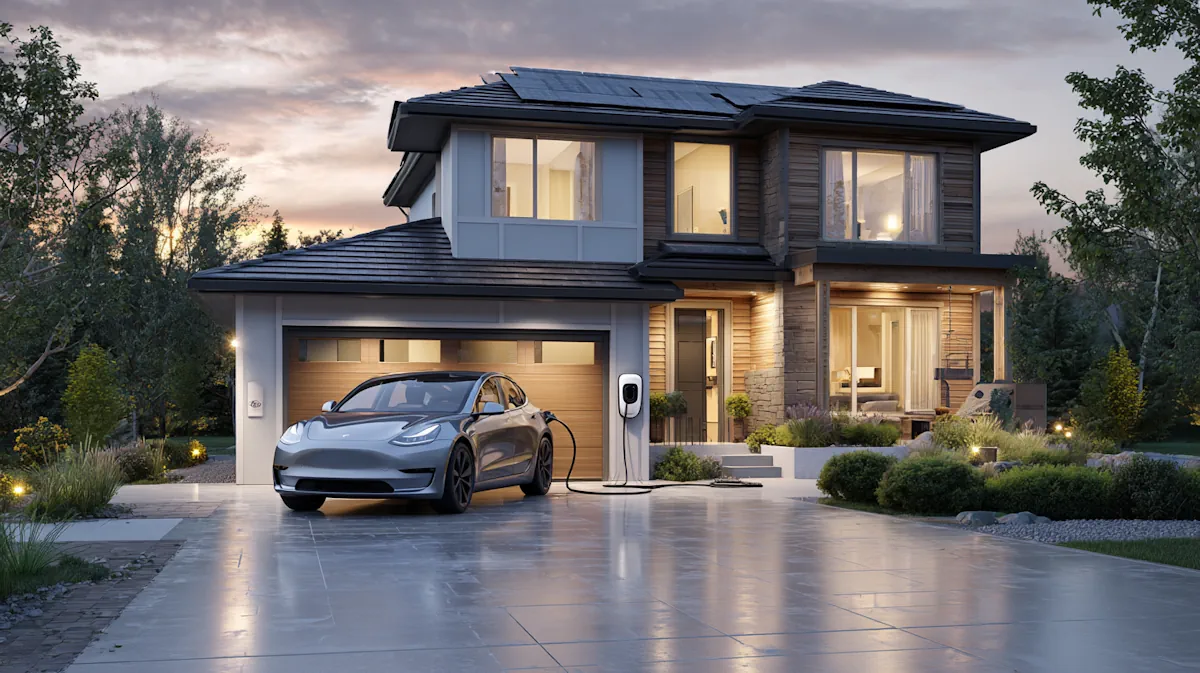
    Many new EV owners go home with two things: a new car and a simple charging cable that plugs into a regular outlet. Then someone mentions a Level 2 wallbox, and the questions start:   Do I really need Level 2, or is the basic cable enough?If I spend the money now, will it actually change my daily life?   If you still feel shaky about the difference between Level 1, Level 2 and DC fast charging in general, it helps to read a full overview of EV charging levels first, then come back to this home-charging decision.     What really changes between Level 1 and Level 2 at home Level 1 home charging Level 1 uses a standard household outlet, typically 120 V in North America. Power is usually around 1–1.9 kW. For many EVs this works out to roughly 3–5 miles (5–8 km) of range added per hour.   It is slow, but simple. You plug in at night, unplug in the morning, and the battery slowly climbs while you sleep. For light daily use, that can be enough.   Level 2 home charging Level 2 uses a dedicated 240 V circuit and an AC EVSE or wallbox. Power typically ranges from about 3.7 kW up to 7.4, 9.6 or 11 kW, depending on the home wiring and the car’s onboard charger.   At these levels, many cars gain 15–35 miles (25–55 km) of range per hour. One evening can refill what you used over a busy day. An overnight session can restore several days of commuting.   How the experience feels different The change between Level 1 and Level 2 shows up in habits: • How many hours you need plugged in to replace a day of driving • Whether you can skip a night of charging and still feel relaxed • How often you rely on public charging to catch up   With Level 1, charging is a slow, steady background drip. With Level 2, charging has more “punch”; a few evening hours can do what used to take most of the night.     Charging speed: Level 1 vs Level 2 Before you choose, look at how power turns into range and time. The table below uses a mid-size EV with a battery around 60 kWh as a reference. Numbers are rounded to show the pattern, not exact for every model.   Home charging options compared Home charging option Typical power Range added per hour (approx.) Time from 20% to 80% (approx.) Typical use case Level 1 (standard outlet) 1.4–1.9 kW 3–5 miles / 5–8 km 20–30 hours Very light use, backup, second car Moderate Level 2 wallbox 3.7–4.6 kW 12–18 miles / 20–30 km 8–12 hours Modest commutes, long nightly parking Common Level 2 home wallbox 7.2–7.4 kW 25–30 miles / 40–50 km 4–6 hours Main family car, mixed city and highway driving   Two quick examples: About 30 miles (50 km) a day • Level 1: roughly 6–10 hours of plug-in time to get that back. • 7.4 kW Level 2: about 1–2 hours is enough.     About 70–80 miles (110–130 km) a day • Level 1: may need more than one long night to catch up from a low state of charge. • Level 2: can comfortably recover that distance overnight, even if you start charging late.   If your daily driving is short and predictable, Level 1 can keep up. The more mileage and variation you have, the more useful Level 2 becomes. Installation, panel capacity and cost: what changes with each level   Using Level 1 every day A plug-in cable in a wall socket is convenient, but for long-term daily use it is worth having an electrician check a few points: • The outlet should be in good condition, not cracked or discolored • The wiring should be suitable for continuous load at the chosen current • The circuit should not also feed several other heavy appliances   Long extension cords, coiled leads and multi-plug adapters are not ideal for EV charging. They add resistance and heat, especially over many hours. If the socket is far from the parking spot, a dedicated outlet or charging point is a safer plan than a chain of adapters.   Installing Level 2 at home Level 2 needs more planning, but the process is straightforward when the basics are in place: • A 240 V circuit with the right breaker size in the panel • Cable sized correctly for the distance to the parking spot • A safe mounting position for the wallbox indoors or outdoors • Permits and inspection, where local rules require them   An electrician can tell you whether there is spare capacity in the panel, how complex the cable route will be, and whether load management is needed so that the charger reduces power when the home is using a lot of electricity elsewhere.     Older homes and tight panels In older houses or apartments, the panel may already be busy. That does not rule out Level 2, but it may shape the choice: • Lower-power Level 2 can fit where a high-power unit would overload the system • Smart charging can cap current or react to other loads • A future panel upgrade can be planned when more EVs or electric appliances arrive   On the cost side, Level 1 mostly uses what is there. Level 2 adds the cost of hardware and installation, which can be modest if the panel and parking spot are close or higher if cable runs are long and walls are finished. Over time, being able to rely on home Level 2 and off-peak tariffs can also reduce how often you need to pay for public charging.   When Level 1 is genuinely enough Level 1 has a place. It can be a long-term solution when several conditions are true: • Average daily distance is low, for example under 20–30 km • The EV is a second car for local errands and short commutes • The car can stay parked overnight for 10–12 hours most days • There is little need to recover a very deep discharge in a single night   In that case, Level 1 simply becomes a quiet habit: plug in most nights, and the car is ready every morning without much thought. A practical way to test this is to start with Level 1 and watch for a month or two: • How often do you wake up with less range than you would like? • How often do you feel forced to find a public charger just to catch up?   If the answer is “almost never”, then Level 1 may already be all you need.   When Level 2 makes life noticeably easier Level 2 deserves serious attention when: • Daily or weekly mileage is high • One EV is the main car for most trips in the household • Work, school or family schedules leave shorter charging windows • You want more flexibility for last-minute plans or weekend getaways   In these situations, Level 2 changes the rhythm. You can come home late, plug in for a few hours, and still have a comfortable buffer by morning. You are less dependent on finding a free public charger at the right time.     A simple checklist to decide If you answer “yes” to three or more, Level 2 is very likely worth the investment: • My typical weekday round trip is above about 50 km • I often drive several separate trips on the same day • I cannot always leave the car plugged in for 10–12 hours at home • I plan to keep this EV for several years and expect mileage to stay high • I may add a second EV to the household within the next two or three years   If most answers are “no” and your driving is light and predictable, a well-installed Level 1 solution can remain a sensible and economical choice.   If you also look after company cars or pool vehicles, you can use our guide on what level of EV charging fleets really need to plan depot and workplace charging.     Home charging solutions from Workersbee Different homes and driving patterns call for different hardware. Some drivers benefit from flexible, portable equipment that can follow them between outlets. Others need a fixed unit that becomes part of the driveway or garage.   Workersbee supports both approaches with portable EV chargers for home use. Installers can match these options to local grid conditions, plug standards and panel capacity so that home charging remains safe, reliable and convenient over the long term.   If you are curious how the hardware changes when you move from home AC charging to high-power DC fast charging, our AC vs DC EV charging hardware guide explains what happens inside the connector and cable.     FAQs: common home charging questions Is Level 1 charging bad for my EV battery?Level 1 uses low power and is generally gentle on the battery. The battery management system controls charging in the same way as with Level 2, as long as temperature and state of charge stay within normal ranges.   Can I use an extension cord for Level 1 home charging?Most extension cords are not designed for continuous high load. They can overheat, especially when coiled. For regular home charging it is safer to use a dedicated outlet or charging point installed by an electrician.   Do I still need Level 2 if I can charge at work?Reliable workplace charging reduces the pressure on home charging, but life does not always follow office hours. A home Level 2 charger gives flexibility for early starts, late returns and days when workplace chargers are busy or out of service.   Is it okay to start with Level 1 and upgrade later?Yes. Many owners start with Level 1 to understand their driving pattern and the local charging network. When they feel that charging is holding them back, they upgrade to Level 2 with a clearer view of what they actually need.
    Read More
  • Charging an Electric Car at Home: The Complete 2025 Guide Charging an Electric Car at Home: The Complete 2025 Guide
    Nov 07, 2025
    Contents Home Charging Options How Long Charging Takes Costs: Equipment, Labor, Electricity Installation & Permits Smart Tariffs, Scheduling & Load Management Apartments & No-Driveway Solutions Battery Health & Safety Solar, Storage & V2X (Optional) FAQs     Home Charging Options Head terms: home EV charging, EV home charger, residential EV charging, portable EV charger, Level 1 vs Level 2 At home you’ll typically use AC charging: Level 1 (120V, North America)Uses a standard household outlet. Slow but simple. Good for low daily mileage or overnight top-ups. Level 2 (240V single-phase / 230V in many regions)The mainstream choice for home: commonly 3.6–7.4 kW on single-phase; 11–22 kW where three-phase is available. DC fast charging at homeRare due to cost, power requirements, and noise/space. Most homeowners don’t install DC fast chargers. The OBC bottleneckYour EV’s on-board charger (OBC) caps the AC charging rate. If the car’s OBC is 7.4 kW, a 22 kW wallbox won’t make AC charging faster.     Charging Options Comparison Level Typical Power (kW) Add-Range (mi/h)* Pros Cons Best For Level 1 (120V) 1.2–1.9 ~3–5 Cheapest to start; use any outlet (properly rated) Slow; can stress old outlets Light daily driving, renters Level 2 (single-phase) 3.6–7.4 ~15–30 Fast overnight; broad compatibility Requires dedicated circuit/installer Most households Level 2 (three-phase) 11–22 ~35–60 Very fast AC at home (if supported) Needs three-phase supply; car OBC may limit High daily mileage, EU homes *Rule-of-thumb conversions for planning only; real results vary by vehicle efficiency and conditions.     How Long Charging Takes Head terms: EV charging time at home, how long to charge an EV at home, Level 2 charging time, 7.4 kW charging time Simple formula:Time (hours) ≈ (Energy to add in kWh) ÷ (Effective power in kW) Where: Energy to add (kWh) = Battery capacity × (Target SOC − Start SOC) Effective power (kW) = min(charger power, OBC limit) × efficiency factor (≈0.9)     Example Time Matrix (estimates) Assumptions: efficiency 90%; OBC ≥ charger power. Battery (kWh) From 20% to 80% 3.6 kW 7.4 kW 11 kW 22 kW 40 24 kWh ~7.4 h ~3.6 h ~2.4 h ~1.2 h 60 36 kWh ~11.1 h ~5.3 h ~3.5 h ~1.8 h 80 48 kWh ~14.8 h ~7.0 h ~4.7 h ~2.4 h 100 60 kWh ~18.5 h ~8.8 h ~5.9 h ~3.0 h Reality check: Cold weather can slow charging; many EVs taper near full. Most owners target ~80% for daily use.       Costs: Equipment, Labor, Electricity Head terms: cost to charge EV at home, home EV charging cost calculator, EV charging cost per kWh, off-peak EV charging, TOU EV tariff Upfront Cost Breakdown (typical components) Item Low Typical High Notes Level 2 hardware — — — Price varies by features (tethered cable, display, app) Mounting & accessories — — — Pedestal, bracket, weather protection Electrical materials — — — Cable/conduit, breaker, GFCI/RCD where required Panel upgrade (if needed) — — — Only if existing capacity is insufficient Permit/inspection — — — Municipality-dependent Labor (licensed electrician) — — — Influenced by run length and complexity (Insert local currency figures once you scope your market.)     Installation & Permits Head terms: home EV charger installation, EV charger permit, panel upgrade for EV charger, 240V EV charging, NEMA 14-50 (NA), single-phase vs three-phase (EU/UK)   A safe, compliant install protects your panel, property, and warranty. Plan with a licensed electrician and match your plug standard (e.g., J1772/Type 1 in North America, Type 2 in much of Europe; NACS is emerging in NA).     Installation Checklist Step Owner / Installer Status Notes Load calculation & panel capacity Electrician ☐ Main breaker rating, spare capacity Select location & cable routing Owner + Electrician ☐ Garage/driveway; weather exposure Choose circuit & protection Electrician ☐ Breaker size, GFCI/RCD, wire gauge Permit application (if required) Owner/Electrician ☐ Municipality rules Install & commission Electrician ☐ Test under load; label circuit Final inspection & handover Authority/Electrician ☐ Keep docs & photos   Connector choices: J1772 (Type 1), Type 2, CCS1/CCS2 cables, and NACS adapters/cables—match the car and region.     Smart Tariffs, Scheduling & Load Management Head terms: smart EV charging, scheduled EV charging, load balancing EV charger, off-peak EV charging, night rate EV charging Time-of-Use (TOU) / Night rates: Shift charging to cheaper off-peak windows. Scheduler: Set start/stop times or departure time to pre-condition and finish near departure. Load balancing: Coordinate with big appliances (HVAC, oven, dryer) to avoid nuisance trips. Solar matching (optional): If you have PV, align charging with surplus generation.   Small settings, big wins: For many households, simply avoiding 4–9 pm and charging overnight yields most of the savings.     Apartments & No-Driveway Solutions Head terms: EV charging in apartment, condo EV charging, no driveway EV charging, curbside EV charging, shared garage EV charging Workplace / community chargers: Leverage daytime parking. Condo/HOA retrofits: Metering and billing policies can enable assigned-spot charging. Shared garages: Portable Level 2 on a dedicated, compliant outlet can bridge the gap (follow building rules). Curbside / municipal: Check local programs near multi-unit dwellings.   Safety first: Don’t run cables across sidewalks. Use approved routes and enclosures.     Battery Health & Safety Head terms: best SOC for daily charging, charge to 80 percent, EV charging safety at home, outdoor EV charger IP rating Everyday target: Many owners set ~70–80% for daily driving. Trip days: Charge to 100% right before you leave. Avoid deep cycles when possible; keep the pack temperate. Outdoor gear: Look for appropriate IP/weather ratings and strain relief on cables. When in doubt: Consult your vehicle manual and a qualified electrician.      Solar, Storage & V2X Head terms: EV charging with solar, solar EV charger, home battery and EV, V2H/V2G home charging PV + EV: Maximize self-consumption by timing charging with mid-day solar (or schedule at night if tariffs are cheaper). Home batteries: Buffer solar for evening charging; weigh cost vs. tariff savings. V2H/V2G: Emerging options that require compatible vehicles, bi-directional hardware, and utility approval.     FAQs How long does home EV charging take?Use Battery kWh × (Target − Start) ÷ Effective kW.    Is a 7.4 kW home charger enough?For most households, yes—especially with overnight charging. Your car’s OBC may cap AC speed anyway.   Can I use a regular outlet?Level 1 (120V) works for light daily use. Ensure the outlet and circuit are in good condition and appropriately protected.   Do I need a permit?Often required for new circuits or panel work. Check local rules and use a licensed electrician.   J1772 vs Type 2 vs NACS—what do I need?Match your region and vehicle inlet. Many North American cars use J1772 for AC (NACS emerging); much of Europe uses Type 2.   What’s the cheapest time to charge?Usually overnight off-peak hours on TOU plans. Use scheduling to automate.     Ready to make home charging simple? Explore flexible home and portable EV chargers from Workersbee and get guidance that matches your panel, plug standard, and parking setup.   Browse Portable Chargers: Portable EV Charger,Electric Car Charger,16A EV Charger Suppliers
    Read More
  • Benefits of EV Charging Stations: How Workersbee's Solutions Drive Business Growth Benefits of EV Charging Stations: How Workersbee's Solutions Drive Business Growth
    Feb 10, 2025
    While many media outlets are discussing the declining trend in electric vehicle sales, actual data shows a completely different picture. Sales of plug-in vehicles, including BEVs and PHEVs, continue to grow steadily, not only in mainstream markets but also in regions with smaller markets, showing remarkable growth in countries such as Brazil, Singapore, and Russia. The share of EVs in modern transportation is gradually increasing.   We cannot deny the positive impact of EV adoption on the environment and climate, and we all understand the crucial importance of sufficient, well-developed charging infrastructure. In addition to public utilities, energy companies, automakers, charger manufacturers, and operators, businesses should also actively embrace this new market opportunity. As a global leading provider of EV charging plug solutions, Workersbee is dedicated to the mission of “Making Charging CareFree.” In this article, we would like to explore with you the value of businesses installing EV chargers and building charging stations, and how we can support your business.   Economic Value · Generate Revenue: Businesses that build public charging stations can attract EV drivers to charge their vehicles. These drivers will pay for charging based on duration or times, creating direct charging income. For long-term customers, businesses can offer membership or prepaid discounts, allowing customers to prepay a certain amount for charging and receive discounts. This helps build customer loyalty and satisfaction. Additionally, more revenue can be generated through cooperative advertising or other business partnerships. · Government Subsidies or Tax Incentives: Depending on the region, governments may provide subsidies or tax incentives to support the installation of chargers, which can reduce the investment and operating costs for businesses. · Increase Property Value: Installing charging stations in apartment complexes can attract more tenants and enhance rental value. · Boost Business Revenue: Charging points can attract foot traffic, creating more business opportunities and improving customer satisfaction. Establishing an eco-friendly brand image builds trust with customers, increasing collaboration opportunities.   Environmental Value · Address Climate Change: EV adoption significantly reduces greenhouse gas emissions, and a robust charging infrastructure encourages more drivers to adopt electric vehicles, helping businesses realize their environmental goals. · Improve Air Quality: EVs efficiently use energy and emit no exhaust gases while driving, which helps reduce air pollution and improve air quality. · Promote Renewable Energy: Combining EV charging stations with renewable energy sources like solar and wind can reduce the use of fossil fuels, increase energy efficiency, and promote technological advancement. · Foster Sustainable Development: Installing EV chargers helps businesses build a sustainable, eco-friendly image, win more business, and take on social responsibility for environmental protection.   Strengthening Business Competitiveness · Enhanced Employee Benefits: Installing EV chargers at the workplace allows employees to charge their vehicles for free or at a discounted rate during working hours, significantly improving employee loyalty and satisfaction. It also encourages more employees who are hesitant to switch to EVs. · Improved Customer Satisfaction: Visiting customers or business partners can charge their vehicles at the workplace, boosting the company’s eco-friendly image and garnering more collaboration and recognition. This increases customer return rates and loyalty and builds confidence in future cooperation. · Increased Foot Traffic: Restaurants, hotels, and shopping centers with charging stations can attract more EV drivers, extend their dwell time, and increase spending. · Enhanced Corporate Image: Establishing charging stations helps businesses gain greater brand visibility and competitiveness in the marketplace. How Workersbee’s Customized Charging Solutions Can Help You As an experienced EV charging equipment manufacturer, Workersbee offers a comprehensive range of charging solutions, including AC and DC products. These include portable EV chargers, charging plugs, sockets, cables, and adapters, providing all-around support for your business. Our technological innovations never stop. Our pioneering experts, active in global markets, continue to achieve breakthroughs in product efficiency, reliability, and safety. Our strict product control and large-scale production ensure international certifications such as CE, UL, and TUV, enabling our charging plugs to deliver higher power output while maintaining safety and stability, making charging easier. We also maintain world-class cost control. With modular design, automated production, and full supply chain control, we are confident in the cost-effectiveness of our delivered products. Our technical team works closely with your business team, providing customized solutions based on nearly two decades of industry experience and localized research.   Conclusion With the rapid growth of the EV market, the demand for charging infrastructure will continue to increase. Governments worldwide are showing strong support for charging infrastructure, with favorable regulations and policies continually emerging. Installing EV chargers or building charging stations is a market trend that businesses cannot ignore. Not only can businesses generate charging-related revenue and achieve significant economic returns, but they can also enhance customer and employee satisfaction and loyalty. Furthermore, by promoting sustainable development and establishing a solid eco-friendly image, businesses can strengthen their competitiveness. Workersbee remains committed to providing efficient and safe charging solutions, helping businesses achieve sustainable growth and profitability. We look forward to discussing how we can leverage our strengths to enhance your market competitiveness and jointly drive the adoption of electric vehicles.  
    Read More

Need Help? leave a message

Leave A Message
Submit

home

products

whatsApp

contact