 Are Portable EV Chargers Worth It? A Practical Guide For Everyday Use
Nov 20, 2025
Portable EV chargers sit in a strange middle ground. In practice, they are portable EVSE charging cables with an in-cable control and protection box, designed to supply AC power safely to an electric vehicle. In real life they decide whether you can charge at a friend’s house, in a rented parking space, or in a village with no public chargers at all.
They are worth the money for some drivers and almost useless for others. The key is to see how a portable EV charger fits into your daily routine, not just its rated kilowatts.
1. Quick answer: when a portable EV chargers worth it?
A portable EV charger is worth it if you often park near a correctly rated household outlet or industrial socket and need flexible, backup charging; it is not ideal as your only long-term charging solution because it is slow, outlet-limited and easy to misuse.
2. How portable EV chargers work and where they fit
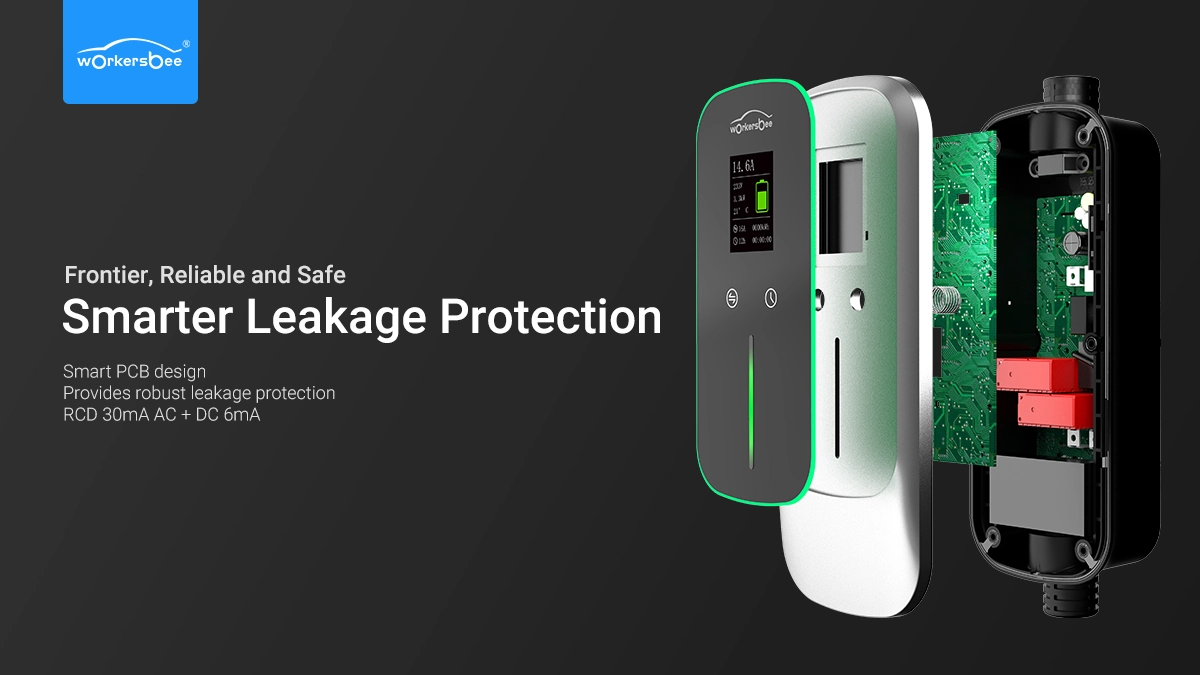
A portable EV charger is a Mode 2 or Mode 3 charging cable with built-in electronics.
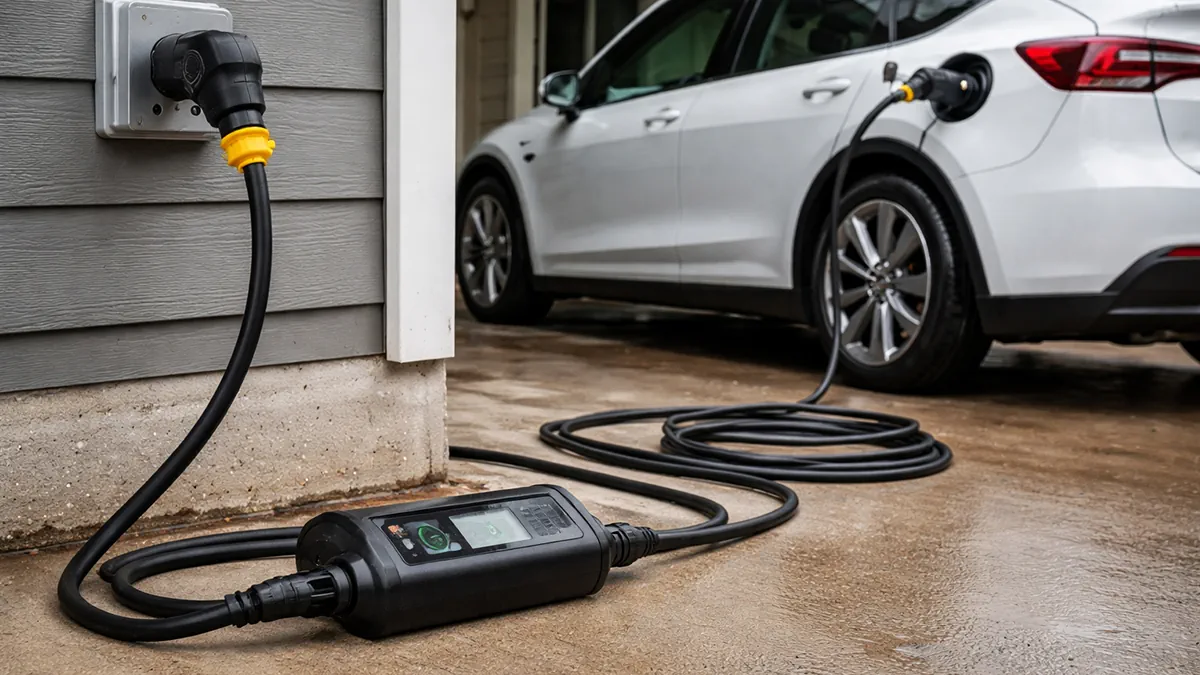
On one side, there is a household or industrial plug, such as Schuko, CEE, NEMA or BS. In the middle there is a small control box that handles safety checks and communication with the vehicle. On the other side, there is a vehicle connector (for example, Type 1 or Type 2) that plugs into your EV’s charge inlet.
Three hard limits decide how fast it can charge:
·The circuit rating of the outlet (often 10–16 A at 220–240 V, or 15–20 A at 120 V).
·The maximum current the portable unit allows.
·The onboard charger limit of the vehicle.
In many homes, this means 1.4–3.7 kW. That is enough to refill a daily commute overnight, but it is far from fast charging. Portable units are better understood as a flexible tool than a performance upgrade.
From the outlet to your battery, the process looks like this:
1. You plug the portable EV charger into a suitable outlet on a correctly rated circuit.
2. The control box checks ground connection, wiring, residual current and communication lines.
3. Once safety checks pass, it sends a signal to the vehicle to request a certain current.
4. The onboard charger in the vehicle decides how much current to accept.
5. Power flows through the cable and contacts, while the portable unit monitors temperature and leakage.
6. If anything goes wrong, the unit trips and stops the charge.
This is why the quality of the control box, cable and vehicle connector matters as much as the plug type. A cheap, badly designed device may skip protections or react slowly to faults.
3. When a portable EV charger makes sense
3.1 Situations where it is worth the money
You get real value from a portable EV charger when at least one of these is true.
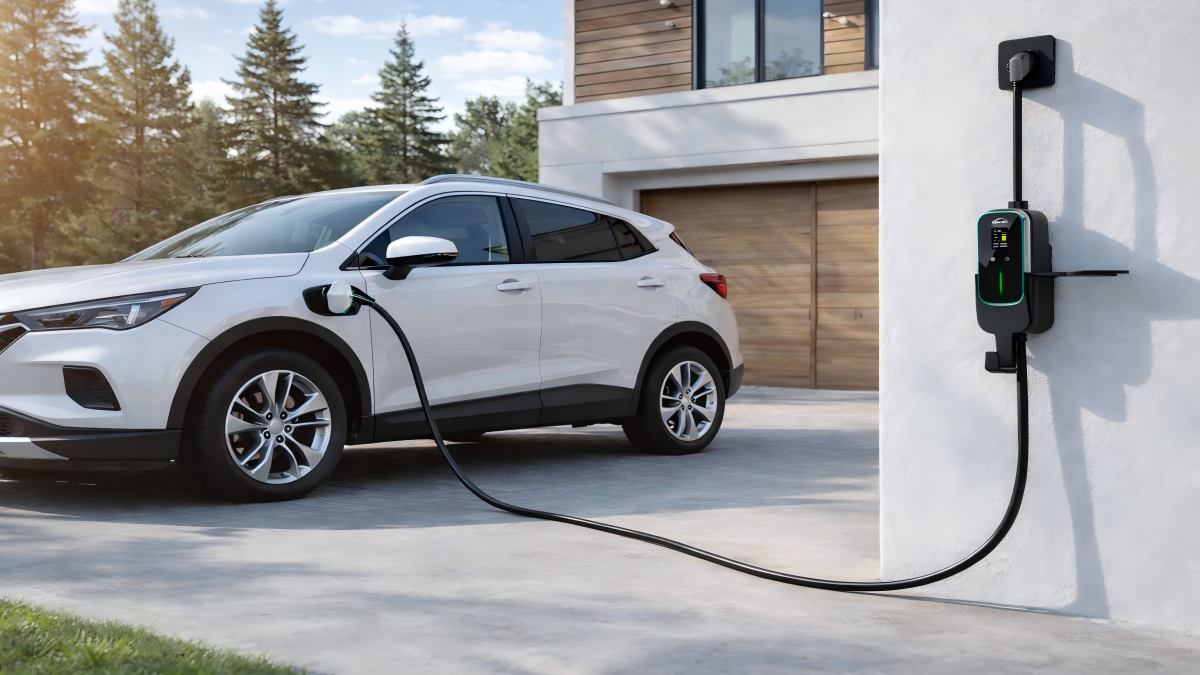
·You cannot install a fixed wallboxRenting, shared parking, no permission to add a new circuit, or you move often. A portable unit and a suitable outlet may be your only stable source of home charging.
·You use several parking locationsFor example, you split time between two homes, or you regularly park at a workplace with only standard sockets or CEE outlets. Carrying one portable EV charger is easier than installing two wallboxes.
·You need a reliable backupEven if you already have a wallbox, a portable EV charger gives you a plan B for power cuts, wallbox failures, or trips to relatives who do not have EV infrastructure.
·You drive modest daily mileageTypical commute under 60–80 km a day. A few kilowatts of overnight charging can cover this easily, so speed is less important than convenience.
·You run a small fleet or business with temporary parkingCar rental yards, pop-up test drive events, car transporters, or dealer forecourts. Portable EV chargers let you top up vehicles wherever a safe outlet exists, without major electrical work.
3.2 Situations where it is not a good fit
In other situations, money and effort are better spent on a wallbox or better public charging access.
·You already have easy access to public AC or DC chargingDense charging networks near home and work can make a portable unit stay in the trunk unused.
·You need high daily energy throughputLong highway commutes or heavy commercial use quickly show the limits of 2–3 kW charging.
·Your electrical installation is old or overloadedOld wiring, unknown breakers, shared circuits with heating or cooking appliances. Pushing these outlets hard just to gain slow charging adds risk and stress.
·You want set-and-forget smart featuresLoad balancing, PV surplus charging, detailed consumption reports and OCPP backends are usually better handled by a fixed smart wallbox.
3.3 Quick decision table
You can use this table as a simple decision tool.
Typical scenario
Portable EV charger
Better alternative
Reason
Renting an apartment, no wallbox allowed
Useful primary solution
None, unless dedicated socket
No permission for fixed installation
Homeowner with dedicated parking and budget
Good backup only
Fixed wallbox
Safer, faster, tidier, smart options
Two homes, one without charging infrastructure
Very useful
Mix of wallbox and portable
Avoid installing two wallboxes
High-mileage driver, frequent road trips
Occasional backup
Public DC and home wallbox
Needs high daily energy intake
Car dealer, small fleet, event charging
Extremely useful
Temporary AC posts plus some portables
Maximum flexibility with limited infrastructure
Occasional EV use, short urban trips
Can be the main solution
Either portable or low-cost wallbox
Charging volume is low
4. Choosing and using a portable EV charger safely
4.1 Key factors when choosing a portable EV charger
If you decide a portable EV charger fits your life, the next step is to choose one that matches your grid, plugs and vehicle.
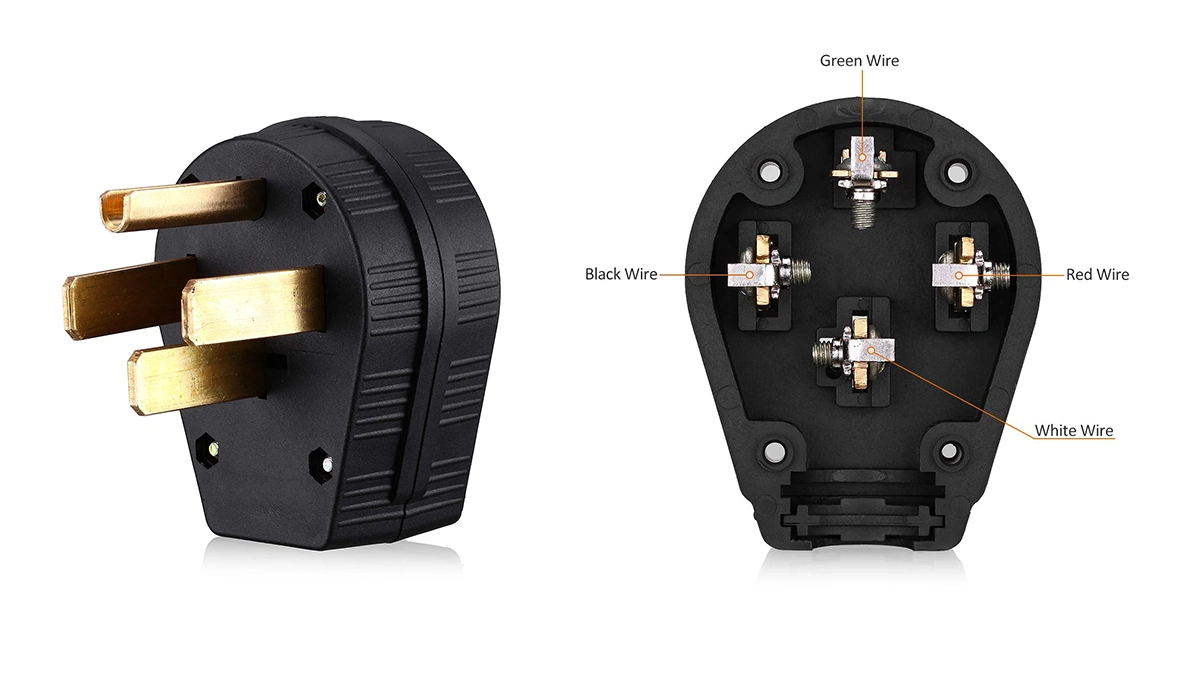
·Plug type and voltageConfirm whether you need NEMA, CEE, Schuko or another regional standard, and whether you will use it on 120 V, 230 V or three-phase power.
·Current settings and flexibilityA good portable EV charger allows stepped current settings (for example 8–10–13–16 A), so you can reduce load on weaker circuits and avoid nuisance tripping.
·Safety protectionsLook for integrated residual current protection, temperature monitoring at the plug and connector, and clear fault indication. Safety labels and testing standards should be easy to verify.
·IP rating and durabilityIf you plan to use the charger outdoors, an appropriate IP rating, robust strain relief and abrasion-resistant cable are essential. Cheap plastics age quickly in sun and cold.
·Connector standard on the vehicle sideMatch the handle to your car (Type 1, Type 2, GB/T and so on). If you plan to change cars, think about how future-proof that connector type is in your region.
·Cable length and handlingToo short and you cannot reach the inlet; too long and it becomes heavy and messy. Most users find 5–8 m workable for everyday use.
·Smart or basicSome portable EV chargers add displays or app-based monitoring (Bluetooth or Wi-Fi), while others stay simple. Smart features help with monitoring, but they should never replace core protections.
4.2 Practical safety tips
A portable EV charger is safe when used as intended and risky when used as a shortcut.
·Use dedicated circuits where possibleAvoid sharing the same outlet with heat pumps, ovens or dryers. Continuous EV charging is a heavy, long-duration load.
·Avoid cheap extension cords and coiled reelsLong, thin, coiled cables heat up quickly. If an extension is unavoidable, it must be correctly rated, fully uncoiled and checked for heat during the first sessions.
·Check outlets regularlyDiscoloration, soft plastics or hot faceplates are warning signs. Stop charging and ask an electrician to inspect the circuit.
·Store the charger correctlyKeep the control box and connectors dry, avoid tight bends and sharp edges, and do not leave the handle on the ground where vehicles can run over it.
4.3 Where a hardware manufacturer fits in
For drivers and businesses that decide a portable EV charger is worth it, the next question is who designed and built the hardware they rely on every night. A specialist supplier such as Workersbee, who develops portable EV chargers alongside vehicle connectors and high current DC components, can help match cable, plugs and safety features to real-world use instead of relying on a generic consumer accessory.
On the B2B side, this also makes it easier for charge-point operators, installers and brands to source complete portable EV charger solutions with consistent connectors, strain-relief boots and enclosure design, rather than mixing parts from different vendors. That consistency is what many owners notice later as fewer hot plugs, fewer failures and a charger they forget is even there, because it simply works.
5.FAQ on portable EV chargers
Can I use a portable EV charger every day?
Yes, many drivers use a portable EV charger every day, as long as the outlet and wiring are properly rated and checked. The important part is not the form factor, but whether the circuit is designed for continuous EV charging and the device has the right protections.
Is it safe to use a portable EV charger in the rain?
Most quality portable EV chargers and vehicle inlets are designed to cope with normal rain when used as intended. The weak points are usually the household outlet and any makeshift connections. Keep plugs and sockets off the ground, avoid standing water and follow the manufacturer’s guidance on outdoor use.
Do portable EV chargers damage the EV battery?
No, a correctly designed portable EV charger does not harm the battery. The battery sees AC charging in the same way as from a wallbox, and the onboard charger in the vehicle controls charging current. What matters for battery health is overall charging pattern and temperature, not whether the AC came from a fixed wallbox or a portable unit.
Read More

 NEMA 6-50 vs 14-50 Outlet Guide for Portable EV Charging
 NEMA 14-50 for Portable EV Charging: What to Check First
 Portable EV Charger Power Plug Guide: NEMA vs IEC 60309 vs Wall Sockets
 Portable EV Charger Guide Level 1 vs Level 2, Mobile Units, Safety


 Contact Us


 English


 IPv6 network supported
