Home

portable evse

  • NEMA 14-50 for Portable EV Charging: What to Check First NEMA 14-50 for Portable EV Charging: What to Check First
    Jan 06, 2026
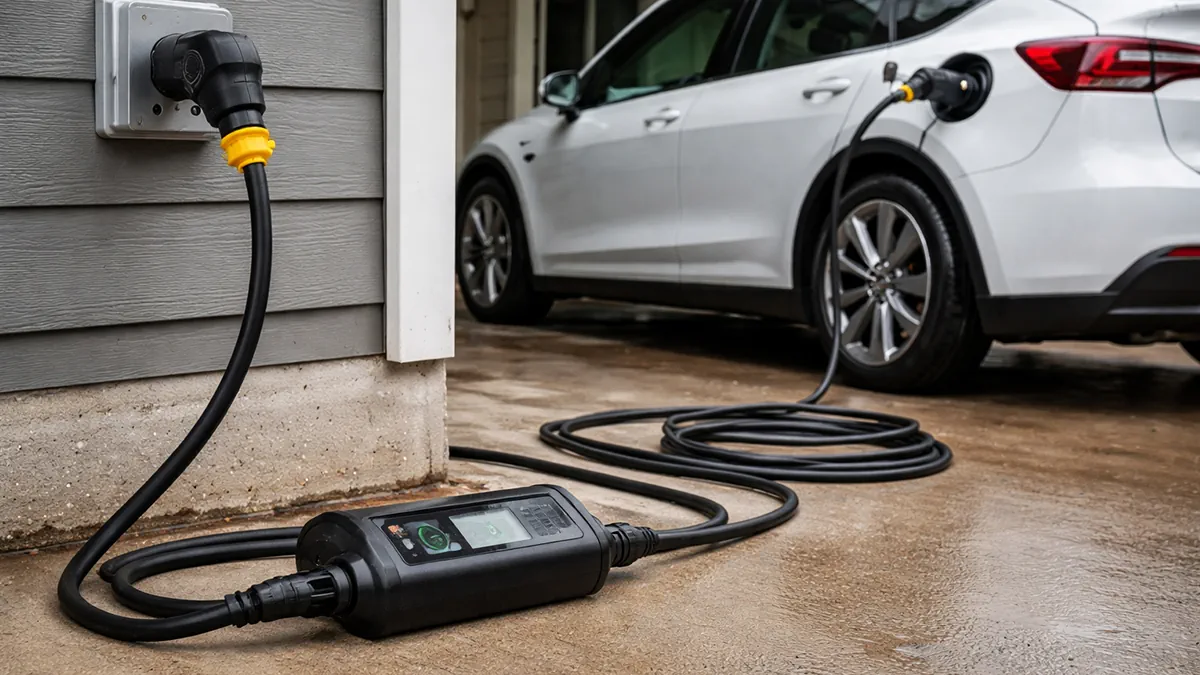
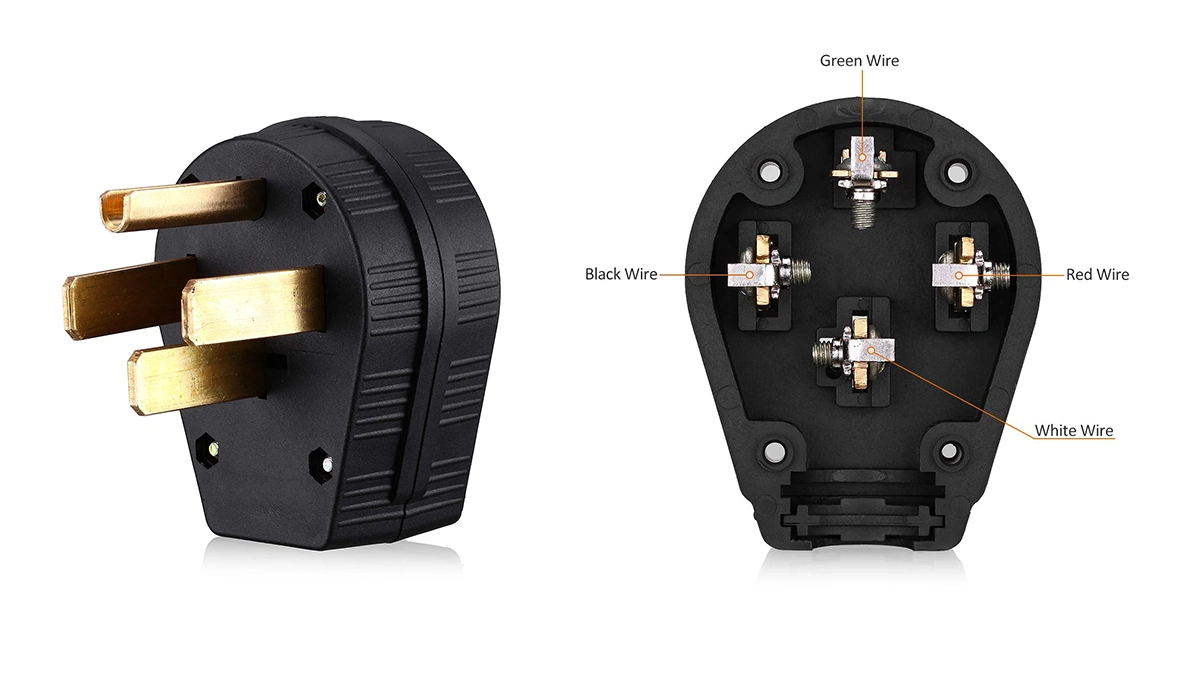
    A NEMA 14-50 outlet is one of the most common high-capacity wall outlets used for portable EV charging in North America. It can be a solid setup, but most problems come from the connection point, not the EV or the charger.   If you’re not sure what outlet you have, start with Portable EV Charger Power Plug Guide.     What a NEMA 14-50 outlet is NEMA 14-50 is a 4-prong outlet designed for 240V service. In real homes, it often appears in garages for EV charging, workshops for tools, and sometimes for RV use. Compared with a standard household outlet, it is built for higher power, but it still depends on installation quality and how tight the plug fits.       Where it shows up most · Home garages and driveways (dedicated EV outlet installs) · Workshops (shared utility circuits are common) · RV-style installations (sometimes repurposed for EV charging)   The same outlet label does not guarantee the same real-world stability. The cable route, receptacle quality, and the circuit behind it matter more than the plastic faceplate.     How to identify NEMA 14-50 on site Look for a 4-slot layout. Many receptacles are labeled 14-50. If the outlet is recessed, painted over, cracked, or visibly loose, treat it as a warning sign. A plug that does not seat firmly is a bigger risk than a lower charging speed.     What to confirm before the first charging session This is the short list that prevents most failures. If you’re not sure about the wiring or the outlet condition, ask a licensed electrician to confirm the installation before relying on it for long sessions. What to confirm What you are trying to avoid Practical tip Plug fit (seats fully, no wobble) Heat at the contact point If the plug feels loose, stop and fix the outlet first Breaker rating (if known) Nuisance trips or overload If you cannot verify, start at a lower current setting Dedicated vs shared circuit Hidden load from other appliances Shared circuits create unpredictable trips Outlet condition (no discoloration) High resistance and overheating Any browning or melting is a hard stop Cable routing and strain relief Pulling the plug partially out Keep the cable supported, no side-load on the plug       What charging speed to expect Portable chargers usually let you set or limit current. For long sessions, EV charging is typically treated as a continuous load, so the usable current is usually below the breaker rating. If you are unsure, start lower, confirm the plug stays cool, then move up.   Stability matters more than peak speed for overnight charging.     Common issues and what they usually mean Warm plug end: Warmth at the plug end is a sign of resistance at the contacts. Stop, let it cool, and check fit. If it repeats, the outlet or plug is not making a solid connection.   Random breaker trips: This often points to a shared circuit, a weak receptacle, or a conservative breaker device. Lower current and re-test. If it still trips, the installation needs attention.   Charging starts fine, then slows or stops: Many portable chargers reduce output when they detect heat or unstable input. That is the charger doing its job. Fix the cause instead of forcing higher current.   Frequent reliance on adapters: Adapters add contact points. Contact points are where heat begins. If you keep needing adapters, it is a sign the plug kit does not match the sites you actually use.   A simple setup flow 1. Confirm it is NEMA 14-50 and the plug seats firmly. 2. Verify circuit basics (breaker rating if available, dedicated vs shared). 3. Set a conservative current for the first session. 4. Monitor the plug end for the first 15–20 minutes. 5. If stable, keep that setting as your default for this site.     Plug kit choices that reduce surprises A good kit is not a bag of every plug in the world. It is the smallest set that covers your real charging environments. · Keep one primary NEMA 14-50 plug path for garage/workshop use. · Choose a cable length that reaches without tension. · Avoid stacking adapters. · Treat extension cords as a last resort, not a plan.     For multi-region projects, a charger with interchangeable power plugs can simplify site deployment. Standardize your on-site confirmation process so teams don’t rely on improvised workarounds. A portable charger with interchangeable power plugs helps keep multi-site deployments consistent. It reduces time lost to mismatched outlets and last-minute workarounds.     When a different approach makes more sense If the outlet will be used for frequent long sessions, the best upgrade is usually a more stable, purpose-built installation rather than repeatedly stressing the same receptacle. Even with a portable charger, your goal is repeatability.   For cable protection, strain relief, and site-ready accessories that keep the connection stable, Workersbee EV Cable & Parts can support a cleaner, safer installation.     FAQ Can I use NEMA 14-50 for daily charging? Yes, if the outlet is high quality, the plug seats firmly, and the circuit is suitable for long sessions. Daily use will expose weak receptacles quickly, so monitor early sessions and stop if the plug end warms up or the fit becomes loose.   Why does the plug get warm even at moderate current? Most cases come from contact resistance: a worn or loose receptacle, weak contact pressure, or a plug that doesn’t seat fully. Stop, let it cool, then check for wobble, discoloration, or a soft fit. If warmth repeats, the outlet should be repaired or replaced before continued use.   What current should I start with on a new NEMA 14-50 outlet? Start conservatively for the first session, then increase only after the plug end stays cool and the fit remains firm. Recheck after 15–20 minutes, since early warmth is usually a connection-point issue. If you can’t confirm the circuit details, keep the setting conservative.   When should I stop and fix the outlet instead of continuing to charge? Stop if any of these happen: the plug feels loose, the plug end gets hot, you see discoloration or melting, or the outlet faceplate shifts when you touch the plug. Those are connection-point problems that don’t improve with lower current alone.
    Read More
  • Portable EV Charger Power Plug Guide: NEMA vs IEC 60309 vs Wall Sockets Portable EV Charger Power Plug Guide: NEMA vs IEC 60309 vs Wall Sockets
    Jan 04, 2026
    Portable EV chargers don’t plug into the wall the same way everywhere. The wall-side outlet you have on site decides what plug you need, how stable the connection is, and how practical the setup will be for long sessions.   If you already know your outlet type, go straight to the Plug index table. If not, start with the setup sections below.     Plug index table Use this table to match your situation to the right page. Where you are charging What you’ll likely see Best-fit approach What to confirm Best next article North America garage / workshop NEMA outlet (higher-capacity) Use a dedicated outlet path Outlet fit + dedicated circuit NEMA 14-50 guide / NEMA 6-50 vs 14-50 Industrial site with single-phase access IEC 60309 Blue Standardize on site-ready plugs Rating on the socket (16A/32A) IEC 60309 Blue 16A vs 32A Industrial site with three-phase access IEC 60309 Red Confirm configuration before selecting Color + rating label + socket layout IEC 60309 Red 3-phase EU household sockets Schuko (Type E/F) Temporary use, conservative approach Socket fit + session length Schuko checks Considering adapters or extension cords Mixed Use clear limits, avoid stacking Connection tightness + heat at ends Safety limits page UK household sockets Type G Temporary use, conservative approach Socket fit + session length UK Type G guide       Plug types by setup North America outlets (NEMA) In North America, portable EV chargers often plug into garage or workshop outlets. The main risk is the connection point: a worn or loose receptacle can heat up during long sessions, even if the circuit looks capable.   Start with the NEMA 14-50 page, then use the NEMA 6-50 vs 14-50 comparison if you’re choosing between the two.   Industrial sockets (IEC 60309 / CEE) IEC 60309 sockets are common on worksites and depots because they’re easier to standardize. Before selecting a plug, confirm what’s on site (blue vs red and the rating label) so you don’t arrive with the wrong configuration.   Use the IEC 60309 Blue page first, and switch to the Red 3-phase page when the site provides three-phase sockets.   Wall sockets (temporary use) Household wall sockets are best for occasional or travel charging. If sessions are long or frequent, the safest move is usually upgrading to a dedicated outlet or an industrial socket rather than relying on the same wall socket every day.   Start with the Schuko (Type E/F) page in most of Europe, or the Type G page if you’re in the UK.   Adapters and extension cords (safety limits) Adapters and extension cords add extra contact points, which increases the chance of looseness and heat at the ends. Treat them as temporary and follow clear stop conditions if the connection feels loose or warms up.   Read the safety limits page before using any adapter or extension cord as a workaround.     Plug kit planning A plug kit works best when it matches real use, not every plug in the world. Start with the top environments you need to support. For many projects that’s a mix of home/garage charging, site or fleet use, and occasional travel or temporary charging.   The goal is to avoid last-minute workarounds. Fewer adapters, fewer unknown outlets, and fewer surprises mid-charge. When charging becomes frequent and long, it usually makes sense to move away from household sockets and toward dedicated outlets or industrial sockets.   Minimum info to match the right plug kit: Clear socket photo (show the face and any label) Breaker rating (panel label is fine) Dedicated vs shared circuit Indoor/outdoor exposure Typical session length     FAQ Can I use a plug adapter for EV charging?Yes, but treat it as a temporary workaround. Avoid stacking adapters, and stop if the connection feels loose or the plug end gets warm. For frequent long sessions, it’s usually better to match the correct plug to the socket instead of relying on adapters.   Is an extension cord OK for a portable EV charger?Only if you have no better option, and only for short-term use. The main risks are heat at the plug ends and a loose fit over long sessions. If you notice warmth, discoloration, or a soft plug fit, stop and switch to a closer outlet or a dedicated setup.   What should I confirm before choosing a plug for my portable EV charger?Start with a clear photo of the socket and any label, then confirm breaker rating, whether the circuit is dedicated, and whether charging will be indoors or outdoors. If sessions are long and frequent, plan for a more stable outlet type rather than “making it work” each time.   Which is better for repeatable setups: household sockets or industrial sockets?For repeatable charging on sites and fleets, industrial sockets are usually easier to standardize and more consistent. Household sockets are more about convenience and temporary use. If you expect regular long sessions, prioritize a setup that reduces unknowns at the connection point.     Related pages: Portable EV Chargers EV Cable & Parts
    Read More
  • Are Portable EV Chargers Worth It? A Practical Guide For Everyday Use Are Portable EV Chargers Worth It? A Practical Guide For Everyday Use
    Nov 20, 2025
    Portable EV chargers sit in a strange middle ground. In practice, they are portable EVSE charging cables with an in-cable control and protection box, designed to supply AC power safely to an electric vehicle. In real life they decide whether you can charge at a friend’s house, in a rented parking space, or in a village with no public chargers at all.   They are worth the money for some drivers and almost useless for others. The key is to see how a portable EV charger fits into your daily routine, not just its rated kilowatts.   1. Quick answer: when a portable EV chargers worth it? A portable EV charger is worth it if you often park near a correctly rated household outlet or industrial socket and need flexible, backup charging; it is not ideal as your only long-term charging solution because it is slow, outlet-limited and easy to misuse.       2. How portable EV chargers work and where they fit A portable EV charger is a Mode 2 or Mode 3 charging cable with built-in electronics.   On one side, there is a household or industrial plug, such as Schuko, CEE, NEMA or BS. In the middle there is a small control box that handles safety checks and communication with the vehicle. On the other side, there is a vehicle connector (for example, Type 1 or Type 2) that plugs into your EV’s charge inlet.   Three hard limits decide how fast it can charge: ·The circuit rating of the outlet (often 10–16 A at 220–240 V, or 15–20 A at 120 V). ·The maximum current the portable unit allows. ·The onboard charger limit of the vehicle.   In many homes, this means 1.4–3.7 kW. That is enough to refill a daily commute overnight, but it is far from fast charging. Portable units are better understood as a flexible tool than a performance upgrade.   From the outlet to your battery, the process looks like this: 1. You plug the portable EV charger into a suitable outlet on a correctly rated circuit. 2. The control box checks ground connection, wiring, residual current and communication lines. 3. Once safety checks pass, it sends a signal to the vehicle to request a certain current. 4. The onboard charger in the vehicle decides how much current to accept. 5. Power flows through the cable and contacts, while the portable unit monitors temperature and leakage. 6. If anything goes wrong, the unit trips and stops the charge.   This is why the quality of the control box, cable and vehicle connector matters as much as the plug type. A cheap, badly designed device may skip protections or react slowly to faults.     3. When a portable EV charger makes sense 3.1 Situations where it is worth the money You get real value from a portable EV charger when at least one of these is true. ·You cannot install a fixed wallboxRenting, shared parking, no permission to add a new circuit, or you move often. A portable unit and a suitable outlet may be your only stable source of home charging.   ·You use several parking locationsFor example, you split time between two homes, or you regularly park at a workplace with only standard sockets or CEE outlets. Carrying one portable EV charger is easier than installing two wallboxes.   ·You need a reliable backupEven if you already have a wallbox, a portable EV charger gives you a plan B for power cuts, wallbox failures, or trips to relatives who do not have EV infrastructure.   ·You drive modest daily mileageTypical commute under 60–80 km a day. A few kilowatts of overnight charging can cover this easily, so speed is less important than convenience.   ·You run a small fleet or business with temporary parkingCar rental yards, pop-up test drive events, car transporters, or dealer forecourts. Portable EV chargers let you top up vehicles wherever a safe outlet exists, without major electrical work.   3.2 Situations where it is not a good fit In other situations, money and effort are better spent on a wallbox or better public charging access.   ·You already have easy access to public AC or DC chargingDense charging networks near home and work can make a portable unit stay in the trunk unused.   ·You need high daily energy throughputLong highway commutes or heavy commercial use quickly show the limits of 2–3 kW charging.   ·Your electrical installation is old or overloadedOld wiring, unknown breakers, shared circuits with heating or cooking appliances. Pushing these outlets hard just to gain slow charging adds risk and stress.   ·You want set-and-forget smart featuresLoad balancing, PV surplus charging, detailed consumption reports and OCPP backends are usually better handled by a fixed smart wallbox.   3.3 Quick decision table You can use this table as a simple decision tool. Typical scenario Portable EV charger Better alternative Reason Renting an apartment, no wallbox allowed Useful primary solution None, unless dedicated socket No permission for fixed installation Homeowner with dedicated parking and budget Good backup only Fixed wallbox Safer, faster, tidier, smart options Two homes, one without charging infrastructure Very useful Mix of wallbox and portable Avoid installing two wallboxes High-mileage driver, frequent road trips Occasional backup Public DC and home wallbox Needs high daily energy intake Car dealer, small fleet, event charging Extremely useful Temporary AC posts plus some portables Maximum flexibility with limited infrastructure Occasional EV use, short urban trips Can be the main solution Either portable or low-cost wallbox Charging volume is low     4. Choosing and using a portable EV charger safely 4.1 Key factors when choosing a portable EV charger If you decide a portable EV charger fits your life, the next step is to choose one that matches your grid, plugs and vehicle.   ·Plug type and voltageConfirm whether you need NEMA, CEE, Schuko or another regional standard, and whether you will use it on 120 V, 230 V or three-phase power.   ·Current settings and flexibilityA good portable EV charger allows stepped current settings (for example 8–10–13–16 A), so you can reduce load on weaker circuits and avoid nuisance tripping.   ·Safety protectionsLook for integrated residual current protection, temperature monitoring at the plug and connector, and clear fault indication. Safety labels and testing standards should be easy to verify.   ·IP rating and durabilityIf you plan to use the charger outdoors, an appropriate IP rating, robust strain relief and abrasion-resistant cable are essential. Cheap plastics age quickly in sun and cold.   ·Connector standard on the vehicle sideMatch the handle to your car (Type 1, Type 2, GB/T and so on). If you plan to change cars, think about how future-proof that connector type is in your region.   ·Cable length and handlingToo short and you cannot reach the inlet; too long and it becomes heavy and messy. Most users find 5–8 m workable for everyday use.   ·Smart or basicSome portable EV chargers add displays or app-based monitoring (Bluetooth or Wi-Fi), while others stay simple. Smart features help with monitoring, but they should never replace core protections.     4.2 Practical safety tips A portable EV charger is safe when used as intended and risky when used as a shortcut.   ·Use dedicated circuits where possibleAvoid sharing the same outlet with heat pumps, ovens or dryers. Continuous EV charging is a heavy, long-duration load.   ·Avoid cheap extension cords and coiled reelsLong, thin, coiled cables heat up quickly. If an extension is unavoidable, it must be correctly rated, fully uncoiled and checked for heat during the first sessions.   ·Check outlets regularlyDiscoloration, soft plastics or hot faceplates are warning signs. Stop charging and ask an electrician to inspect the circuit.   ·Store the charger correctlyKeep the control box and connectors dry, avoid tight bends and sharp edges, and do not leave the handle on the ground where vehicles can run over it.     4.3 Where a hardware manufacturer fits in For drivers and businesses that decide a portable EV charger is worth it, the next question is who designed and built the hardware they rely on every night. A specialist supplier such as Workersbee, who develops portable EV chargers alongside vehicle connectors and high current DC components, can help match cable, plugs and safety features to real-world use instead of relying on a generic consumer accessory.   On the B2B side, this also makes it easier for charge-point operators, installers and brands to source complete portable EV charger solutions with consistent connectors, strain-relief boots and enclosure design, rather than mixing parts from different vendors. That consistency is what many owners notice later as fewer hot plugs, fewer failures and a charger they forget is even there, because it simply works.     5.FAQ on portable EV chargers Can I use a portable EV charger every day? Yes, many drivers use a portable EV charger every day, as long as the outlet and wiring are properly rated and checked. The important part is not the form factor, but whether the circuit is designed for continuous EV charging and the device has the right protections.   Is it safe to use a portable EV charger in the rain? Most quality portable EV chargers and vehicle inlets are designed to cope with normal rain when used as intended. The weak points are usually the household outlet and any makeshift connections. Keep plugs and sockets off the ground, avoid standing water and follow the manufacturer’s guidance on outdoor use.   Do portable EV chargers damage the EV battery? No, a correctly designed portable EV charger does not harm the battery. The battery sees AC charging in the same way as from a wallbox, and the onboard charger in the vehicle controls charging current. What matters for battery health is overall charging pattern and temperature, not whether the AC came from a fixed wallbox or a portable unit.
    Read More

  • Portable EV Charger Guide Level 1 vs Level 2, Mobile Units, Safety Portable EV Charger Guide Level 1 vs Level 2, Mobile Units, Safety

    Aug 21, 2025
    New EV drivers and fleet managers often ask the same set of questions about portable charging. This guide answers them in plain language, so readers can make safe choices at home, on the road, or at work.     What Counts as a Portable EV Charger? Portable charging falls into three practical categories. • Level 1 or Mode 2 cordsIn North America this is a 120 V cord with a control box. In Europe and many other regions it is a 230 V Mode 2 cable. Both plug into standard outlets and work everywhere, but they refill slowly.   • Level 2 portable EVSEA compact control box with a vehicle connector and changeable wall plugs. On single phase it typically provides 3.6–7.4 kW. In three-phase markets it can reach 11–22 kW with the correct plug.   • Mobile DC unitsBattery trailers or vans that deliver DC fast charging on site. These are great for events, roadside assistance, or fleet yards, but they are not a consumer product due to size and cost.     Is a Portable EV Charger Safe? Yes, when the device is certified and used correctly. Check the following before you plug in.   • Certifications that match your market, such as UL or ETL in North America and CE or UKCA in Europe• Built-in protection: ground-fault, overcurrent, overtemperature, surge protection• Outdoor ratings that suit your climate, for example IP65 on the control box and splash protection on the handle• Heavy-duty cable with molded strain relief and a plug that fits firmly in the outlet• A dedicated circuit where possible. If a plug becomes hot or smells scorched, stop and ask an electrician to inspect the outlet     How to Charge in an Emergency? Use the simplest safe option first. Navigate to the nearest public charger. Even slow AC posts add enough energy to continue your trip. Use the portable cord on a safe household outlet while you arrange a better option. Call roadside assistance. Many providers now offer mobile charging or towing to DC fast charging. As a last resort, a generator or power station can add a small amount of range. Treat this as a recovery tool, not everyday charging.     Typical Power and Range Added Charging option Approx. power Range gained per hour* Level 1, 120 V 12 A 1.4 kW 3–5 mi / 5–8 km Mode 2, 230 V 10–16 A 2.3–3.7 kW 10–20 mi / 15–30 km Level 2, single-phase 7.0 kW 20–30 mi / 30–50 km Level 2, three-phase 11–22 kW 35–70+ mi / 55–110+ km DC fast 50–150 kW 150–500+ mi / 240–800+ km *Estimates vary by vehicle, state of charge, temperature, and elevation.     Is There a Mobile EV Charging Unit? Yes. Two types are common.   • Battery-powered vans or trailers with onboard inverters that provide DC charging where cars are parked• Generator-equipped service trucks that supply power at events or during roadside incidents.   They are useful for operations teams and service providers rather than private owners.     How to Charge a Car Without Installing a Wallbox Charging must route through an EVSE, which manages the handshake and safety with the vehicle. Good options that avoid permanent installation:   • Keep the factory portable cord in the trunk• Carry a Level 2 portable EVSE and the right adapters for local sockets, such as NEMA 14-50 in North America or CEE plugs in Europe• Use public charging whenever it is nearby   Skip DIY or unverified adapters, and never defeat the EVSE’s protection and control logic.     Is There a Self-Charging Electric Vehicle? No. Regenerative braking recovers some energy while driving and small solar panels can top up slowly, but they do not replace grid charging.     Can You Buy Your Own EV Charger? Yes. Homeowners and businesses do this every day. When choosing a device, match it to your vehicles and power supply.   • Connector standard: J1772 Type 1, Type 2, NACS, or regional standard• Power level: 32–40 A single-phase covers most homes; three-phase 11–22 kW suits European driveways and commercial sites• Smart functions: load balancing, scheduling, RFID, and open protocols for fleet or building integration• Cable details: length, jacket flexibility in cold weather, strain relief durability• Outdoor rating and operating temperature range that match real conditions• Professional installation for hardwired units     Can a Power Station Such as Jackery Charge an EV? Technically yes, but only for short top-ups. Most portable power stations store 1–5 kWh and output 1–3 kW. That is enough to add a few miles to reach a safer location. Confirm the inverter is pure sine and rated for continuous load.     What Is a Level 1 EV Charger? In North America it refers to 120 V charging through a portable cord set. It adds a little range per hour and works best for low daily mileage or overnight refills. In many other regions a 230 V Mode 2 cable plays a similar role and is somewhat faster than 120 V.     Safety Checklist You Can Publish • Use certified equipment appropriate for the local grid• Keep connectors out of puddles and cap them when not in use• Don’t string adapters together or chain multiple extension cords in series• If a breaker trips, stop and investigate the cause rather than immediately resetting• Keep the portable EVSE in a moisture-proof pouch and routinely check the cable jacket and O-ring seals     Buying Advice by Scenario • Apartment living or frequent travelChoose a Level 2 portable EVSE with interchangeable plugs. It gives flexibility across different outlets and can live in the trunk.   • Homeowner with off-street parkingA 32–40 A wallbox provides faster daily charging and smart scheduling. Keep a portable unit as a backup for trips.   • Fleet and site operatorsThree-phase 11–22 kW AC is ideal for shift or overnight parking. Add DC where turnaround time matters. Consider cable management, holsters, and weather protection to keep connectors clean.   • Harsh climatesChoose equipment with strong ingress protection, glove-friendly handles, cold-flexible cable jackets, and tight-sealing dust caps.     What to Keep in the Trunk • Portable EVSE and its protective caps• The correct adapters for regional sockets and one heavy-duty extension rated for the load if you must use it• Microfiber cloth and a small brush for pins, caps, and O-rings• Reflective triangle and gloves for roadside stops     Explore Workersbee solutions:• Portable Type 2 smart charger (single-phase and three-phase options)• J1772 portable Level 2 charger designed for both home use and travel.• 22 kW three-phase portable EV charger (interchangeable CEE plugs)• CCS2 EV charging cable, 375 A naturally cooled• Liquid-cooled DC charging cable for high-power sites• NACS connector and cable solutions• Charging accessories: inlets, outlets, and adapters   Need help choosing? Share your outlet type (for example NEMA 14-50, CEE 16 A/32 A), cable length, and climate, and we’ll map the safest portable charger and accessories for your use case.
    Read More

Need Help? leave a message

Leave A Message
Submit

home

products

whatsApp

contact