leave a message
If you are interested in our products and want to know more details,please leave a message here,we will reply you as soon as we can.
California’s EV charger reliability rules will reach a new implementation stage on September 28, 2026. From that date, newly installed networked DC fast chargers covered by the rules must meet additional OCPP 2.0.1 certification, network provider enrollment and hourly data-reporting requirements.
The regulation itself is already in force. The California Energy Commission (CEC) adopted the EV Charger Data and Reliability Standards in October 2025, and they took effect on April 1, 2026. The rules originated in legislation passed in 2022 and 2023 requiring California to track the reliability of publicly supported charging infrastructure and adopt measures to improve it.
Not every charger in California faces the same obligations. Inventory reporting extends broadly across Level 2 and DC fast chargers, subject to several exemptions. The 97% uptime requirement is narrower, primarily covering DC fast chargers installed on or after January 1, 2024, that received funding from a California state agency or through charges on ratepayers. These chargers generally remain subject to the requirement for six years after installation.
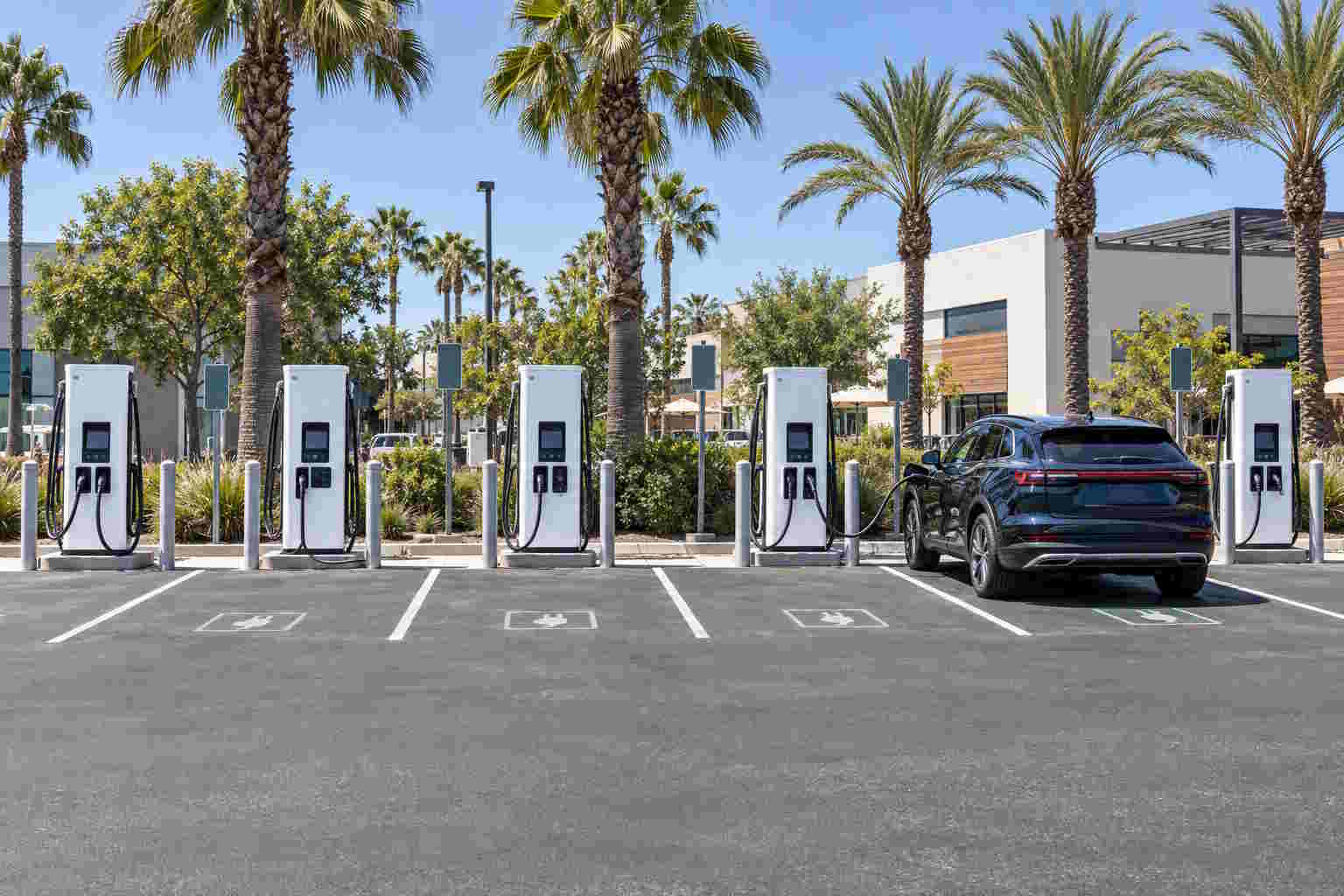
Applicable networked DC fast chargers installed on or after September 28 must obtain Subset Certification under the Open Charge Alliance OCPP Certification Program for OCPP 2.0.1, covering Core and Advanced Security functionalities.
Their charging network providers must also enroll with the CEC. Enrollment requires the provider’s charging station management system to meet the relevant OCPP certification requirements and demonstrate that it can transmit data in the format required by the state.
Operating, authorization and transaction records generated through OCPP must be sent to the CEC, or its designated recipient, through an API. Data generated by the central system must be transmitted within 60 minutes. Charger-generated data must be transmitted within 60 minutes after being received by the central management system.
The September date does not impose the same technical requirements retroactively on every existing charger. For applicable DC fast chargers installed between January 1, 2024, and September 27, 2026, the recordkeeping and reporting agent must retain reliability data at 15-minute intervals. Hourly submission is optional for those chargers.
Beginning September 28, the CEC will also make reliability metrics available to public funding entities. State agencies may consider this information when reviewing future applications for publicly or ratepayer-funded charging projects. The regulation does not automatically approve or reject applicants based on one reliability figure, but past operating performance may become part of future funding decisions.
The 97% uptime requirement is calculated for each charging port rather than as an average across an entire station. If a site has several ports, the availability of the working ports does not offset extended downtime at another port.
California’s definition of uptime covers both hardware and software. A port must be online and available for use, or already in use, and capable of dispensing electricity successfully.
Downtime can be identified from several sources, including status messages from the charger, OCPP “Faulted” or “Unavailable” records, gaps between heartbeat and restart records, internal diagnostics, inspections and customer reports. Where the records indicate different durations for the same outage, the rules use the longest supported period during which the port could not operate.
Some outages may be excluded when the cause is outside the charging station operator’s control and supporting evidence is available. These include utility power loss, natural disasters, advance-scheduled maintenance and third-party vandalism or theft.
Cable theft and third-party damage to a connector may qualify for up to ten days of excluded downtime per event. Scheduled maintenance generally has to be announced at least two weeks in advance, and no more than 72 hours may be excluded during a 12-month period. A communications outage may also qualify under specified conditions, including that the charger defaults to free charging so drivers can continue to use it.
Ordinary hardware failures, software faults, payment problems and delays in obtaining labor or replacement parts are not automatically excluded. This brings fault detection, maintenance response and the physical condition of charging components into the reliability record, even though component suppliers are not the entities responsible for submitting the data.
Uptime still does not describe every charging failure. A charger may appear available while a session fails because of payment processing, authentication, roaming or communication problems between the vehicle and charger. A damaged connector, unreadable screen or broken card reader may also prevent charging without immediately appearing as a remote network fault.
The CEC acknowledged this limitation during the rulemaking process. Its staff report noted that a charging port could report high uptime while completing charging sessions less consistently. Standardized uptime data should make comparisons easier, but charging-session initiation, customer complaints and maintenance records may still be needed to understand performance in the field.
On August 7, 2026, the CEC proposed a different regulatory approach for ports equipped with Megawatt Charging System connectors.
Under the proposal, MCS ports would be exempt from the 97% performance standard, uptime reporting, specified OCPP and hourly reporting obligations, and the requirement to provide customers with a way to report outages. MCS would still be recognized as a connector type in California’s charger inventory reports.
The CEC described MCS as an early-stage technology serving heavy-duty vehicles. Unlike more established charging systems, MCS connectors and their supporting infrastructure have not yet gone through the same period of large-scale commercial use and refinement. The proposed exemption is intended to avoid placing the full reliability framework on the technology during its initial deployment.
The amendment would also provide limited flexibility to charging network providers that have started but not completed OCPP 2.0.1 certification. Providers could receive provisional enrollment if they continue to meet the data-transfer requirements and show that certification is in progress.
These changes are proposals, not current exemptions. A public hearing is scheduled for September 24, 2026, before the amendment moves further through the rulemaking process.
One practical question remains unresolved. Some charging systems use a shared power cabinet for both MCS and CCS ports. The proposed wording does not yet make clear how reporting should be handled when an exempt MCS port and a regulated CCS port share the same power electronics.
The first reporting period under the statewide framework runs from July 1 through December 31, 2026. The first required semiannual inventory and uptime submissions are due on January 31, 2027.
Those submissions will begin to show how the new reporting framework operates across different chargers, networks and locations. Whether the data will closely match the charging problems experienced in the field—and how strongly it will influence future public funding—will take longer to determine.
leave a message
Scan To Wechat :

Scan To WhatsApp :





 English