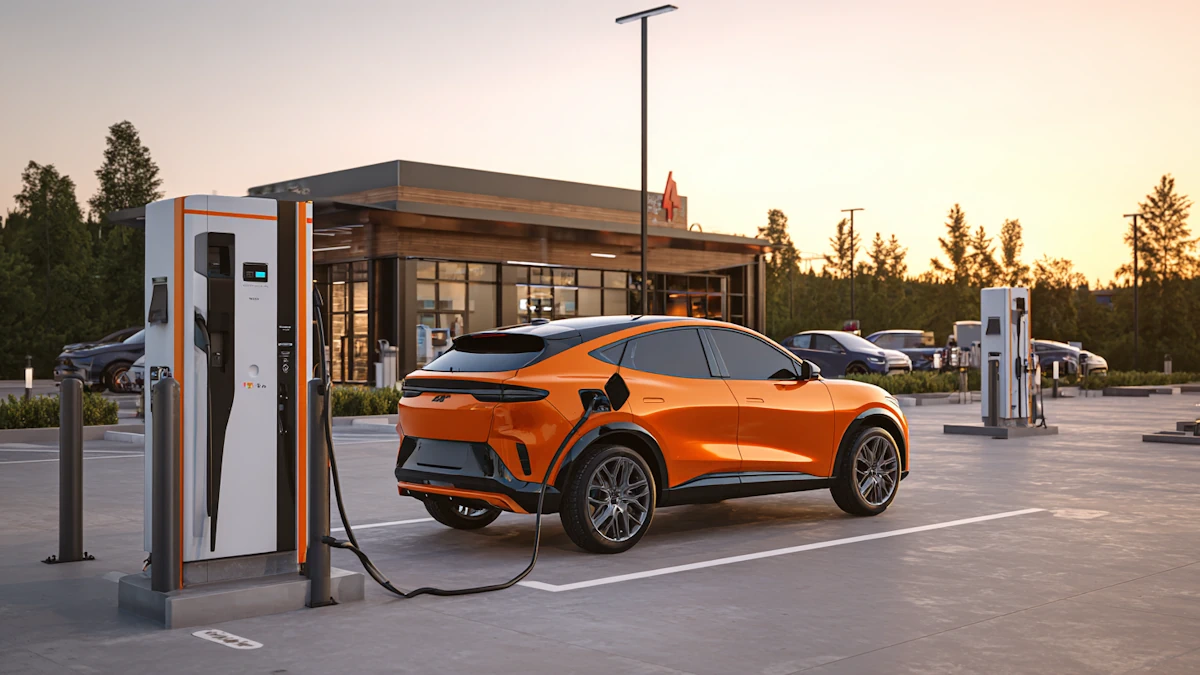
 Can You Really Charge an EV in 10 Minutes or Less?
Nov 19, 2025
Ten-minute charging shows up in headlines all the time, and it is hard to tell how much of that promise will ever reach real cars and real sites. If you drive an EV, the question is simple: will a quick stop really give me enough range, or am I still sitting at the charger for half an hour? If you run or plan charging sites, it turns into another version of the same doubt: does it make sense to spend more on high-power hardware for a “10-minute” experience?
For a typical EV today, the answer is clear: a full 0–100% charge in ten minutes is not realistic. What is realistic, with the right car and the right DC fast charger, cable and connector, is to add a useful block of range in that time. Understanding where that line is – and what it demands from the battery and the hardware – is what matters for both drivers and project owners.
1. Can You Charge an EV in 10 Minutes?
Charging times are always tied to a state-of-charge (SOC) window. Most fast-charging figures refer to something like 10–80%, not 0–100%.
In the middle of the SOC range, lithium-ion cells can accept much higher current. Near the top, the battery management system (BMS) has to cut power to prevent overheating, lithium plating and other failure modes. That is why the last 20% often seems to crawl.
So when someone claims “10-minute charging”, it usually means one of three things:
·adding a set amount of energy (for example 20–30 kWh)
·adding a set amount of range (for example 200 km)
·moving through a mid-SOC window on a specific vehicle and charger
Very few real-world combinations even try to promise a complete fill in that time.
2. How fast EVs really charge: from home AC to ultra-fast DC
In real use, charging speed is defined more by the context than by any single big kW number.
Home AC
·Level 1 and Level 2 charging at home is low power but always available.
·A car may sit plugged in for 6–10 hours overnight.
·This is enough to cover most daily driving without ever touching DC fast chargers.
Conventional DC fast charging (about 50–150 kW)
·On compatible cars, 10–80% often takes 30–60 minutes.
·Older models, small packs, or vehicles limited to lower DC power may take longer.
·For many drivers, this still fits naturally into a meal stop or shopping trip.
High-power and ultra-fast DC (250–350 kW and above)
·Modern high-voltage platforms can draw very high power in the mid-SOC band.
·Under good conditions – battery pre-conditioned, mild weather, low initial SOC – 10–20 minutes can move the car from a low SOC to something comfortable for the next leg.
For site operators, the same factors that shape driver experience also shape utilisation:
·arrival SOC
·battery size and DC capability of the local vehicle mix
·how long drivers actually choose to stay
A site where most cars sit for 45 minutes behaves very differently, in terms of vehicles served per day, from one where most cars stay 10–15 minutes even if the advertised charger power is similar.
3. What a 10-minute stop actually adds
Drivers think in distance, not in percentages. Site owners think in vehicles per bay per day. Both can be translated from the same basic numbers.
The table below uses simple archetypes to show what ten minutes on a suitable high-power DC charger might look like in practice.
Vehicle archetype
Battery (kWh)
Max DC power (kW)
Energy in 10 min (kWh)*
Range added (km)*
Typical use case
High-voltage highway SUV
90
250–270
35–40
150–200
Long motorway legs
Mid-size family sedan
70
150–200
22–28
110–160
Mixed city and highway
Compact city EV
50
80–120
13–18
70–120
Mostly urban, occasional highway
Light commercial van
75
120–150
20–25
90–140
Delivery routes, depot top-ups
*Assumes a friendly SOC window (for example 10–60%) on a compatible high-power DC charger at moderate temperature.
For a commuter, that 10-minute stop might cover several days of city driving. For a long-distance driver, it may be one more stretch of motorway without range anxiety.
Seen from a bay-turnover angle, the same table suggests that a high-power bay can serve several vehicles per hour if most drivers only need 10–15 minutes, rather than locking a bay for almost an hour per car.
4. What the battery can handle – limits and lifetime
The battery is the first hard limit on ten-minute charging.
Chemistry and charge rate
·Every cell design has a practical charge rate (C-rate) it can tolerate.
·Push a cell too hard and lithium can plate onto the anode, which damages capacity and can create safety issues.
Heat
·High current causes internal losses and heat.
·If heat cannot be removed quickly enough, cell temperature rises and the BMS reduces power to stay within safe limits.
SOC dependence
·Cells accept fast charging more comfortably at low and mid SOC.
·Near full, the safety margins tighten and charging must slow down.
Research into extreme fast charging works on all three fronts: new electrode materials, better cell geometry and more effective cooling paths. Even so, very fast charging is always tied to a limited SOC band and assumes a purpose-built pack and thermal system.
Lifetime and daily use
For private drivers, the question is less “can the battery handle one 10-minute fast charge?” and more “what happens if I do this all the time?”
Key points:
·Occasional DC fast charging on long trips has a moderate impact on lifetime.
·Using high-power DC very frequently, especially to very high SOC, can accelerate ageing.
·Staying in a moderate SOC window and letting the BMS and thermal system do their job helps a lot.
A practical pattern looks like this:
·home or workplace AC as the backbone for daily energy
·DC fast charging when distance or time constraints demand it
·no need to avoid DC completely, but no need to chase it for every kWh either
For fleets and ride-hailing operators that live on DC fast charging, pack lifetime becomes part of the business model. Charging strategies, SOC windows and charger placement all need to be chosen with both vehicle availability and battery replacement cost in mind.
5. Hardware for 10-minute-level charging
Delivering useful energy in ten minutes is not only about the car. Everything from the grid connection to the vehicle inlet has to cope with high power in a repeatable way.
The chain typically looks like this:
·Grid and transformerSufficient contracted capacity and transformer rating for multiple high-power chargers, plus any building load.
·DC chargerPower modules sized for the intended per-bay power, with thermal design that can handle continuous high output. Intelligent power sharing across connectors when several vehicles plug into one cabinet.
·DC cableAt hundreds of amps, a conventional air-cooled cable becomes heavy and runs hot. Liquid-cooled DC cables allow high current with manageable weight and surface temperature.
·DC connectorThe connector has to carry that current through its contacts while keeping temperatures and contact resistance under control. It also needs to survive thousands of mating cycles, rough handling and weather, often at high ingress protection levels.
·Vehicle inlet and batteryThe inlet must match the connector standard and current rating; the battery and BMS must actually request and accept that power.
For high-power sites, high-current CCS2, CCS1 or GB/T connectors and matched DC charging cables are central to the design, not accessories. Suppliers such as Workersbee cooperate with charger manufacturers and site owners to provide EV connectors and liquid-cooled DC cable systems that are engineered specifically for sustained high-power duty rather than occasional short bursts.
6. Planning a high-power DC site
When charge-point operators or project owners consider “10-minute-style” charging, copying the highest power value from a brochure is rarely the best way to start.
A more grounded approach is to work backwards from how the site will really be used.
Location and behaviour
·Highway corridors see short stays and high expectations for speed.
·Urban retail car parks and leisure destinations have natural dwell time, so medium-power DC and AC may offer better overall value.
·Depots and logistics hubs can mix overnight charging with targeted fast top-ups.
Target dwell time and vehicles per day
·Decide how long an average vehicle should stay and how many vehicles each bay should serve.
·These numbers drive the required power per bay far more than marketing claims.
Power layout
·Decide how many bays, if any, truly need 250–350 kW capability.
·Other bays may be better used at 60–120 kW, which is still “fast” for many vehicles that cannot benefit from higher power.
Cable and connector choices
·Natural-cooling DC cables are simpler and cheaper, but they limit current and can become heavy as power rises.
·Liquid-cooled cables and high-current connectors cost more but unlock shorter sessions and higher bay turnover in the right locations.
·In harsh climates or heavy commercial use, sealing, strain relief and robustness need extra attention.
Operations and safety
·High-power equipment requires regular inspection and clear procedures for dealing with contamination, damage or overheating events.
·Staff training and clear user instructions reduce misuse and extend equipment life.
Many teams find it easier to manage this complexity with a short internal checklist: main use case, target dwell time, target vehicles per bay per day, and then the charger power, cable technology and connector rating that makes sense for that combination.
7. Who benefits most from 10-minute charging
Not everyone needs to be anywhere near ten-minute sessions.
Long-distance private drivers
·A handful of genuine high-power bays along a corridor can transform their trips.
·They may only need to use these a few times a year, but the impact on confidence is large.
Ride-hailing, taxi and delivery fleets
·Time at the charger is time not earning money.
·For these users, even reducing a stop from 30 minutes to 15 minutes can add up across a fleet.
·However, predictable availability and smart scheduling are often more important than the absolute peak power value.
Urban commuters with home or workplace charging
·Most daily energy needs can be covered by AC.
·Occasional medium-power DC near shopping or leisure destinations is usually sufficient.
·For this group, more plugs in the right places beat a single ultra-fast unit.
From a network planning perspective, this means extreme fast charging belongs in specific corridors and hubs, not on every corner of every city.
8. How ten-minute charging might change over the next decade
Several trends are likely to make fast charging feel faster, even if the ten-minute headline stays more of a special case than a daily habit.
·Higher-voltage platforms moving into mainstream price segments.
·Battery designs that can accept higher charge rates within safe windows, supported by stronger thermal management.
·Smarter site-level energy management and, in some cases, local storage to smooth grid constraints while still offering high peak power to vehicles.
For high-power projects, it makes sense to think in terms of upgrade paths: conduits, switchgear, charger footprints, cables and connectors that can be serviced and upgraded as vehicles evolve, without rebuilding the whole site.
9. What to do now: drivers, fleets and site owners
For drivers:
·Do not expect a full charge in ten minutes, and do not need it for most trips.
·With the right car and charger, ten to fifteen minutes can already add a large block of range.
·Treat fast charging as one tool among several, not as the only way to power the car.
For fleets:
·Build charging plans around where vehicles actually dwell and how routes are structured.
·Use high-power DC where it clearly improves vehicle availability enough to justify the cost, and tune SOC windows to protect pack life.
For site owners and CPOs:
·Start from use cases, traffic patterns and desired dwell times, then size power, cables and connectors accordingly.
·For sites that genuinely need high-power operation, invest in high-current DC connectors and appropriate cable technology; they are core infrastructure, not optional extras.
FAQ: 10-minute EV charging
Can any EV fully charge in 10 minutes today?
For today’s passenger EVs, a full 0–100% charge in ten minutes is not realistic. Fast-charging times are always tied to a state-of-charge window, such as 10–80%, and assume a compatible high-power DC charger. Even the quickest cars still slow down sharply as they approach a high state of charge to protect the battery.
How much range can a typical EV add in a 10-minute stop?
On a suitable high-power DC charger, many modern EVs can add roughly 70–200 km of range in ten minutes. The exact number depends on battery size, the maximum DC power the car accepts, temperature and the state of charge when you arrive. In friendly conditions, a 10-minute stop is often enough to cover several days of commuting or one more highway leg.
Does fast charging always damage an EV battery?
Fast charging does add extra stress compared with gentle AC charging, especially if it is used very often and up to a very high state of charge. Modern packs, thermal systems and battery management software are designed to keep cells within safe limits and will reduce power when needed. Occasional DC fast charging on trips is usually fine; using it every day as the main charging method can accelerate ageing and is better managed with sensible state-of-charge windows.
Where does ultra-fast EV charging make the most sense?
Ultra-fast DC charging is most valuable on busy highway corridors, depots and hubs where vehicles need to turn around quickly. Long-distance private drivers, ride-hailing fleets and delivery vans gain the most from shorter stops and higher bay turnover. In urban areas with long natural dwell times, a larger number of medium-power DC or AC chargers often serves drivers better than a single ultra-fast unit.
Do all high-power chargers deliver the same real-world speed?
Not necessarily. The power printed on the charger cabinet is only one part of the story; the car’s own DC limit, its charging curve, the cable and connector rating, temperature and how many vehicles share the same cabinet all affect real-world speed. In practice, a well-matched car and charger running comfortably within their design limits will often give a better experience than a “bigger number” used outside its ideal conditions.
Workersbee works with charger manufacturers and site owners to design EV connectors and DC charging cables for CCS2, CCS1, GB/T and other high-power standards. When the battery, the charger, the cable and the connector are specified as one system instead of separate pieces, a ten-minute stop becomes a predictable part of the charging experience in the places where it really adds value.
Read More



 Contact Us


 English


 IPv6 network supported