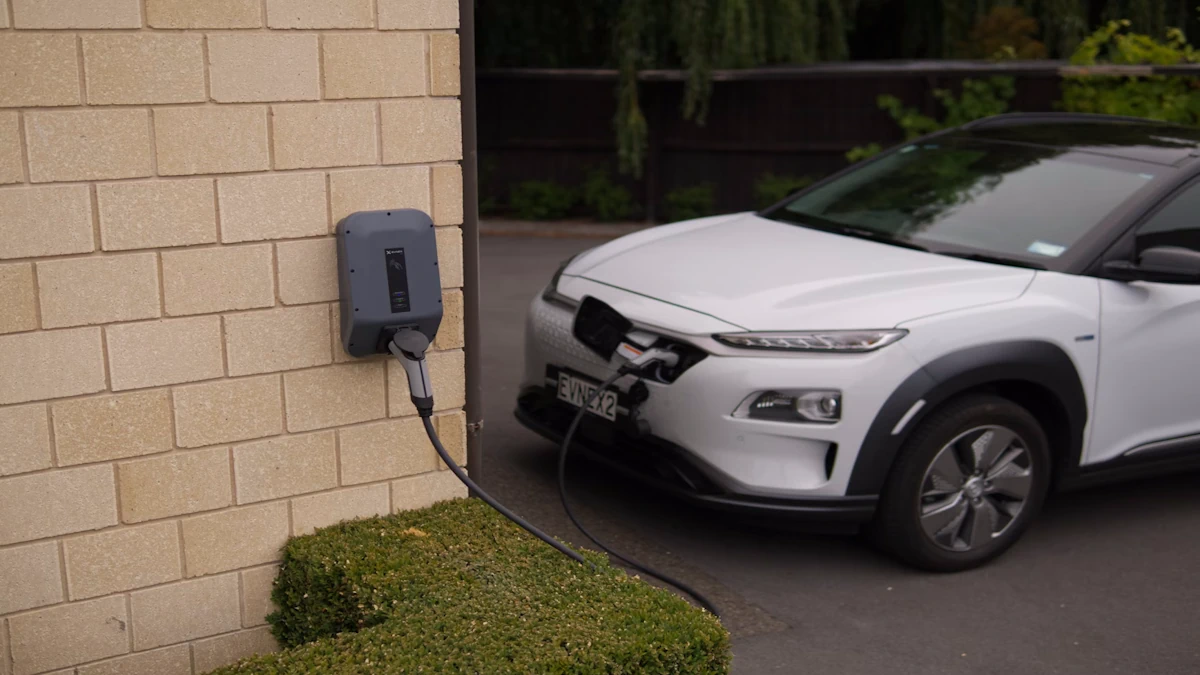
 Charging an Electric Car at Home: Speed, Cost, Installation, and Safety
Apr 14, 2026
Charging an electric car at home is straightforward for many drivers, but the best setup varies from one household to another. Some EV owners can rely on a regular outlet for light daily use, while others need a dedicated home charger to make overnight charging faster and more convenient.
The right choice depends on the vehicle, the available electrical capacity at home, the parking arrangement, and weekly driving distance. Once those factors are clear, it becomes much easier to judge charging speed, installation needs, long-term cost, and whether a home charging upgrade is worth it.
What You Need to Charge an EV at Home
Home charging depends on three basics: a compatible vehicle, reliable access to power, and a practical place to park. For most EV owners, the vehicle is not the limiting factor. What matters more is whether charging can be done easily where the car is parked. A private driveway or garage usually makes home charging straightforward, while a longer distance to the power source or full outdoor use may require a more carefully planned setup. These conditions usually make it clear whether basic home charging will be enough or whether a more stable dedicated setup is the better fit.
Level 1 vs Level 2 Home Charging
Home charging usually comes down to two options. Level 1 uses a standard household outlet and works best for light daily driving, longer parking hours, and households that do not need to recover much range overnight. It is the simplest way to start charging at home, but it adds range slowly and can start to feel limiting as daily mileage increases.
Level 2 uses a dedicated charger with a higher power supply. It is a better fit for drivers who want faster overnight charging, have longer commutes, or want a more consistent charging routine. It also makes more sense for larger-battery vehicles or homes with more than one EV.
Charging Type
Typical Power
Charging Speed
Installation Need
When It Makes Sense
Level 1
Lower
Slower
Usually minimal
Light daily driving and long parking hours
Level 2
Higher
Faster
Dedicated charger usually needed
Longer commutes, larger batteries, and easier overnight charging
The difference is not only speed. Level 1 is easier to access, while Level 2 is built for stronger day-to-day convenience and a more dependable routine. Once that distinction is clear, the next question is how much charging time each setup actually delivers in real use.
How Long Does Home Charging Actually Take?
Actual charging time depends on five factors: battery size, charging power, the vehicle’s onboard charger, starting battery level, and temperature. That is why the same charger can produce very different results across different EVs and driving situations.
For most households, the practical question is not how long a full charge takes from empty. It is whether the car can recover the energy used during the day while parked at home. That is why home charging is often judged by overnight recovery rather than a 0 to 100 percent charging timeline.
Daily Driving Need
Typical Range to Recover
Regular Outlet
Dedicated Home Charger
Light daily use
20–30 miles / 30–50 km
Around 6–10 hours
Around 1–3 hours
Moderate daily use
40–60 miles / 65–100 km
Around 10–18 hours
Around 2–5 hours
Heavy daily use
80–120 miles / 130–190 km
Often 20+ hours
Around 4–8+ hours
These differences matter most when daily mileage is higher or charging time at home is limited. For lighter daily use, slower charging may still be enough if the car stays parked for long hours. As driving demand increases, faster home charging gives the driver a wider margin and a more predictable routine.
How to Choose the Right Home Charging Setup
The right home charging setup depends on three things: how much range needs to be recovered, how much charging time is available, and how consistent the parking routine is. When daily driving is light and the car stays parked for long hours, a basic setup may be enough. When daily mileage is higher or overnight charging time is limited, a dedicated home charger usually becomes the more reliable choice.
Decision Factor
Basic Home Charging
Dedicated Home Charger
Daily driving need
Lower
Higher
Time available for charging
Longer
Shorter
Parking routine
Less fixed
Fixed daily parking
Main priority
Basic charging access at home
Faster and more dependable overnight recovery
The best setup is the one that matches daily driving needs, available charging time, and the way the vehicle is parked at home. Workersbee follows the same principle: home charging should be sized around real driving demand and installation conditions, not chosen only for higher power on paper.
What Your Home Needs Before Installation
Before installing a home EV charger, three site conditions matter most. The first is panel capacity, which means whether the house has enough spare electrical capacity for another high-power load. The second is a dedicated circuit, because most home chargers need their own circuit instead of sharing power with other household appliances. The third is the distance between the electrical panel and the parking space, since a longer cable run usually means more wiring work and a more involved installation.
If these three basics are already in place, installation is often more straightforward. Depending on local rules, permitting and inspection may also be required before the charger can be put into regular use. This is why home charger installation is usually shaped by the house and parking layout first, not by the charger alone.
How Much Does It Cost to Charge an EV at Home?
Home charging cost has three parts: the charger itself, the installation work, and the electricity used over time. The upfront cost depends mainly on the charger and the site conditions. When the parking space is close to the electrical panel and the house already has enough spare capacity, installation is usually simpler. When longer cable runs or electrical upgrades are needed, installation becomes a much larger part of the total cost.
The ongoing cost depends on how far the vehicle is driven, how efficient it is, and the local electricity rate. That is why home charging cost is not defined by the charger alone. A household with light weekly driving may see only a modest increase in electricity use, while a higher-mileage driver will usually see a more noticeable monthly cost.
Cost Part
What It Includes
What Usually Affects It Most
Equipment
Charger hardware
Charger type and power level
Installation
Electrical work and setup
Panel capacity, circuit availability, and cable run distance
Ongoing electricity use
Daily or monthly charging
Driving mileage, vehicle efficiency, and local power rates
It helps to separate setup cost from ongoing electricity cost. One is paid upfront to make home charging possible, while the other depends on how the vehicle is used over time.
How to Reduce Long-Term Charging Cost
Keeping home charging cost under control starts with choosing a setup that matches actual driving needs. If daily mileage is low and overnight charging time is enough, a lower-power, lower-cost charger is usually the better choice. In many homes, the simplest way to control cost is to avoid paying for charging capacity that is not really needed.
The second step is to reduce electricity cost over time. In areas where electricity rates change by time of day, charging during lower-rate hours can make a clear difference. This is why scheduled charging matters. It helps move regular charging into cheaper periods instead of starting as soon as the vehicle is plugged in.
Is Home Charging Safe?
Home charging safety has two sides: household electrical safety and battery-use safety.
The first is household electrical safety. A home charging setup is safer when the charger, circuit, and installation are all suited to regular EV use. Most safety problems start when charging depends on the wrong outlet, a shared heavy-load circuit, damaged cables, or temporary fixes that were never meant for repeated charging. The practical way to reduce risk is simple: use equipment intended for EV charging, make sure the electrical support matches the charger, and avoid improvised setups.
The second is battery-use safety. For most drivers, battery safety depends more on charging habits than on the fact that charging happens at home. Keeping the battery out of extreme heat when possible and avoiding long periods at very high or very low charge levels help reduce stress over time. In everyday use, regular home AC charging is usually a steadier routine than frequent high-power charging.
Safe home charging depends on a sound electrical setup for the house and sensible charging habits for the battery.
FAQ
Can I charge an EV from a regular household outlet?
Yes, in many cases. A regular outlet may be enough for light daily driving and long parking hours, but charging is usually much slower than with a dedicated home charger. For drivers who need to recover more range overnight, it may become limiting.
Is a Level 2 charger worth it for home use?
It depends on daily driving demand and available charging time. If the car is driven farther each day or needs to recover more range overnight, a Level 2 charger is usually worth it. If daily mileage is low and the car stays parked for long hours, a simpler setup may still be enough.
Do I need a dedicated circuit for a home EV charger?
In most cases, yes. A dedicated home charger is usually installed on its own circuit so it does not share power with other heavy household loads. This supports regular charging more safely and more consistently.
Will home charging increase my electricity bill a lot?
It will increase electricity use, but the size of that increase depends mainly on how far the vehicle is driven, how efficient it is, and when charging happens. For many households, the monthly cost remains manageable, especially when charging is moved into lower-rate hours.
Can I charge an EV outdoors at home?
Yes, outdoor home charging is possible, but the setup needs to be suitable for that environment. The charger location, cable handling, and overall installation should all be appropriate for regular outdoor use.
Is daily home charging bad for the battery?
Not by itself. For most drivers, battery condition depends more on charging habits and temperature than on the fact that charging happens at home. In normal use, regular home AC charging is usually a steady and practical routine.
Read More



 Contact Us


 English


 IPv6 network supported