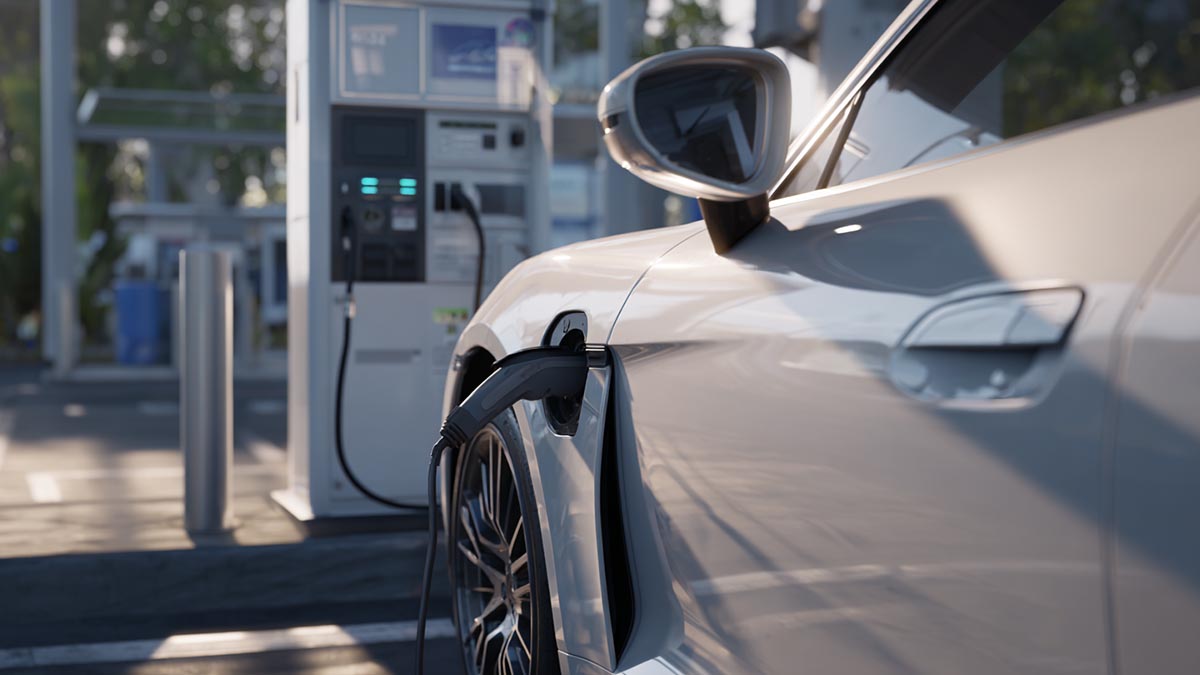
 What is the J1772 Connector and Why it Matters in 2025
Oct 22, 2025
Quick answerJ1772 is the North American AC charging connector for Level 1 and Level 2. You meet it at home and at most public Level 2 posts. In 2025 it still dominates AC charging, even as NACS adoption grows. If you understand J1772, you can pick the right home charger, carry the right adapter, and avoid slow sessions.
J1772 at a glanceScope: single-phase AC only, for Level 1 (120 V) and Level 2 (240 V).Typical power: up to 19.2 kW on paper (80 A at 240 V), but your on-board charger and circuit size set the real ceiling.
Where it appears: home wallboxes, workplace posts, many public L2 pedestals.
Why it is trusted: five pins with control logic that negotiates current and prevents live unplugging.
Spec card
Item
J1772 (Type 1)
Pins
5 (L1, L2/N, PE, CP, PP)
AC levels
Level 1 (120 V), Level 2 (240 V)
Typical real-world power
3.3–11.5 kW for most cars; up to 19.2 kW max
Use cases
Home L2, workplace, public L2
Safety logic
CP PWM negotiation, PP cable current coding
Inside the plug: pins and safety signalsL1 and L2/N carry AC power. PE is protective earth.CP (Control Pilot) is a low-voltage signal that announces the post’s available current and coordinates start/stop so the relay only closes after the connector is seated.PP (Proximity Pilot) encodes the cable’s current rating and detects the latch. When you press the latch, the system opens the relay before you pull the plug. This avoids arcing and protects contacts.
Level1 vs Level2Level 1 at 120 V is slow but steady. It fits overnight top-ups for low daily miles.Level 2 at 240 V is the practical default for most homes. Expect several times faster than Level 1. The exact rate depends on your on-board charger (for example, 7.2 kW or 11.5 kW) and the branch circuit.
Home notes: pick the amperage to match panel capacity; keep cable runs reasonable; for outdoor installs, aim for weather sealing and UV-resistant jackets.
J1772 vs CCS1 vs NACS
Connector
Charging type
Typical power band
Where used in 2025
Adapter need
J1772 (Type 1)
AC Level 1/2
Up to 19.2 kW (AC)
Home and public L2
NACS vehicles may need J1772↔NACS adapter
CCS1
DC fast charging
Tens to hundreds of kW (DC)
Legacy fast-charge sites
Not for AC home charging
NACS (SAE J3400)
AC and DC
AC similar to J1772; DC to high power
New vehicles and growing sites
J1772 vehicles may need adapters at NACS-only posts
Practical Playbook: decide, avoid, buy
A) Two-step decision flow (vehicle inlet → location → action)
Vehicle inlet:• J1772 inlet– Home: install a Level 2 J1772 charger in the 32–48 A range. Choose 7–10 m cable. Outdoor use targets IP54 or higher. No adapter needed.– Public: use any J1772 handle. No adapter needed.
• NACS inlet– Home: if you already own a J1772 wallbox, add a NACS↔J1772 adapter; otherwise a native NACS mobile connector is fine.– Public: at J1772-only posts, bring an adapter; at mixed sites plug native first, adapter as backup.
Outcome checklist before you buy: amperage setting, cable length that reaches without tension, enclosure rating for outdoor installs, adapter yes/no.
B) Common mistakes and the simple fixes• Assuming “higher kW on the box = faster.” AC speed is capped by your on-board charger and wiring. Match the charger’s amps to the car and circuit.
• Long cable runs and tight coils. Long runs increase voltage drop; tight coils trap heat. Keep runs reasonable and lay cables flat.
• Mixing up CCS1 DC fast charging with J1772 AC. J1772 does AC only; DC fast uses CCS1 or NACS.
C) Light buyer’s guide for home Level 2Amperage: 32 A is easy to fit; 40 A is a common sweet spot; 48 A needs a 60 A breaker and suitable wiring.
Hardwire vs plug-in: hardwire reduces plug heat points; plug-in (NEMA 14-50) offers easy relocation.
Cord length: 7–10 m covers most garage positions without extensions.
Enclosure: for outdoor, aim IP54 or above and a UV-resistant cable jacket.
Smart basics: scheduling, current caps, usage logs are handy if you’ll use them.
Installation sanity check: panel capacity, dedicated circuit, correct breaker and GFCI per local code.
Public charging with J1772 in 2025You will still find J1772 Level 2 at many retail lots, workplaces, and municipal sites. Check app details for plug types and access hours. Seat the connector firmly, start the session in the app or on the post, and wait for the relay click before you pull current. If your vehicle is NACS-only and the site offers J1772, use a certified adapter and make sure it is fully latched.
For site operators and fleetsL2 with J1772 captures the widest base of legacy and current vehicles for dwell-time charging. During the transition, pairing J1772 bays with NACS accommodation (native cables or managed adapters) protects utilization. Keep cable management tidy, avoid tight coils, and design posts to minimize connector drop damage. Uptime and clear labeling matter more than headline power.
FAQsIs J1772 going away?No. J1772 remains the standard for AC Level 2 across a large installed base. NACS is growing, but AC sites and home chargers with J1772 will serve drivers for years, with adapters bridging gaps.
What is the maximum AC power for J1772?Up to 19.2 kW is possible, but most cars take 7.2–11.5 kW. Your on-board charger and circuit size set the limit.
Do I need an adapter?If your car’s inlet and the site’s plug do not match, yes. J1772 car at a NACS-only site needs a J1772↔NACS adapter; NACS car at a J1772-only site needs the reverse. For home, choose a wallbox that matches your inlet or plan for an adapter you trust.
Can J1772 do DC fast charging?No. J1772 is for AC charging. DC fast charging uses CCS1 or NACS.
How long will a typical Level 2 session take?It depends on the battery size, state of charge, and your on-board charger. As a simple guide, many cars add roughly 20–40 miles of range per hour on Level 2.
Related article: What Is a Type 2 EV Connector?
Read More


 Contact Us


 English


 IPv6 network supported