
Europe’s EV charging market continues to grow, but the latest charging data shows that the next stage of infrastructure development will be more complex than simply adding more public charge points.
According to the 2026 Europe charging data, the region now has more than 11.4 million battery electric vehicles and over 1.2 million public charge points. In 2025, BEV growth reached 28%, while public charge point growth reached 19%. At the same time, total public charging capacity grew by 36%, reaching 48.1 GW.
For Workersbee, these figures point to a clear market signal. Charger count still matters, but the market is increasingly shaped by charging capacity, high-power infrastructure, regional differences, grid constraints, and the field reliability of charging hardware.
For charging connector, cable, and inlet suppliers, this shift makes thermal stability, mechanical durability, sealing performance, and scenario-specific component design more relevant to customer decisions.
The difference between public charge point growth and charging capacity growth is one of the strongest signals in the report.
Public charge points increased by 19% in 2025, while total public charging capacity increased by 36%. In other words, Europe is not only adding more chargers; it is increasing the capability of the public network.
The report also shows that the average public charging speed reached 43 kW, while the share of ultra-fast chargers above 150 kW increased to 11.8%. This points to a continued shift toward higher-power charging, especially in public fast charging, highway charging, commercial charging hubs, and fleet-related use cases.
For high-power charging sites, hardware performance becomes more visible. Cables, connectors, vehicle inlets, locking systems, temperature monitoring, and cooling structures need to support repeated operation under real field conditions, not only meet rated specifications on paper.
As charging power and site utilization increase, the gap between rated performance and field performance becomes more expensive for operators.
The report also shows that Europe should not be viewed as one uniform charging market.
Different countries and regions are moving through different development stages. This affects infrastructure planning, product selection, certification priorities, inventory planning, and after-sales support.
Germany has a large public charging base and a strong number of ultra-fast chargers above 150 kW. For this type of market, high-power DC infrastructure, CCS2 systems, liquid-cooled cable options, thermal stability, and uptime-focused components become especially important.
The Netherlands has one of Europe’s largest public charging networks, with a strong 7.4–22 kW charging base. In this type of mature mid-speed market, AC and mid-speed charging maintenance, replacement, destination charging, and power-mix upgrades still have a role.
The UK has a different structure. Its market combines home charging, curbside charging, public slow charging, and rising ultra-fast charging. This means the UK cannot be understood only through public fast charging. Home charging access and curbside infrastructure also play a central role.
In the Nordics and Benelux, high EV adoption and mature charging density make replacement cycles, uptime, weather resistance, winter performance, and utilization more visible in procurement. In Eastern Europe and the Baltics, stronger BEV or charging capacity growth from a lower base creates different needs, including new infrastructure deployment, cost-effective products, stable supply, and project support.
For EVSE manufacturers, CPOs, distributors, and component suppliers, these regional differences are not minor details. They influence which product portfolio, technical message, service model, and local support structure will fit a customer’s real market.
Charging demand is also being reshaped by the vehicles entering the market.
The report shows that Europe had 463 available BEV models in 2025, with 63 new models added during the year. Average retail price fell by about €2,800, while average battery capacity stayed close to 73.3 kWh and average range remained near 390 km.
More models, lower prices, and stable range suggest that EVs are moving closer to mainstream users.
That changes expectations around charging. Early EV drivers often accepted fragmented apps, uncertain charger availability, unclear pricing, and more planning. Mass-market users will be less forgiving.
They will expect charging to be simple, predictable, and reliable. They will care about whether they can charge near home, whether the charger works, how long they need to wait, whether the price is clear, and whether payment is easy.
This raises the standard for charging infrastructure. Charging hardware must support not only technical performance, but also user experience, site availability, and long-term operation.
Residential charging remains one of the foundations of EV adoption in Europe.
The report shows that around 65% of EV charging in the UK happens at home, compared with about 56% across Europe. The UK also has a higher share of EV owners using home chargers at their usual residence.
Home charging is usually cheaper and more convenient. But access to home charging is not equal. It depends on housing type, parking access, ownership status, and local infrastructure.
For users without private parking, public charging, curbside charging, workplace charging, and destination charging become more important. In dense urban areas, public charging is not only long-distance infrastructure. It can also act as a substitute for home charging.
This is why the next stage of EV charging will not be solved by one charging type alone. Type 2 AC charging components, curbside charging systems, residential charging, workplace charging, destination charging, fleet charging, and high-power DC charging all have different roles.
For hardware suppliers, this means product development and support must match specific use cases rather than assume one standard charging scenario.
For CPOs, the business model is also becoming more demanding.
The earlier phase of charging infrastructure was largely about site acquisition, charger installation, and network expansion. Those factors still matter, but high-power charging and higher utilization create new operating challenges.
A charging site now needs to be assessed through grid connection capacity, peak demand cost, energy pricing, utilization, uptime, and maintenance requirements. The report also highlights technologies and strategies such as dynamic load management, peak shaving, battery energy storage, PV integration, grid signaling, tariff optimization, and flexibility services.
This does not mean every CPO will become an energy trader. But it does mean that charging operations are becoming harder to separate from energy management.
For high-power charging sites, equipment reliability is closely tied to operating cost. A cable, connector, or inlet failure does not only create a technical problem. It can reduce uptime, interrupt charging revenue, increase maintenance cost, and damage user trust.
As Europe’s charging market moves toward higher capacity and more specialized use cases, charging components will face higher expectations.
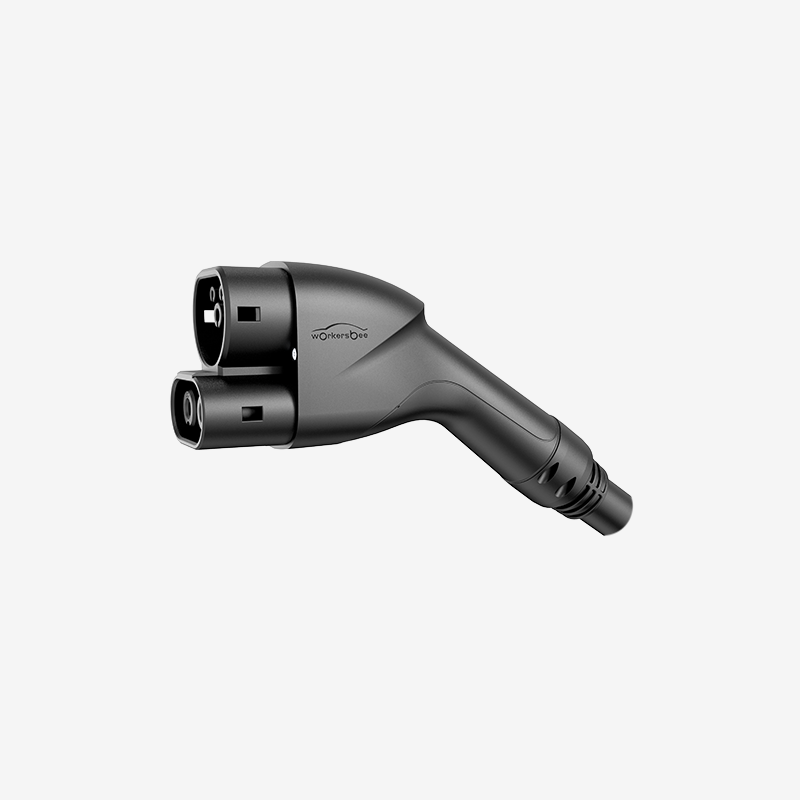
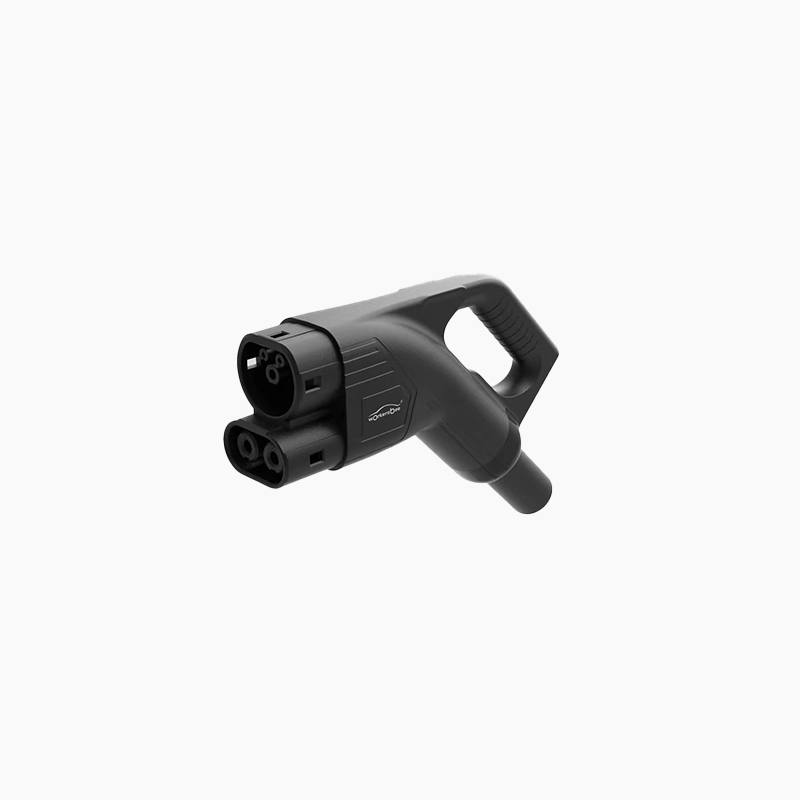
For high-power DC charging, thermal stability, current handling, temperature monitoring, cooling reliability, and sealing performance become more visible in product selection. This is especially relevant for CCS2 DC connectors, high-current charging cables, liquid-cooled charging cables, and EV charging inlets used in public fast charging and commercial charging sites.
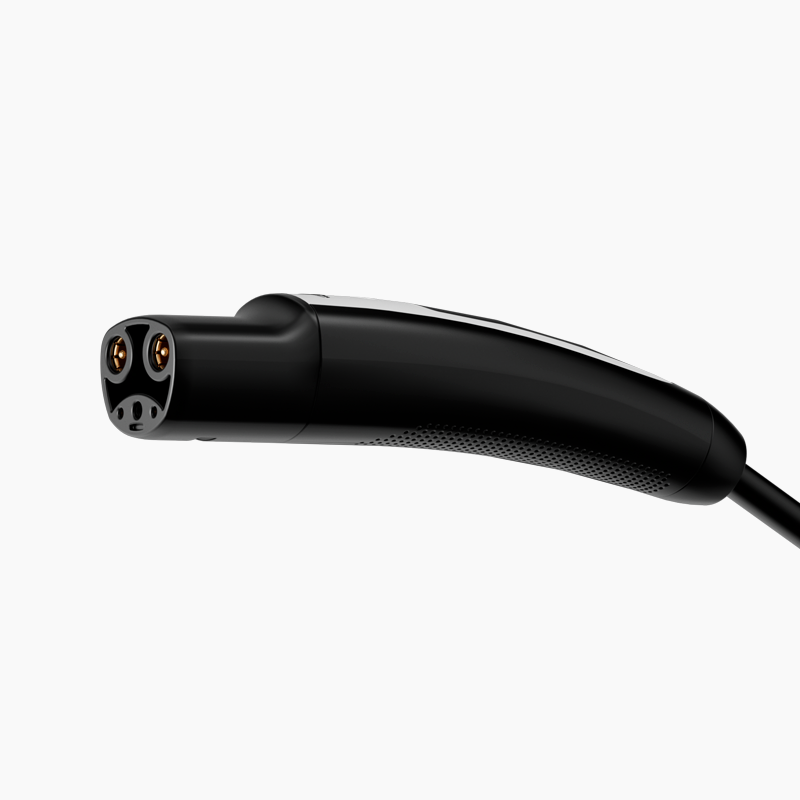
For public charging and high-utilization sites, mechanical durability, cable handling, locking systems, strain relief, and field maintenance become more important. A component that works under controlled test conditions still needs to perform reliably under repeated plugging, outdoor exposure, user handling, and maintenance cycles.
For outdoor installations, material stability, waterproofing, dust protection, UV resistance, and performance under changing weather conditions become part of long-term reliability.
For CPOs and EVSE manufacturers, total cost of ownership is increasingly linked to component behavior in real operating conditions. A lower-cost component may not remain cost-effective if it increases downtime, replacement frequency, maintenance work, or user complaints.
Workersbee’s product development focus aligns with this shift. EV charging connectors, charging cables, vehicle inlets, and high-power cable solutions need to perform reliably under real site conditions, not only under laboratory ratings.
As Europe’s charging market becomes more segmented, reliable charging components will play a larger role in helping partners respond to different market needs, from Type 2 AC charging and curbside charging to CCS2 DC fast charging and liquid-cooled high-power charging.
Europe’s EV charging market is still expanding. But the next stage is not only about adding more chargers.
The market is becoming more specific. Different countries need different charging mixes. Different users have different charging behavior. CPOs must manage energy cost, grid constraints, uptime, and maintenance. EVSE manufacturers and component suppliers need to think beyond rated output and focus more on field reliability, serviceability, and scenario fit.
For Workersbee, the key signal from the 2026 Europe charging data is clear: the future of EV charging infrastructure will depend not only on deployment volume, but also on whether charging hardware can support real operating conditions across different markets.
To request the complete Europe Charging Report 2026 or discuss component solutions for AC charging, high-power DC charging, liquid-cooled cable systems, and regional EV charging projects, please contact the Workersbee team.


Address : 538 Fangqiao Road, SlP-Xiangcheng Cooperative Zone, Xiangcheng, Suzhou, China
 Contact Us


 English










 IPv6 network supported