



 English
.jpg)
Plug Fits but Not Charging (2026): EV Charging Session Failures and Fixes

A connector can fit and lock, yet charging still fails. In many cases, the issue is not the connector shape. It happens during the charging session: safety checks, communication setup, authorization, or power negotiation.
Here, compatibility means the full path from plug-in to stable energy delivery. The connector standard can match, and the session can still fail to start, stop early, or run at unexpectedly low power.
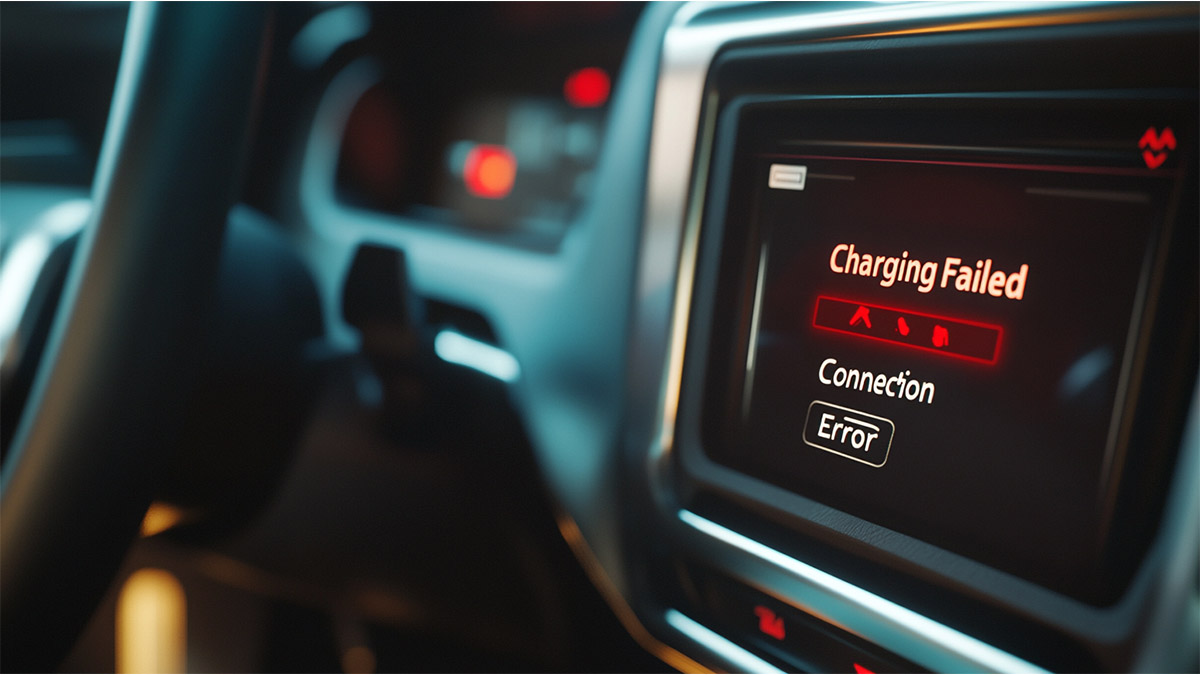
Checks to do before you change anything
1. Re-seat the connector
Unplug, then plug in again firmly until it is fully seated and latched. Keep the cable straight and avoid side pull.
2. Remove strain on the handle
If the cable weight twists the handle, support the cable or reposition slightly so the connector sits straight.
3. Inspect the connector tip
Look for water, dirt, or visible damage. If it is wet or dirty, stop and try a different stall or connector.
4. Try a different stall
If another stall works, the issue is likely tied to the first stall or its connector.
5. Read the station message
Note the exact wording or code. It usually points to payment, communication, safety checks, or temperature protection.
If the session starts and stops more than once on the same stall, switch stalls or switch sites instead of repeating the same attempt.
Symptom to cause map
|
What you see on site |
Most likely category |
What to do next |
|
“Authorization failed”, “Payment required”, app/RFID step not accepted |
Authorization and backend approval |
Confirm the app/RFID/payment step completed, retry once, then switch stall or site |
|
“Communication error”, “Handshake failed”, repeated start attempts without charging |
Communication setup and protocol behavior |
Re-seat, switch stall, then switch site and report the stall ID + error |
|
Plug locks, then stops within 1–3 minutes |
Contact instability or a protection trigger |
Remove strain, keep the tip dry, switch stall, avoid repeated retries |
|
Charging starts but power is far lower than expected |
Station limit, battery conditions, negotiated cap, thermal derating |
Try another stall, compare behavior, check battery state/temperature |
|
Works at one site but fails at another |
Operator rules, firmware differences, backend differences |
Use a different operator/site, capture error code + time + stall ID |
|
Connector locks but won’t release |
Lock routine or latch friction |
End the session, unlock the vehicle, then follow the station/vehicle release steps. Do not force the handle |
Where failures happen in the charging sequence
Charging sequence
Connect and latch
→ Safety checks (grounding, insulation, temperature sensors)
→ Communication setup (vehicle and station align on protocol and limits)
→ Authorization (account/payment, session approval)
→ Power negotiation (voltage/current limits, ramp)
→ Energy delivery (monitoring and protection)
→ Controlled stop and release
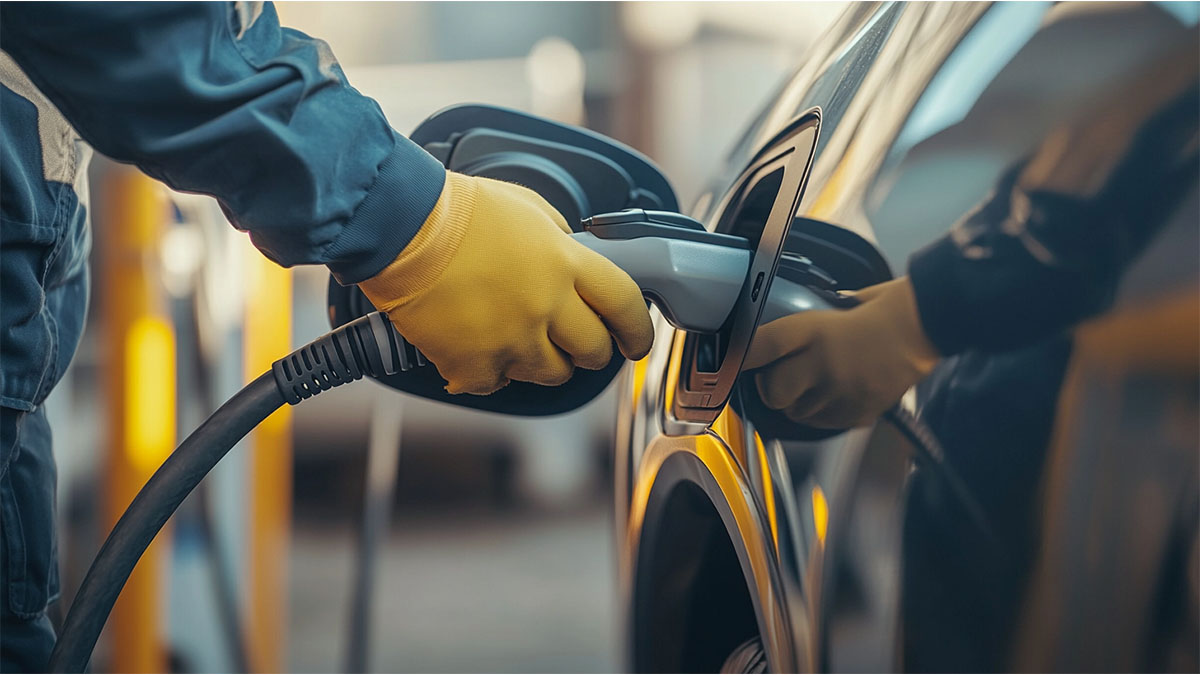
Common causes and what typically triggers them
1. Contact instability under cable load
A connector can be inserted but still sit under side load. Small contact resistance can rise under current, which may trigger protective stops or early derating.
Common on-site triggers
·Cable weight pulls the handle down or sideways
·The latch did not fully engage
·There is dirt, moisture, or wear at the contact surfaces
2. Communication setup problems
Before power flows, the vehicle and station need a stable communication sequence and an agreed set of limits. Differences in implementation can cause a failed start or repeated handshake attempts.
Common on-site triggers
·The station shows a communication or handshake error
·Charging works on one stall but not another at the same site
·It works at one operator but fails at another with the same vehicle
3. Authorization and session approval
A session can be refused even when the hardware connection is solid. The cause can be account state, payment flow, roaming rules, or operator policy.
Common on-site triggers
·The station asks for a step that the app did not complete
·RFID is read, but the session is rejected
·Another site starts normally shortly after
4. Electrical envelope overlap
Charging requires overlap between what the station can output and what the vehicle requests. When the overlap is limited, the session can fail during negotiation or run at reduced power.
Common on-site triggers
·The station stays in a negotiating state and then stops
·One hardware generation gives low power while another is normal
·The result changes with battery temperature and state of charge
5. Thermal protection and derating
Stations and vehicles reduce current or stop to protect hardware when temperature rises too quickly. This can show up as slow charging, repeated stops, or sensitivity to weather.
Common on-site triggers
·Ambient temperature is high
·The connector is under strain or not fully seated
·Repeated retries are done on the same warm connector
What you can do, and what belongs to the site operator
Some actions are in the driver’s control. Others require the site operator or installer.
For drivers
Re-seat fully and remove side load
Switch stalls early instead of repeating the same attempt
Keep the connector dry and off the ground
If power drops, try another stall and compare behavior
Record the exact message/code, stall ID, time, and conditions
For site operators
Inspect and clean contacts; check latch engagement and cable condition
Validate grounding and insulation checks
Review logs for handshake failures, authorization failures, and thermal events
Update station firmware where applicable
Improve on-screen guidance so users can separate payment issues from communication or safety stops
For manufacturers and integrators
Validate contact stability under real cable load and repeated mating cycles
Confirm thermal margins at sustained duty
Test interoperability across common vehicle stacks and operator backends
Provide actionable error codes and consistent fallback behavior
When to stop and switch approach
Stop and switch stalls or switch sites if any of the following happens:
The session starts and stops twice on the same stall
The connector becomes hot to the touch
You notice a burnt smell or visible discoloration
The station repeatedly cycles through start attempts without charging
What to record when you report the issue
Site name/location and time
Stall ID and connector type
Vehicle model/year and battery state
Exact station message or code (a photo is best)
Weather (heat, cold, rain) and whether the cable was under strain
Whether another stall worked
FAQ
Why does it work at one site but fail at another?
Operators can differ in station firmware, backend authorization rules, and protection thresholds. Battery conditions can also change the negotiated result.
The plug fits and locks. Doesn’t that mean it should charge?
Fit and lock confirm the mechanical interface. A charging session still depends on safety checks, communication, and authorization.
Is this an adapter problem?
If the connector standard matches, swapping adapters usually does not help. Focus on seating, strain, station behavior, and the stage where it fails.
What should I send to the operator or installer?
Share the stall ID, time, connector type, the exact error message/code, and whether another stall worked. Add weather and battery state if you can.
Workersbee note
For fleets and CPO projects, stable interfaces reduce avoidable session failures. Workersbee supplies EV charging connectors and cable assemblies designed for repeatable mating, secure locking, and consistent contact performance across cycles. We also support connector selection and validation around your target use case, duty cycle, and environment.