UK 3-Pin (BS 1363) Granny Charging: A Practical Safety Checklist for Portable EV Chargers
Jan 26, 2026
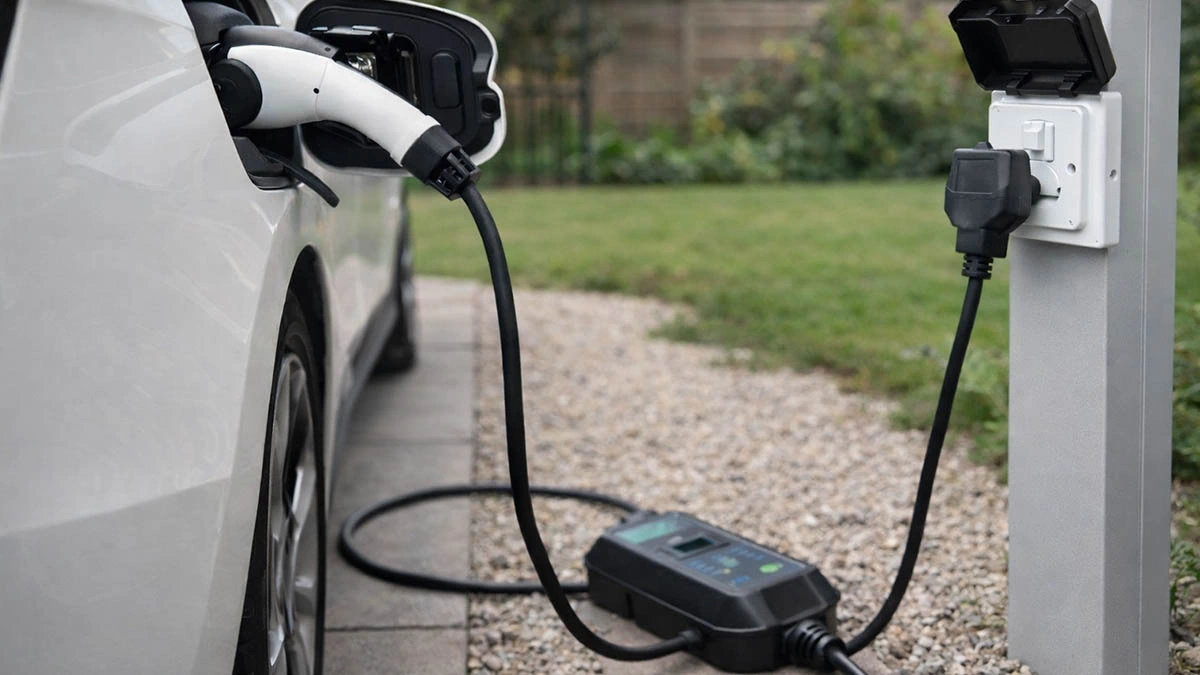
UK 3-pin sockets are everywhere. That is why they become the default option in rentals, older homes, and short-term parking situations. A portable EV charger can work on a domestic socket, especially when you only need a modest top-up.
In the UK, this is often called granny charging on a 13A socket. It can be practical, but it is not built for set-and-forget charging every night. Long sessions put continuous stress on the plug and socket contacts. Heat usually starts at the wall connection, not at the car.
Occasional 3-pin charging
Treat 3-pin charging as a backup. It is useful when you have no wallbox and no better outlet. It is also a practical bridge while you wait for a dedicated installation.
If you rely on it frequently, small issues show up fast. A socket that feels fine for a kettle can behave very differently under hours of steady load.
What to expect for speed
A UK 3-pin supply is typically 230V. Most portable chargers let you choose current. Conservative settings are usually kinder to household sockets during long sessions.
As a rough guide, 10A is about 2.3 kW. Lower settings are slower but often more stable. Higher settings can work in the right conditions, but they demand better socket contact and better installation quality. In many real-world cases, the limit is the plug and socket connection, not the car.
That speed can still be useful. It often adds a modest amount of range per hour, but results vary by vehicle, temperature, and battery state. This is why 3-pin charging works for topping up, yet feels limiting if you need large daily mileage.
Where the heat starts
The weak point is the plug and socket contact area. EV charging is steady, and the contact area is small. If contact pressure is weak, resistance rises and heat builds.
Once the plug area warms up, you may see practical symptoms. Charging can slow down, pause, and restart. Some homes see trips when other loads switch on. If the pattern changes as the home load changes, suspect the connection and the circuit before blaming the car.
Check the socket first
Start with what you can see and feel. The socket faceplate should be solid and flat, not loose or rocking. The plug should insert fully and feel firm. If it sags or wobbles, do not treat it as good enough.
Look for signs of past stress. Discoloration, cracks, or a slightly melted look are hard warnings. Any hot plastic smell is also a hard stop. Moisture matters too. If the connection is in a damp garage or outdoors, avoid long sessions unless you can keep the plug area dry and protected.
Current settings that stay safe
Start conservative. Then let the first session decide whether you should stay there. There is no perfect number that fits every home, because socket condition and wiring quality vary widely.
A practical approach is simple. If your charger allows it, many drivers start around 8–10A for a first test. Only consider increasing if the plug fit is tight, the socket stays only slightly warm, and the session remains stable when other household loads switch on. If you see heat rise early, pauses, restarts, or trips, go lower or stop and fix the connection. Reducing current can help in the short term, but it is not a reliable long-term fix for a loose contact.
It is also worth being strict about when not to increase. Do not increase if the plug feels even slightly loose, if you need an extension lead, if the socket is in a damp area, or if the socket looks aged, cracked, or heat-marked.
The first 20 minutes
Treat the first charge like a test run. Set a conservative current. Make sure the cable does not pull sideways on the plug. Keep the control box on a dry, ventilated surface and do not cover it.
Let it run for 15–20 minutes. Then check the plug and socket area. A slight warmth can be normal. Fast-rising heat is not. A practical rule is this: if you cannot keep your hand comfortably on the plug body for a few seconds, stop and address the connection.
If everything stays stable, you can continue. For an overnight session, do one more check later in the charge, especially in warm rooms or older properties.
When to stop
Most problems show up early. If it warms up fast in the first 20 minutes, it rarely improves later. Stop if the plug feels loose, if the socket faceplate heats quickly, or if you notice a hot plastic smell.
Stop as well if charging pauses and restarts repeatedly, or if the breaker trips when other household loads switch on. Lowering current can reduce stress, but it is not a fix for a loose contact. If the connection is unstable, repair the socket or switch to a better supply option.
Extensions and multi-sockets
Extensions, travel adapters, and multi-sockets add contact points. Each contact point is another place for resistance and heat. Long leads can also increase voltage drop, which can make charging less stable.
A direct connection to a solid wall socket is usually safer than building a chain. Avoid daisy chains and avoid multi-outlet strips. Do not run a coiled extension under load, because coils trap heat.
If an extension is unavoidable, keep it simple and properly rated. Then apply the same first-20-minute check at every connection point, not only at the wall.
Shared loads at home
Many UK homes use ring circuits for socket outlets. That means other sockets on the same circuit may share the same protection path. When other loads turn on, voltage can dip and the circuit can run closer to its limit.
You can often spot this in real use. Charging may look stable at first, then become unstable when high-load appliances such as a kettle or space heater switch on. If the pattern follows home load changes, reduce current, move to a socket with fewer shared loads, or stop and plan a more suitable circuit.
EV-marked sockets in the UK
Some sockets are designed and tested with EV charging in mind. You may see EV marking on certain outlets or products marketed as EV-suitable. This usually points to better performance under repeated load cycles.
In practice, the “EV” wording may appear on the product packaging, datasheet, or the back of the socket rather than on the front. It still does not make a poor setup safe. Wiring quality, tight contact, and conservative current settings still matter. If you are not sure what you have, an electrician can confirm the circuit and the socket type quickly.
When 3-pin is no longer enough
If you use 3-pin charging rarely, careful setup and monitoring can keep it workable. If you use it frequently, or if you keep seeing heat, restarts, or trips, the setup is telling you it is at its limit.
Overnight charging also deserves a clearer line. It tends to be lower-risk when the plug fit is tight, the socket stays only slightly warm, the connection is dry and protected, you are not using extensions or multi-sockets, and you can do at least one mid-session check. If you cannot meet those conditions, avoid overnight sessions on 3-pin.
A dedicated circuit and a proper charging solution are the usual step up. The benefit is stable contact and predictable protection, not only faster charging.
Safer path by use case
Use the table to match your use case to a safer approach.
Use case
Main risk
First check
Safer approach
Occasional 1–2 hour top-up
Loose contact, partial insertion
Plug fit and socket stability
Conservative current, quick recheck
Overnight 6–10 hours
Heat buildup, shared-load changes
Socket condition, home load patterns
Lower current, mid-session check
Frequent long sessions
Wear, recurring heat, nuisance stops
Wiring quality, socket suitability
Upgrade to a dedicated solution
FAQ
Is it safe to charge an EV from a UK 3-pin socket overnight
It can be done, but overnight sessions need extra caution. Heat has time to build if the socket is worn or the plug fit is not tight. If the plug or faceplate warms up quickly in the first 15–20 minutes, do not continue overnight.
What current should I use for 3-pin portable EV charging in the UK
Start conservative. If your charger allows it, many drivers begin around 8–10A for a first test. Only increase if the plug fit is tight, the socket stays only slightly warm, and the session stays stable when other household loads change.
How warm is too warm at the plug
Slight warmth can be normal. Fast-rising heat is not. If the plug body feels hot to the touch, or you cannot keep your hand comfortably on it for a few seconds, stop and fix the connection.
My charger stops and restarts, but the breaker did not trip
This often points to charger protection rather than a hard trip. Common triggers are an unstable contact point, heat at the plug, or voltage dips when other loads switch on. Treat it as a warning and re-check plug fit and temperature at the socket.
Can I use an extension lead with a 3-pin EV charger
It adds risk because it adds contact points. Loose fits and extra resistance can create heat. If you cannot avoid it, use properly rated equipment, avoid daisy chains, and apply the first-20-minute check at every connection.
Is it safe to charge from a garage socket or an outdoor socket
It depends on moisture protection and socket condition. If the plug area can get wet or the socket is not well protected, avoid long sessions. Even in a garage, treat damp conditions as a reason to stay conservative and re-check temperature during the first session.
Does a UK 3-pin plug fuse make charging safer
The fuse helps protect the flexible cord from overload. It does not guarantee the socket contact will stay cool under long continuous load. You still need a tight fit, a sensible current setting, and temperature checks during the first session.
Related guides
Start with portable EV charger power plug guide to compare plug types by region and site conditions. For industrial outlets, CEE/IEC 60309 blue 16A vs 32A and CEE/IEC 60309 red 3-phase 16A vs 32A help you pick safer options for longer sessions. For North America outlet checks, use NEMA 6-50 vs 14-50 and NEMA 14-50 for portable EV charging.
Read More
.jpg)






 English