 Charging on Schuko (Type E/F): Safe Use for Portable EV Chargers
Jan 20, 2026
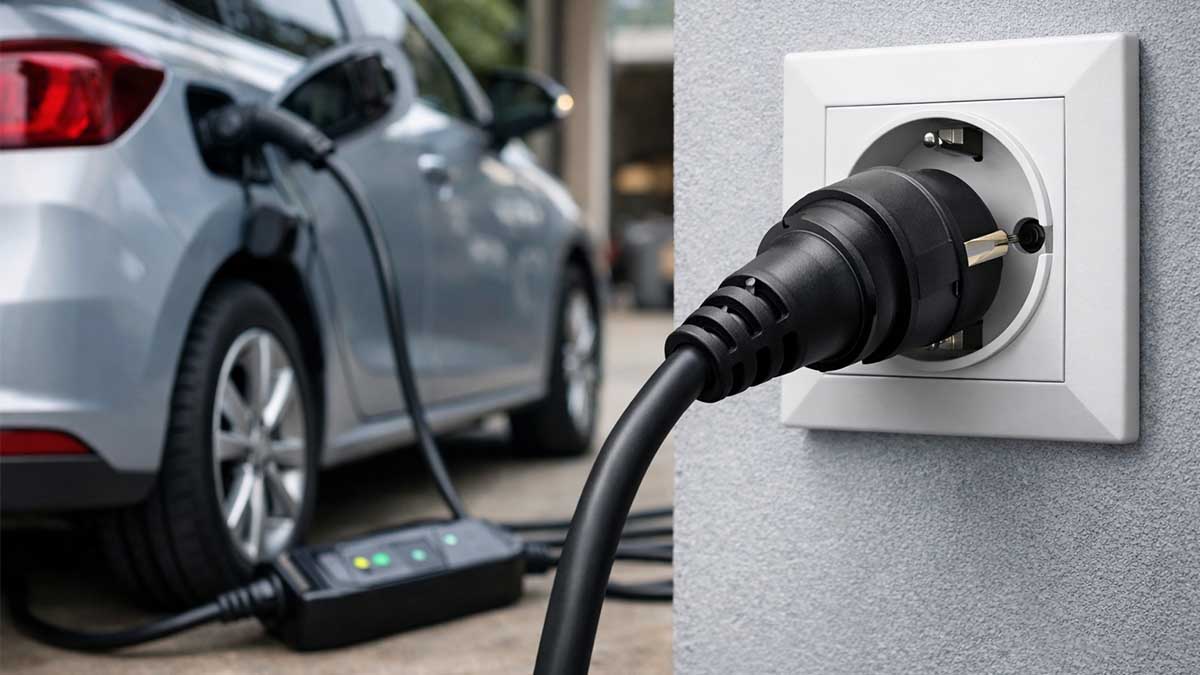
Schuko sockets (Type E/F) are common across Europe. That is why they show up in real charging situations like rentals, trips, and temporary parking. A portable EV charger can work on a Schuko outlet for short, occasional sessions, especially when you just need a practical top-up.
Long or frequent sessions need more care. Heat builds over time, and weak contact becomes obvious once the socket warms up. In most cases, the first risk point is the wall connection, not the vehicle.
Occasional use, not a daily setup
A household socket can handle many everyday loads, but EV charging is a steady load that can run for hours without a break. If you use Schuko once in a while, good habits usually keep it stable. If it becomes a daily routine, the socket and its wiring take repeated heat cycles, and small weaknesses show up more often.
When charging starts to feel inconsistent, the reason is often simple. The socket is worn, the contact is loose, or the circuit is shared with other loads.
Socket type, real-world limits
Type F is widely called Schuko, and Type E is common in parts of Europe. Many homes have sockets that accept both styles, so the plug may fit with no drama. A normal fit still does not prove the socket is healthy, because contact pressure is inside the socket body.
Schuko is often labeled 16A, but continuous charging is where quality differences show up. Contact wear, installation quality, and the condition of the terminals matter more than the printed number.
Charging time changes everything
A one-hour top-up usually stays within a comfortable margin. An overnight session gives heat time to build, especially if the contact is not tight. If you plan to charge for many hours, treat the setup like unknown equipment and test it under load before you commit to a full session.
It also helps to set realistic expectations. On a typical 230V supply, 6A is roughly 1.4 kW, and 8-10A is roughly 1.8-2.3 kW.
Many cars will add a modest amount of range per hour at that level, often in a broad ballpark like 6-12 km per hour, but it varies a lot by vehicle and conditions. This is why Schuko can be useful for topping up, yet frustrating as a primary routine.
Socket condition comes first
Start with what you can check without tools. The faceplate should feel solid, not loose or floating. The plug should insert fully and feel tight, with no wobble. If the plug sags or feels soft in the socket, that is already a warning before you even start charging.
Look for signs of past stress. Discoloration, cracking, or a slightly melted look suggests the socket has run hot before. Any hot plastic smell is a hard stop signal.
Moisture changes the rules. Damp garages, outdoor sockets, and sockets near sinks add risk. If the connection cannot stay dry and protected, skip the long session.
Heat starts at the contact point
Most Schuko charging problems begin at the socket. The current is steady, and the contact area is relatively small. If contact pressure is weak, resistance rises and heat follows.
Once heat appears, you may see protective behavior. This can include current reduction, pauses, retries, or breaker trips when other loads switch on. It can look random from the outside, but the trigger is often the same: a weak contact point under a long steady load.
First-session routine
Treat the first charge as a controlled trial. Start with a conservative current. Keep the cable relaxed so it does not pull sideways on the plug. Place the control box where it stays dry, ventilated, and not buried under items on the floor.
Let it run for 15-20 minutes, then check the plug and socket area. A slight warmth can be normal. Rapid heat rise is the problem.
A practical rule is this: if you cannot keep your hand comfortably on the plug body for a few seconds, stop and address the connection.
If everything stays stable, continue. For an overnight session, do one more check later in the charge, especially when the socket is older or the environment is warm.
A routine that works in real homes looks like this: start conservative, run 15-20 minutes, check heat and stability, then continue only if it stays consistent.
Stop signs that matter
These signs usually show up early. If the setup heats up in the first 20 minutes, it rarely improves later. Stop if the plug feels loose or starts to sag, if the faceplate warms up quickly, if the plug body becomes hot to the touch, or if you notice a hot plastic odor.
Stop as well if charging stops repeatedly without a stable pattern, or if the breaker trips when other household loads turn on.
Lowering current can reduce stress, but it is not a fix for a loose contact. If the connection point is unstable, repair the socket or switch to a more suitable supply option.
Extra connections add risk
Adapters and extension cords add contact points. Each contact point is a place where a loose fit can create heat. Long cords can also introduce voltage drop, which may make charging less stable.
A direct plug into a solid wall socket is usually safer than building a chain. Avoid daisy chains and multi-outlet strips. Avoid running a coiled cable under load, because coils trap heat.
If an extension is unavoidable, treat it as part of the system. It needs a real current rating, solid plugs, and a tight fit at both ends. Then apply the same first-session routine and stop signs without exception.
Pick the safer path
Use the table to match your use case to a safer habit.
Use case
Main risk
First check
Safer approach
Occasional 1-2 hour top-up
Loose contact, partial insertion
Plug fit and socket stability
Conservative current, quick recheck
Overnight 6-10 hours
Heat buildup, shared-load trips
Socket condition, signs of shared circuit
Lower current, mid-session check
Frequent long sessions
Accelerated wear, recurring heat
Wiring quality, professional inspection
Upgrade to a dedicated solution
A clear upgrade point
If Schuko charging is rare, careful setup and monitoring usually keeps it under control. If it becomes frequent, wear and heat cycles add up. Even a socket that looks fine can drift into loose contact over time, especially in older properties or heavily used outlets.
A dedicated circuit and a proper charging solution are the usual step up. The benefit is not only speed. The benefit is stable contact and a more predictable supply path.
FAQ
Is it safe to charge an EV from a Schuko socket overnight?
It can be done, but overnight sessions need extra caution. Heat has time to build if the socket is worn or the plug fit is not tight. If the plug or faceplate warms up quickly in the first 15-20 minutes, do not continue overnight.
What current should I use on Schuko for portable EV charging?
Start conservative. Then let the first-session check decide the next step. Socket condition, wiring quality, and shared loads matter more than a single universal number.
How warm is too warm at the plug?
Slight warmth can be normal. Fast-rising heat is not. If the plug body feels hot to the touch, or you cannot keep your hand comfortably on it for a few seconds, stop and fix the connection.
My charger stops and restarts, but the breaker did not trip. Why?
This often points to charger protection rather than a hard trip. Common triggers are an unstable contact point, heat at the plug, or voltage dips under load. Treat it as a warning and re-check plug fit and temperature at the socket.
Can I use an extension cord or a travel adapter with Schuko?
It adds risk because it adds contact points. Loose fits and extra resistance can create heat. If you cannot avoid it, use properly rated equipment, avoid daisy chains, and apply the same 15-20 minute check at every connection.
Type E vs Type F, does it matter for charging?
For charging safety, socket condition matters more than the letter. Many sockets accept both styles, but contact pressure varies widely. If the plug fit feels loose, treat it as unsafe even if the plug type is correct.
Related guides
If you need to choose the right plug type by region and site conditions, portable EV charger power plug guide is the best starting point. If you often charge at workplaces, marinas, campgrounds, or industrial sites, CEE/IEC 60309 blue 16A vs 32A for portable EV charging is the better match for single-phase, and CEE/IEC 60309 red 3-phase 16A vs 32A for portable EV charging fits three-phase setups. For North America, NEMA 6-50 vs 14-50 outlet guide for portable EV charging helps you choose the outlet, and NEMA 14-50 for portable EV charging covers first-session checks in more detail.
Read More


 Contact Us


 English


 IPv6 network supported