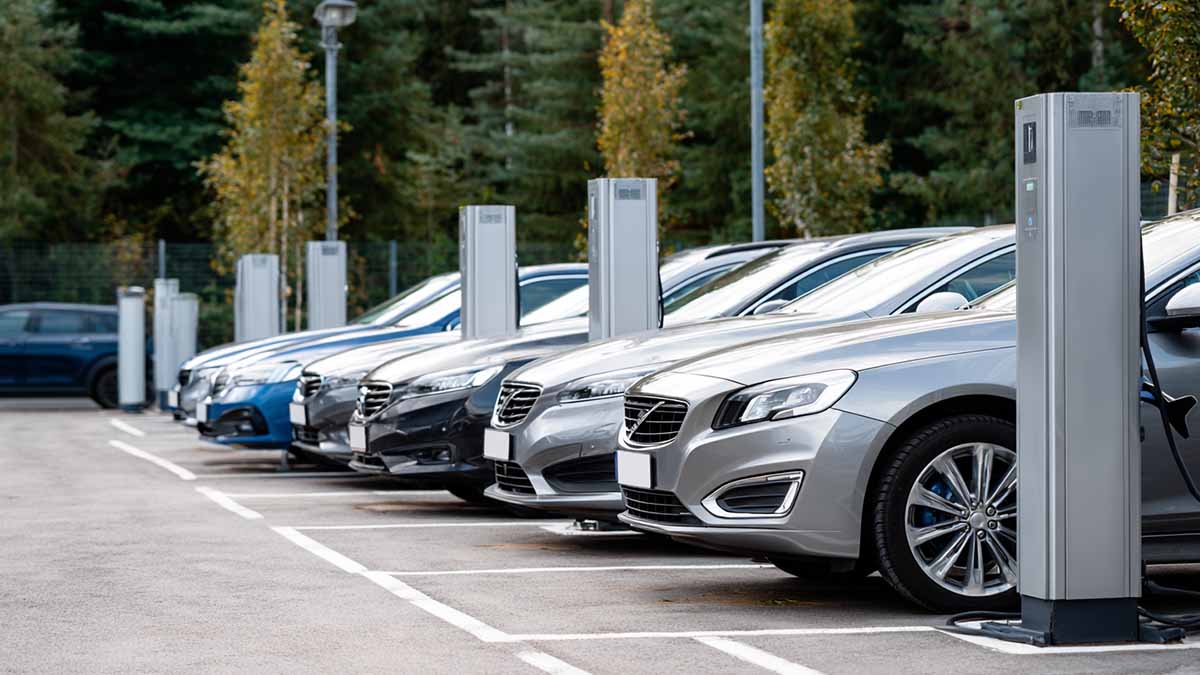
 What Is EVSE? A Complete Guide to Electric Vehicle Supply Equipment and How It Works
Nov 04, 2025
What EVSE MeansEVSE stands for Electric Vehicle Supply Equipment. In everyday language, people say EV charger, charging station, or charge point. EVSE is the hardware that safely delivers power from the grid (or onsite generation) to the vehicle inlet.
A quick terms check keeps things clear: a site is the physical location with one or more parking bays; a port is a single usable output at a time; a connector is the physical plug at the end of the cable; and an EVSE is the unit that controls and protects the power flow. The industry keeps the term EVSE in specifications and codes because it stresses safety functions and control logic, not just power.
How It WorksThere are two charging paths. With AC charging, the EVSE provides safe AC power and signaling, and the car’s on-board charger (OBC) converts AC to DC for the battery. With DC fast charging, rectification happens off-board: the DC charger supplies controlled DC directly to the battery, so charging power can be much higher.
Every session starts with a handshake. The control pilot line confirms that the cable is connected, checks grounding, advertises available current, and lets the car request start/stop. Protective devices sit in the power path: contactor/relay for line isolation, RCD/GFCI for ground-fault protection, over-current protection, and temperature sensing along cable and connector to prevent heat rise. A metering element records kWh. A control board runs firmware, shows status on an HMI or LEDs, and hosts a networking module if the unit is online.
Good systems plan for offline moments. If the network drops, a safe default current and local start/stop keep you running, and error codes remain available onsite for quick diagnosis.
Charging LevelsBelow is a practical view of levels, typical power, where each fits, and the trade-offs.
Level
Input (typical)
Power (typical)
Best Fit
Pros
Cons
Level 1 (AC)
120 V single-phase
~1.4 kW
Overnight at home; light daily miles
Lowest install cost; uses existing outlet
Slow; sensitive to shared circuits
Level 2 (AC)
208–240 V single-/three-phase
7–22 kW
Homes, workplaces, depots
Fast enough for daily turnover; wide hardware range
Needs dedicated circuit; plan cable run and voltage drop
DC Fast Charging
400–1000 V DC
50–350+ kW
Highways, public hubs, heavy-use fleets
Trip-saving speed; power sharing options
Highest CAPEX/OPEX; thermal management matters
Session time depends on vehicle limits, state of charge, temperature, and how the charger shapes its power curve. More kW does not always mean the car will accept it; the vehicle sets ceilings and tapers as the battery fills.
Connectors And StandardsConnector types track region and power class, with growing overlap:
J1772 (Type 1) for North America AC charging;
Type 2 for Europe and many other regions, including three-phase AC up to 22 kW in typical wallboxes.
CCS1 (North America) and CCS2 (Europe and others) combine AC pins with DC fast pins for one inlet on the car.
J3400 (often called NACS) is expanding across North America; adapters and dual-standard sites are common during the transition.
CHAdeMO persists in parts of Asia and on some legacy vehicles.
For operations, OCPP helps a network or operator talk to many charger brands; OCPI helps roaming between networks. On the installation side, follow local electrical code for circuit sizing, protection devices, labeling, and inspection.
Installation And Compliance BasicsHomeCheck panel capacity and the target circuit size before picking hardware. Keep cable runs sensible to avoid voltage drop; avoid tight coils that trap heat. Choose cable length to reach the inlet without strain, and confirm enclosure rating if the unit will face rain, sun, and dust. Where permits apply, book inspection early.
CommercialThink like your users. Wayfinding and signage reduce idle bays. Access control and payment need to be simple. Plan cable management so connectors stay off the ground and don’t become tripping hazards.
Network reliability matters as much as nameplate kW; build in redundancy, and map a local-control fallback. Metering and billing should produce clean session records.
Fleet And DepotsSize circuits and transformers for the combined load, then apply load management so not every vehicle charges at full power at once. Balance dwell time, shift change windows, and route needs.
Keep spare parts for wear items (contactors, cables, connectors), and define clear RTO targets for uptime. Consider environmental factors—cold mornings and hot afternoons shift the thermal and taper behavior of vehicles and cables.
FAQs
Is EVSE the same as a charger?No for AC: the car’s on-board charger converts AC to DC. The EVSE supplies safe AC and control signals. For DC fast charging, the off-board unit is the charger.
How much faster is Level 2 than Level 1?Roughly 5–10× by power. Typical home Level 2 at 7–11 kW can add about 25–45 km of range per hour depending on the vehicle and conditions.
Which connector should I pick?Match your vehicles and region. In North America that often means J1772 for AC with growing J3400 support; CCS1 or J3400 for DC. In Europe and many other regions, Type 2 for AC and CCS2 for DC.
What cable length is sensible?Long enough to reach the inlet without pulling or crossing walkways. For home, 5–7.5 m covers most driveways. For public sites, plan holsters and reach for both left and right inlets.
Workersbee products and services• DC connectors and cablesLiquid-cooled CCS2 DC connector for high-current public sites; naturally-cooled CCS2 connector for 250–375 A ranges; matching cable sets and spare kits for field service.
• AC connectors and portable chargingType 1 and Type 2 portable EV chargers for homes and light commercial use; compatible cable assemblies and adapters where permitted.
• Engineering supportApplication guidance for connector and cable selection, thermal and ergonomics checks, and maintenance plans; assistance with certification documentation for typical compliance needs.
• After-sales and supply
Spare parts packages, replacement cables and handles, and coordinated deliveries for multi-site rollouts.
If you’re scoping a project and want a quick sanity check, share your target power, connector type, and site conditions. We’ll suggest a suitable option from a liquid-cooled DC connector, a naturally cooled CCS2 connector, or a Type 1/Type 2 portable EV charger, and outline lead times, spare sets, and service options.
Read More

 Power Up Your Business:7 Benefits of Owning an EVSE Charger


 Contact Us


 English


 IPv6 network supported