Home

Level 2 EV charging

  • EV Charging Levels Explained: Level 1, Level 2 and DC Fast Charging EV Charging Levels Explained: Level 1, Level 2 and DC Fast Charging
    Nov 25, 2025
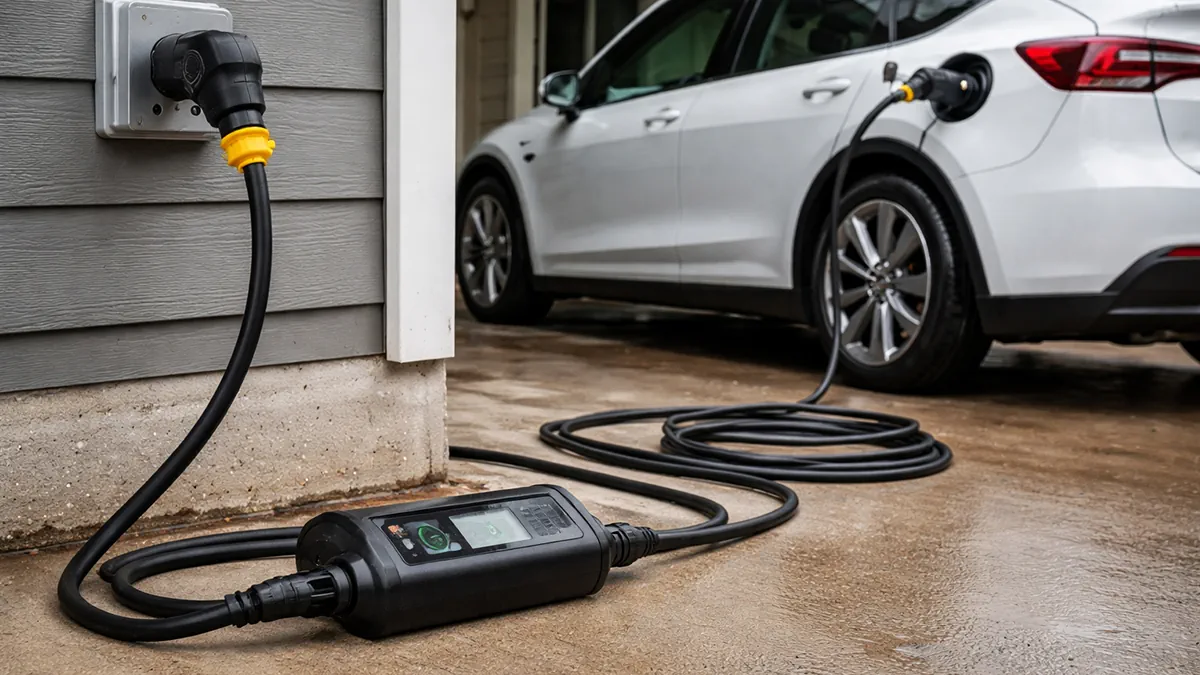
    Why EV charging levels matter more than just “slow, medium, fast”Most drivers hear Level 1, Level 2, DC fast charging and translate that as slow, medium, fast. In reality, each level is tied to a different power range, cost, and use case. The right level can turn charging into a background task you barely notice. The wrong level can mean queues at fast chargers, higher running costs, or a wallbox that is overkill for your driving pattern.   Charging levels affect daily life in three main ways: how long the car stays parked, how much energy it needs in that window, and how much you want to spend on hardware and grid capacity.   What the three EV charging levels actually areCharging levels are a simple way to group power ranges that show up again and again in the real world.   Level 1 charging: slow backup from a household outlet• Uses a standard household outlet in markets with 120 V supply• Power around 1–2 kW• Best for very light use and backup charging   Level 2 charging: everyday home and workplace charging• Uses a dedicated circuit at 208–240 V (single phase) or 400 V (three phase)• Power typically 3.7–22 kW depending on grid and hardware• Covers most daily home and workplace charging   DC fast charging: high power when time is tight• Uses dedicated DC equipment that converts power inside the station• Power from about 50 kW up to several hundred kilowatts• Used on highways, busy depots and sites where time is tight   AC versus DC chargingFor AC charging, the car does the heavy lifting. The wallbox or charge point delivers AC power, and the car’s onboard charger converts that to DC at a limited rate. This keeps hardware small and affordable, which is ideal in homes and many workplace or destination car parks.   For DC fast charging, the station converts AC grid power to DC and manages a much higher current directly into the battery. The car shares its preferred voltage and current limits, and the station follows that profile. This moves cost and complexity out of the vehicle and into the infrastructure, which is why DC equipment is larger, heavier, and more expensive, but also able to deliver very high power.   AC levels decide how fast a car can charge based on its onboard charger and the circuit feeding it. DC fast charging depends more on the station’s capability, the battery state of charge, and temperature limits.   Level 1 EV charging: when very slow is still enoughLevel 1 uses a standard low-power outlet, common in regions with 120 V mains. The power is usually around 1–1.9 kW. That can translate to roughly 3–5 miles of range per hour for many cars.   This sounds slow, but there are use cases where Level 1 works:• Short daily commutes and low yearly mileage• Cars parked at home for 10–12 hours almost every night• Second cars that move very little during the week   Advantages• Almost zero installation cost if the circuit is already safe and dedicated• Very gentle on the grid and often on the battery as well   Limits• Large battery packs can take days to refill from low state of charge• Not suitable where several drivers share one parking spot or have irregular shift patterns• In many markets, regulations and safety rules limit how casually a household socket can be used for long charging sessions   Level 1 makes sense when driving needs are predictable and modest and when the home’s electrical system cannot easily support higher power.   Level 2 EV charging: the everyday sweet spot for home and workplaceFor most drivers with access to off-street parking, Level 2 is the practical target. It uses a dedicated circuit and EVSE at 208–240 V single phase or up to 400 V three phase in many regions. Typical power spans from 3.7 kW up to 11 or 22 kW, depending on grid and hardware.   At these powers, an overnight session can comfortably refill the battery after a long day. For example, a 7.4 kW charger can often add around 25–30 miles of range per hour, which is enough to recover well over 150 miles in six hours for many vehicles.     Common use cases• Home wallboxes for one or two cars• Workplace charging where cars remain parked for several hours• Hotels, shopping centers, and public car parks focused on park and charge while you do something else   Benefits• Overnight charging covers almost any daily commute• Power levels match the way cars already park and rest• Installation cost and grid impact remain manageable in most residential and commercial buildings   Limits• Requires a dedicated circuit and suitable panel capacity• May need professional installation and local inspection• For very high annual mileage or multi-shift fleets, Level 2 alone may be too slow   Many drivers mix a fixed wallbox with portable options. A portable EV charger for home use can bridge different outlets on the road or at a second home while keeping Level 2 convenience where it matters most.   DC fast EV charging: when time becomes the main constraintDC fast charging, sometimes called Level 3 in casual speech, starts around 50 kW and now reaches 350 kW or more on some highway corridors. The key difference is how power is delivered across the charging session.   At low state of charge with a warm battery, many vehicles accept close to their maximum DC rating. In this phase, a 100 kW session can add meaningful range in 10–15 minutes. As the battery fills and reaches higher state of charge, the car requests less current to protect cell life and manage heat. The driver sees this as a taper in power, especially above about 70–80 percent.     Typical use cases• Long-distance travel on motorways and expressways• Quick top-ups during the day for ride-hailing or delivery vehicles• Fleet depots where vehicles must turn around quickly between shifts   Considerations• Per-kWh cost is often higher than AC charging, once service fees and demand charges are factored in• Repeated high-power charging can stress the battery if cooling is weak or software is not well tuned• Stations demand strong grid connections, careful load management, and robust connectors and cables   High-power DC fast charging connectors for public sites take these stresses into account with higher current ratings, thermal management, and ergonomic designs that still allow drivers to handle the cables safely.     EV charging levels comparison table Below is a simplified comparison. Numbers are typical ranges, not exact values for every vehicle or region. Charging level Typical supply and power Approximate range added per hour Typical 10–80% charge time for a mid-size EV Best suited for Level 1 120 V AC, 1–1.9 kW 3–5 miles (5–8 km) 20–40 hours from low state of charge Very light use, second cars, backups Level 2 208–240 V AC or 400 V AC, 3.7–22 kW 15–35 miles (25–55 km) 4–10 hours depending on power and battery Daily home and workplace charging DC fast Dedicated DC, 50–350 kW+ 100–800 miles (160–1300 km) per hour at low SOC (for the time spent) Roughly 20–45 minutes for a large part of the usable range Highways, depots, high-utilization fleets   Actual figures depend on vehicle efficiency, weather, and the charging curve set by the manufacturer. Level 1 is about slow recovery, Level 2 is overnight and destination convenience, and DC fast charging is short, intense top-ups.     How drivers can choose the right charging level Step 1: daily and weekly mileage• If most days are under 40–50 miles and you have many hours to park at home, Level 1 combined with occasional public Level 2 might work.• If days often exceed 60–80 miles or you stack many short trips, Level 2 at home makes life much easier.   Step 2: access to off-street parking• If you have a private driveway or garage, a properly installed Level 2 solution is usually the most efficient long-term plan.• If you rely on street parking or shared lots, public Level 2 and DC fast chargers become the backbone of your strategy.   Step 3: travel pattern and long trips• If you mostly drive within a city and rarely take road trips, regular Level 2 and occasional DC top-ups are enough.• If you take frequent long intercity journeys, learning the DC fast charging network on your usual routes matters more than squeezing another kilowatt out of a wallbox.   Step 4: budget and electrical capacity• When panel capacity is tight, a modest Level 2 unit with load management is often a better choice than attempting the maximum possible power.• A well-sized solution that runs smoothly every night is more valuable than a theoretical high-power option that trips breakers or needs costly upgrades.   If you mainly charge at home, this guide on Level 1 vs Level 2 home charging can help you decide which setup fits your daily routine.     What EV charging levels mean for sites, fleets, and charging hardware Site hosts and fleet operators face a different question: less about which level fits a commute and more about how many vehicles need how much energy in each parking window. Charging levels turn into a planning tool across several dimensions.   Fleet teams that want a step-by-step approach can use our guide on what level of EV charging fleets really need.   Parking time and turnover• Supermarkets, restaurants, and malls see dwell times between 30 minutes and a few hours. Medium-power Level 2 units often cover that window, with a small number of DC fast chargers reserved for drivers in a hurry.• Highways and intercity corridors have short stops and huge energy needs. Here, DC fast charging dominates, with power sized to keep queues short at peak times.• Depots and fleet yards can mix overnight Level 2 rows with a few high-power DC posts for vehicles that miss their slot or start second shifts.   Grid connection and infrastructure• Large clusters of Level 2 charge points spread load more gently across time.• High-power DC units concentrate power demand and may need medium-voltage connections, dedicated transformers, and smart energy management.• The choice of charging levels also shapes cable runs, protective devices, and mechanical layouts on the site.   Connectors and cables• AC solutions use lighter connectors and cables sized for modest current levels and daily handling by a wide range of drivers.• High-power DC fast chargers rely on robust connectors, thicker cables, and sometimes liquid cooling to keep handles manageable while carrying several hundred amps.• For operators, investing in durable EV connector and cable manufacturing helps reduce downtime and maintenance overhead over the station’s lifetime.   For a closer look at how AC and DC choices change connector and cable design, see our overview of AC vs DC EV charging hardware.   For projects that need to turn these charging levels into real hardware, Workersbee supports AC home and workplace charging as well as public DC fast charging sites. Our portfolio covers portable EV chargers for home use, AC wallboxes for destination charging, and DC fast charging connectors and cables engineered for high-duty public and fleet operation.     Common questions about EV charging levels Is there such a thing as Level 4 charging?People sometimes use Level 4 as a casual way to describe very high power, megawatt-scale charging for heavy vehicles. In most standards and regulations there are only AC Levels 1 and 2 and DC fast charging categories, even at very high power.   Can every EV use DC fast charging?Not all vehicles have DC fast charging hardware. Some city cars or plug-in hybrids support AC only. Even when DC is available, each model has its own maximum DC power and connector type, so drivers still need to match the station to the car.   Does frequent DC fast charging damage the battery?Modern batteries and thermal systems are designed to tolerate regular DC fast charging within the stated limits. However, constantly charging at high power to very high state of charge can add stress compared with gentler AC charging that keeps most sessions between lower and mid-range state of charge.   Are charging levels the same in every country?The idea of slow, medium, and fast charging is global, but voltages, plug types, and typical power levels vary. Some regions use three-phase AC widely, others mostly use single-phase. DC fast charging also appears with different connector standards, but the basic role of each level in daily life is very similar.   Do I still need home charging if I live near DC fast chargers?It is possible to rely on public DC fast charging alone, especially in dense urban areas, but it can be less convenient and sometimes more expensive. A mix of home or workplace Level 2 charging for routine use and DC fast for trips usually gives a smoother experience.
    Read More

  • How to Use Public EV Chargers How to Use Public EV Chargers
    Nov 17, 2025
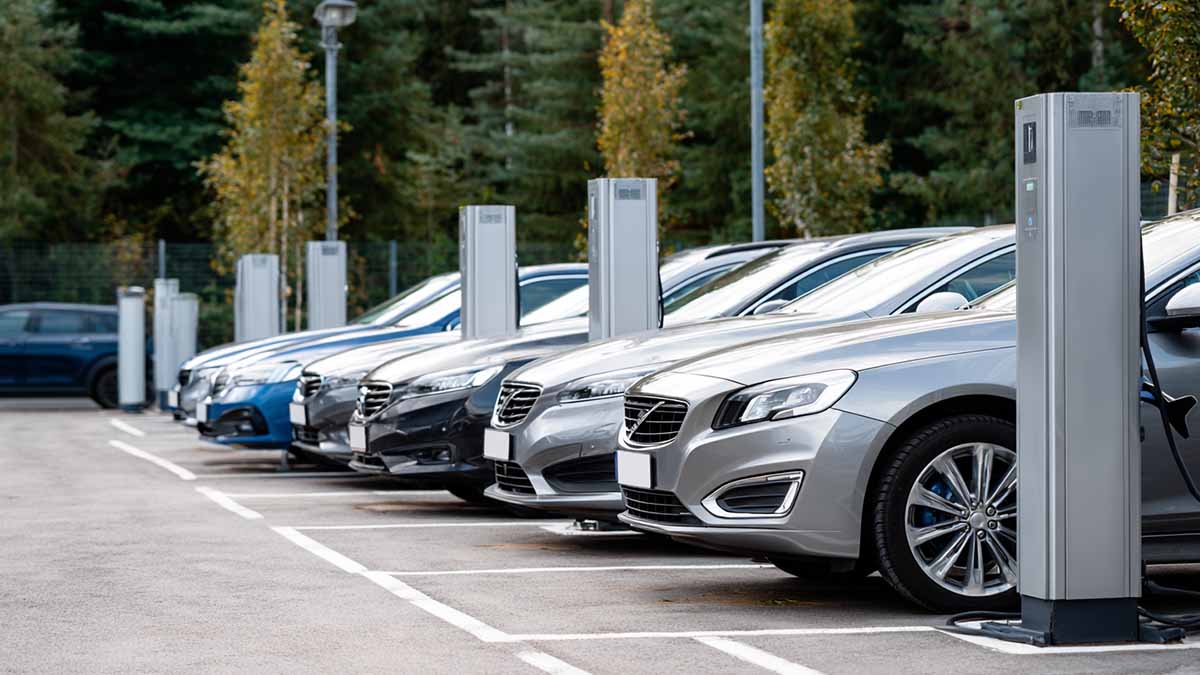
    Read this once and you can handle your first public charge. You’ll know what plug fits, how to pay, how long it takes, and how to fix common hiccups.     Public charging: AC vs DC AC Level 2 shows up at parking lots, hotels, and workplaces. Typical power is 6–11 kW. Good for topping up while you do something else. DC fast is for trips. Power ranges from 50–350 kW. You stop for minutes, not hours. Level 2 is slower but cheaper per hour. DC fast costs more and gets you moving sooner.     Check compatibility before you go Your inlet decides what you can use. In North America, AC is J1772 and DC is often CCS. In Europe, AC is Type 2 and DC is CCS2. Some older Japanese models use CHAdeMO. J3400 (often called NACS) is expanding. If an adapter is involved, confirm support for both your car and the site.     Which connector do you need—CCS, CHAdeMO, or NACS (J3400)? Your car’s DC inlet is the rule. Many newer North American models use CCS. Some legacy models use CHAdeMO. J3400 access is growing. If your car needs an adapter, verify support and any power limits before you rely on it.     Compatibility decision table Your vehicle inlet (region) You can use these public plugs Notes AC J1772 + DC CCS1 (North America) Level 2: J1772; DC fast: CCS1 Some sites also list J3400 stalls; adapter rules vary by model. AC Type 2 + DC CCS2 (UK/EU) Level 2: Type 2 (often socketed); DC fast: CCS2 Bring your own Type 2 cable for many AC posts. CHAdeMO (selected legacy models) DC fast: CHAdeMO Coverage is shrinking in some regions; plan ahead. J3400/NACS inlet DC fast: J3400; Level 2: J3400 or adapter to J1772 Non-Tesla access depends on site and app eligibility. Tesla J1772-only cars (older imports) Level 2 via J1772; DC often needs an adapter Check adapter power limits.     Get ready: app, payment, cable, adapters Set up at least one network app and add a card. If the network offers an RFID card, keep it in the car. In the UK/EU, pack a Type 2 cable for socketed AC posts. If your inlet and local plugs don’t match, bring the right adapter and know how to attach it safely.   Do I need an app or can I just tap a card? Both work in many places. Apps show live status and member pricing. Contactless cards are quick for one-off sessions. Save the network phone number in case activation fails.     Find a station and confirm details on site Search “EV charging” in your maps app, filter by connector and power, then pick a site with recent photos and good lighting.   Filter by connector, power (kW), availability, and amenities. Check recent photos for cable reach and layout. On arrival, re-check the stall’s posted power and tariff, time limits, and idle fees. Park so the cable isn’t stretched. Pick a well-lit bay at night.   Safety in rain: charging hardware is weather-rated. Keep connectors off the ground, make a firm click-in, and if you see an error, stop and call support.     How much does public EV charging cost? Networks use per-kWh, per-minute, per-session, or mixed pricing. Level 2 is slower but cheaper per hour. DC fast costs more and may add idle fees. Confirm the live tariff on the screen or in the app.   As a rough guide, many U.S. DC fast sites price around $0.25–$0.60 per kWh; adding ~25 kWh often lands near $7–$15. Per‑minute sites may range about $0.20–$0.60/min, so a ~30‑minute stop can be ~$6–$18. Local taxes, demand charges, and member plans change the math. Parking fees, if any, are separate.     The six steps that work almost everywhere 1) Park and read the power and fee info on the screen. 2) Plug the connector until it clicks. 3) Start the session with app, RFID, or contactless. 4) Confirm charging on the unit and in your car. 5) Watch progress; charge rate usually slows at higher state of charge. 6) Stop the session, unplug, re-dock the handle, and move the car.     While charging: speed, taper, and when to leave Charging is fastest at low state of charge. As the battery fills, current tapers. On trips, aim for the energy to reach your next stop with a buffer, not 100%. Watch for time limits and idle fees when charging ends.     How long does a public charge usually take? It depends on arrival SOC, charger power, and your car’s intake curve. Use the table below as a rough guide and keep a buffer.     Time expectations Goal Charger power Typical minutes* Add ~25 kWh on Level 2 7 kW ~210–230 min Add ~25 kWh on Level 2 11 kW ~130–150 min Add ~25 kWh on DC fast 50 kW ~30–40 min Add ~25 kWh on high-power DC 150 kW+ ~12–20 min *Actual times vary with battery size, temperature, arrival SOC, and load sharing.   End the session and be courteous Stop in the app or on the unit. Unplug, re-dock the handle, tidy the cable, and move. Keep sessions short when others are waiting. Follow posted limits to avoid idle fees.   What’s the proper etiquette at public chargers? Don’t block bays once you’re done. Re-dock the connector. If there’s a queue, take only the energy you need and free the stall.     Quick fixes that work If payment fails, try another method or another stall. If charging won’t start, seat the connector firmly and check app alerts. If the port or handle won’t release, end the session, use the vehicle’s charge-port unlock, wait a few seconds, then pull straight. If the unit faults, note the station ID and call support.     What should I do if the connector is stuck and won’t release? End the session, try the vehicle’s unlock, wait for the latch to cycle, then pull straight. If it’s still locked, call the support number on the unit.     What changes by region North America: Public AC uses J1772; DC fast is CCS with growing J3400 access. Many new sites let non-Tesla cars use designated J3400 stalls. UK/EU: Many AC posts are socketed Type 2; bring your own cable. DC fast is CCS2. Contactless pay is common on newer sites. APAC: Standards vary by market. Check your route and carry the right cable/adapter where allowed.     Can non-Tesla drivers use Tesla Superchargers now? In many regions, yes, at eligible sites and stalls. Eligibility and adapters vary by vehicle and location. Check the network or vehicle app for eligibility before you plan around it; if an adapter is needed, confirm model support and power limits.     Pocket checklist • App installed and payment set • Correct connector or adapter packed • Type 2 cable (if your region uses socketed AC posts) • Plan A and Plan B chargers saved • Arrive low, leave with a buffer, avoid idle fees     If you’re comparing handle styles or cable ergonomics before a fleet rollout, see EV connector options from Workersbee to understand what operators deploy.   For homes and depots that need a flexible backup, portable EV chargers from Workersbee can bridge slow AC posts or temporary sites on travel days.
    Read More
  • What Is EVSE? A Complete Guide to Electric Vehicle Supply Equipment and How It Works What Is EVSE? A Complete Guide to Electric Vehicle Supply Equipment and How It Works

    Nov 04, 2025
    What EVSE MeansEVSE stands for Electric Vehicle Supply Equipment. In everyday language, people say EV charger, charging station, or charge point. EVSE is the hardware that safely delivers power from the grid (or onsite generation) to the vehicle inlet.   A quick terms check keeps things clear: a site is the physical location with one or more parking bays; a port is a single usable output at a time; a connector is the physical plug at the end of the cable; and an EVSE is the unit that controls and protects the power flow. The industry keeps the term EVSE in specifications and codes because it stresses safety functions and control logic, not just power.     How It WorksThere are two charging paths. With AC charging, the EVSE provides safe AC power and signaling, and the car’s on-board charger (OBC) converts AC to DC for the battery. With DC fast charging, rectification happens off-board: the DC charger supplies controlled DC directly to the battery, so charging power can be much higher.   Every session starts with a handshake. The control pilot line confirms that the cable is connected, checks grounding, advertises available current, and lets the car request start/stop. Protective devices sit in the power path: contactor/relay for line isolation, RCD/GFCI for ground-fault protection, over-current protection, and temperature sensing along cable and connector to prevent heat rise. A metering element records kWh. A control board runs firmware, shows status on an HMI or LEDs, and hosts a networking module if the unit is online.   Good systems plan for offline moments. If the network drops, a safe default current and local start/stop keep you running, and error codes remain available onsite for quick diagnosis.     Charging LevelsBelow is a practical view of levels, typical power, where each fits, and the trade-offs. Level Input (typical) Power (typical) Best Fit Pros Cons Level 1 (AC) 120 V single-phase ~1.4 kW Overnight at home; light daily miles Lowest install cost; uses existing outlet Slow; sensitive to shared circuits Level 2 (AC) 208–240 V single-/three-phase 7–22 kW Homes, workplaces, depots Fast enough for daily turnover; wide hardware range Needs dedicated circuit; plan cable run and voltage drop DC Fast Charging 400–1000 V DC 50–350+ kW Highways, public hubs, heavy-use fleets Trip-saving speed; power sharing options Highest CAPEX/OPEX; thermal management matters   Session time depends on vehicle limits, state of charge, temperature, and how the charger shapes its power curve. More kW does not always mean the car will accept it; the vehicle sets ceilings and tapers as the battery fills.       Connectors And StandardsConnector types track region and power class, with growing overlap: J1772 (Type 1) for North America AC charging; Type 2 for Europe and many other regions, including three-phase AC up to 22 kW in typical wallboxes. CCS1 (North America) and CCS2 (Europe and others) combine AC pins with DC fast pins for one inlet on the car. J3400 (often called NACS) is expanding across North America; adapters and dual-standard sites are common during the transition. CHAdeMO persists in parts of Asia and on some legacy vehicles.   For operations, OCPP helps a network or operator talk to many charger brands; OCPI helps roaming between networks. On the installation side, follow local electrical code for circuit sizing, protection devices, labeling, and inspection.     Installation And Compliance BasicsHomeCheck panel capacity and the target circuit size before picking hardware. Keep cable runs sensible to avoid voltage drop; avoid tight coils that trap heat. Choose cable length to reach the inlet without strain, and confirm enclosure rating if the unit will face rain, sun, and dust. Where permits apply, book inspection early.   CommercialThink like your users. Wayfinding and signage reduce idle bays. Access control and payment need to be simple. Plan cable management so connectors stay off the ground and don’t become tripping hazards.   Network reliability matters as much as nameplate kW; build in redundancy, and map a local-control fallback. Metering and billing should produce clean session records.   Fleet And DepotsSize circuits and transformers for the combined load, then apply load management so not every vehicle charges at full power at once. Balance dwell time, shift change windows, and route needs.   Keep spare parts for wear items (contactors, cables, connectors), and define clear RTO targets for uptime. Consider environmental factors—cold mornings and hot afternoons shift the thermal and taper behavior of vehicles and cables.     FAQs Is EVSE the same as a charger?No for AC: the car’s on-board charger converts AC to DC. The EVSE supplies safe AC and control signals. For DC fast charging, the off-board unit is the charger.   How much faster is Level 2 than Level 1?Roughly 5–10× by power. Typical home Level 2 at 7–11 kW can add about 25–45 km of range per hour depending on the vehicle and conditions.   Which connector should I pick?Match your vehicles and region. In North America that often means J1772 for AC with growing J3400 support; CCS1 or J3400 for DC. In Europe and many other regions, Type 2 for AC and CCS2 for DC.   What cable length is sensible?Long enough to reach the inlet without pulling or crossing walkways. For home, 5–7.5 m covers most driveways. For public sites, plan holsters and reach for both left and right inlets.     Workersbee products and services• DC connectors and cablesLiquid-cooled CCS2 DC connector for high-current public sites; naturally-cooled CCS2 connector for 250–375 A ranges; matching cable sets and spare kits for field service. • AC connectors and portable chargingType 1 and Type 2 portable EV chargers for homes and light commercial use; compatible cable assemblies and adapters where permitted. • Engineering supportApplication guidance for connector and cable selection, thermal and ergonomics checks, and maintenance plans; assistance with certification documentation for typical compliance needs. • After-sales and supply Spare parts packages, replacement cables and handles, and coordinated deliveries for multi-site rollouts.     If you’re scoping a project and want a quick sanity check, share your target power, connector type, and site conditions. We’ll suggest a suitable option from a liquid-cooled DC connector, a naturally cooled CCS2 connector, or a Type 1/Type 2 portable EV charger, and outline lead times, spare sets, and service options.
    Read More

Need Help? leave a message

Leave A Message
Submit

home

products

whatsApp

contact