Home

NEMA 14-50

  • NEMA 6-50 vs 14-50 Outlet Guide for Portable EV Charging NEMA 6-50 vs 14-50 Outlet Guide for Portable EV Charging
    Jan 08, 2026
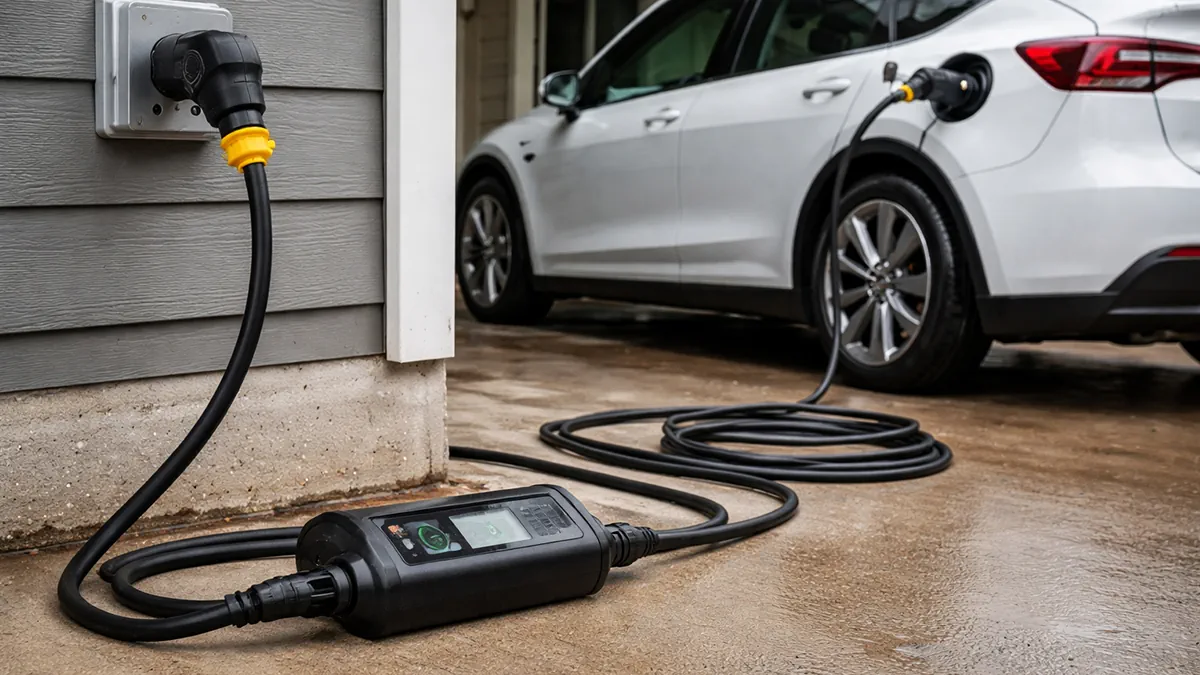
    A lot of people assume this is simple: a 240V outlet is a 240V outlet. Then reality happens. One site charges smoothly all night, another trips at random, another makes the plug end warm, and another starts strong and then throttles.   In most cases, the outlet label is not the real culprit. The real culprit is what the circuit was built for and how solid the plug connection is. NEMA 6-50 and 14-50 mainly help you predict those two things.   A quick choice in 30 seconds If you want a repeatable overnight routine, 14-50 is often the cleaner baseline because it is more commonly installed for EV or RV-style use. If you are adapting to an existing workshop outlet, 6-50 can be reliable when the circuit is not shared and the plug fit is solid. Charging speed is set by your circuit capacity and current setting, not by whether the outlet is 6-50 or 14-50.       Why charging feels inconsistent Portable EV charging is steady and long. Many high-power outlets in the real world are used in short bursts, get repurposed over time, or share load with other equipment. That is why things look fine at minute one but fail later.   Most of the frustration comes from the connection point and circuit behavior, not from the plug shape itself. A loose contact warms up over time. A shared circuit trips when other loads appear. Protective behavior in the charger or vehicle reduces current when heat shows up where it should not.   Trips mid-session usually points to shared load, a marginal circuit, or settings that are too aggressive for long sessions. A warm plug end usually points to weak contact tension, worn receptacle parts, or a plug that does not seat firmly. Throttling or power drop usually points to heat building at the contact point, causing the system to protect itself.   6-50 vs 14-50 in practice What matters on site NEMA 6-50 tends to imply NEMA 14-50 tends to imply Typical environment Workshop or equipment circuits Garage EV-ready or RV-style installs Circuit behavior More likely to be shared or repurposed More likely to be dedicated, not guaranteed Common failure pattern Random trips when other loads appear Plug fit and receptacle quality issues during long sessions Best fit Adapting to existing shop infrastructure Building a repeatable overnight routine Neither outlet is better by default. A great 6-50 on a stable circuit beats a loose 14-50 every time.     Three situations that explain most outcomes Workshop outlet, often 6-50 The biggest risk is not the outlet type. It is the circuit getting loaded by other equipment. If the outlet shares with welders, compressors, heaters, or other tools, you can see clean starts followed by random trips.   EV-ready garage install, often 14-50 This is usually more repeatable, but long sessions punish weak receptacles. If the plug has any wobble, resistance increases, heat builds, and performance drops or stops.   Travel or RV-style outlet, often 14-50 Variability is the story here. Outdoor exposure, frequent plug cycles, and unknown installation quality make maximum settings a poor default. Treat the first session as a test and earn your way up.     Outlet checks before you trust it You do not need a spec sheet to catch most problems. You need quick checks focused on the connection point. · The plug seats fully and does not wobble · The faceplate does not move when you touch the plug · No discoloration, cracking, or heat marks on the receptacle · The cable is supported, not pulling sideways on the plug · If it is an older outlet with lots of insertions, assume contact tension may be weak until proven otherwise   If you cannot confirm wiring or outlet condition, ask a licensed electrician to verify the installation before relying on it for long sessions.     The first-session rule that prevents most headaches Start conservatively on a new outlet. Recheck after 15 to 20 minutes. That is when a weak connection usually starts to show itself.   If the plug end feels warm or the fit feels loose, do not push through. Fix the connection point first. Replacing a worn receptacle is often a better solution than permanently dialing down current and hoping for the best.   For long sessions, EV charging is typically treated as a continuous load. Your stable setting is often below the breaker number people quote casually. Always follow local electrical code and the charger manufacturer settings.     Choosing the right path If you are planning a new, repeatable setup for overnight charging, 14-50 is often the cleaner direction because it is commonly installed with EV or RV use in mind.   If you are adapting to an existing workshop outlet, 6-50 can be perfectly reliable when the circuit is not shared and the receptacle is in good condition. When it becomes sometimes it works and sometimes it trips, assume shared load or weak contact until proven otherwise.   For a deeper first-session checklist focused on 14-50 outlet condition and plug fit, see NEMA 14-50 for Portable EV Charging: What to Check First.     Plug strategy for mixed sites If you charge in one predictable place, standardize around the outlet type that makes that site stable. Consistency beats a bag of adapters.   If your charging switches between garages and workshops, the goal changes. You want the routine to stay the same even when the wall outlet changes. A simple plug kit that covers the places you actually use is usually more reliable than stacking adapters and extra contact points.     FAQ Is 6-50 less safe than 14-50? Not inherently. Safety depends on outlet condition, plug fit, and whether the circuit is shared.   Which one is better for overnight charging? The one installed as a stable, dedicated outlet with a firm connection. In many garages that ends up being 14-50, but installation quality matters more than the label.   If I only have a 6-50 outlet today, what is the safest approach? Start conservatively, confirm the plug seats firmly, and recheck after 15 to 20 minutes. If warmth repeats or the fit is loose, stop and fix the connection point.     If your sites switch between 6-50 and 14-50, cut down on extra contact points and keep your setup simple. Workersbee Portable EV Charger can be configured with interchangeable wall-side plugs, so you can keep the same routine without stacking adapters.
    Read More
  • NEMA 14-50 for Portable EV Charging: What to Check First NEMA 14-50 for Portable EV Charging: What to Check First
    Jan 06, 2026
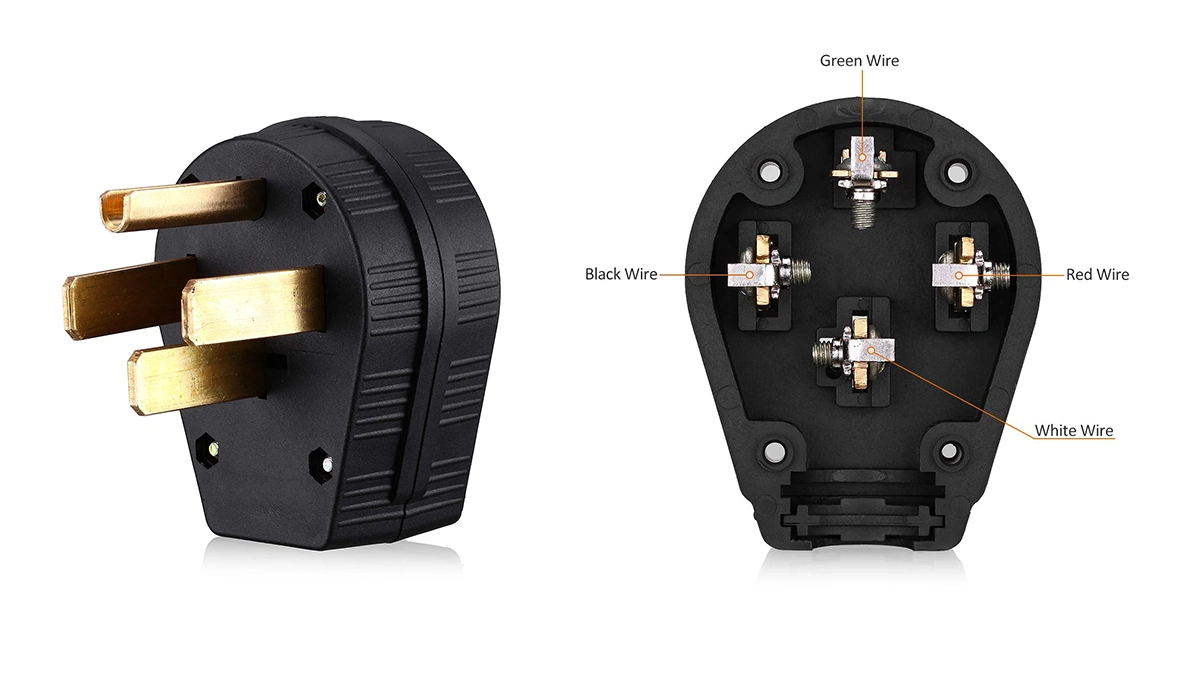
    A NEMA 14-50 outlet is one of the most common high-capacity wall outlets used for portable EV charging in North America. It can be a solid setup, but most problems come from the connection point, not the EV or the charger.   If you’re not sure what outlet you have, start with Portable EV Charger Power Plug Guide.     What a NEMA 14-50 outlet is NEMA 14-50 is a 4-prong outlet designed for 240V service. In real homes, it often appears in garages for EV charging, workshops for tools, and sometimes for RV use. Compared with a standard household outlet, it is built for higher power, but it still depends on installation quality and how tight the plug fits.       Where it shows up most · Home garages and driveways (dedicated EV outlet installs) · Workshops (shared utility circuits are common) · RV-style installations (sometimes repurposed for EV charging)   The same outlet label does not guarantee the same real-world stability. The cable route, receptacle quality, and the circuit behind it matter more than the plastic faceplate.     How to identify NEMA 14-50 on site Look for a 4-slot layout. Many receptacles are labeled 14-50. If the outlet is recessed, painted over, cracked, or visibly loose, treat it as a warning sign. A plug that does not seat firmly is a bigger risk than a lower charging speed.     What to confirm before the first charging session This is the short list that prevents most failures. If you’re not sure about the wiring or the outlet condition, ask a licensed electrician to confirm the installation before relying on it for long sessions. What to confirm What you are trying to avoid Practical tip Plug fit (seats fully, no wobble) Heat at the contact point If the plug feels loose, stop and fix the outlet first Breaker rating (if known) Nuisance trips or overload If you cannot verify, start at a lower current setting Dedicated vs shared circuit Hidden load from other appliances Shared circuits create unpredictable trips Outlet condition (no discoloration) High resistance and overheating Any browning or melting is a hard stop Cable routing and strain relief Pulling the plug partially out Keep the cable supported, no side-load on the plug       What charging speed to expect Portable chargers usually let you set or limit current. For long sessions, EV charging is typically treated as a continuous load, so the usable current is usually below the breaker rating. If you are unsure, start lower, confirm the plug stays cool, then move up.   Stability matters more than peak speed for overnight charging.     Common issues and what they usually mean Warm plug end: Warmth at the plug end is a sign of resistance at the contacts. Stop, let it cool, and check fit. If it repeats, the outlet or plug is not making a solid connection.   Random breaker trips: This often points to a shared circuit, a weak receptacle, or a conservative breaker device. Lower current and re-test. If it still trips, the installation needs attention.   Charging starts fine, then slows or stops: Many portable chargers reduce output when they detect heat or unstable input. That is the charger doing its job. Fix the cause instead of forcing higher current.   Frequent reliance on adapters: Adapters add contact points. Contact points are where heat begins. If you keep needing adapters, it is a sign the plug kit does not match the sites you actually use.   A simple setup flow 1. Confirm it is NEMA 14-50 and the plug seats firmly. 2. Verify circuit basics (breaker rating if available, dedicated vs shared). 3. Set a conservative current for the first session. 4. Monitor the plug end for the first 15–20 minutes. 5. If stable, keep that setting as your default for this site.     Plug kit choices that reduce surprises A good kit is not a bag of every plug in the world. It is the smallest set that covers your real charging environments. · Keep one primary NEMA 14-50 plug path for garage/workshop use. · Choose a cable length that reaches without tension. · Avoid stacking adapters. · Treat extension cords as a last resort, not a plan.     For multi-region projects, a charger with interchangeable power plugs can simplify site deployment. Standardize your on-site confirmation process so teams don’t rely on improvised workarounds. A portable charger with interchangeable power plugs helps keep multi-site deployments consistent. It reduces time lost to mismatched outlets and last-minute workarounds.     When a different approach makes more sense If the outlet will be used for frequent long sessions, the best upgrade is usually a more stable, purpose-built installation rather than repeatedly stressing the same receptacle. Even with a portable charger, your goal is repeatability.   For cable protection, strain relief, and site-ready accessories that keep the connection stable, Workersbee EV Cable & Parts can support a cleaner, safer installation.     FAQ Can I use NEMA 14-50 for daily charging? Yes, if the outlet is high quality, the plug seats firmly, and the circuit is suitable for long sessions. Daily use will expose weak receptacles quickly, so monitor early sessions and stop if the plug end warms up or the fit becomes loose.   Why does the plug get warm even at moderate current? Most cases come from contact resistance: a worn or loose receptacle, weak contact pressure, or a plug that doesn’t seat fully. Stop, let it cool, then check for wobble, discoloration, or a soft fit. If warmth repeats, the outlet should be repaired or replaced before continued use.   What current should I start with on a new NEMA 14-50 outlet? Start conservatively for the first session, then increase only after the plug end stays cool and the fit remains firm. Recheck after 15–20 minutes, since early warmth is usually a connection-point issue. If you can’t confirm the circuit details, keep the setting conservative.   When should I stop and fix the outlet instead of continuing to charge? Stop if any of these happen: the plug feels loose, the plug end gets hot, you see discoloration or melting, or the outlet faceplate shifts when you touch the plug. Those are connection-point problems that don’t improve with lower current alone.
    Read More

  • Portable EV Charger Power Plug Guide: NEMA vs IEC 60309 vs Wall Sockets Portable EV Charger Power Plug Guide: NEMA vs IEC 60309 vs Wall Sockets

    Jan 04, 2026
    Portable EV chargers don’t plug into the wall the same way everywhere. The wall-side outlet you have on site decides what plug you need, how stable the connection is, and how practical the setup will be for long sessions.   If you already know your outlet type, go straight to the Plug index table. If not, start with the setup sections below.     Plug index table Use this table to match your situation to the right page. Where you are charging What you’ll likely see Best-fit approach What to confirm Best next article North America garage / workshop NEMA outlet (higher-capacity) Use a dedicated outlet path Outlet fit + dedicated circuit NEMA 14-50 guide / NEMA 6-50 vs 14-50 Industrial site with single-phase access IEC 60309 Blue Standardize on site-ready plugs Rating on the socket (16A/32A) IEC 60309 Blue 16A vs 32A Industrial site with three-phase access IEC 60309 Red Confirm configuration before selecting Color + rating label + socket layout IEC 60309 Red 3-phase EU household sockets Schuko (Type E/F) Temporary use, conservative approach Socket fit + session length Schuko checks Considering adapters or extension cords Mixed Use clear limits, avoid stacking Connection tightness + heat at ends Safety limits page UK household sockets Type G Temporary use, conservative approach Socket fit + session length UK Type G guide       Plug types by setup North America outlets (NEMA) In North America, portable EV chargers often plug into garage or workshop outlets. The main risk is the connection point: a worn or loose receptacle can heat up during long sessions, even if the circuit looks capable.   Start with the NEMA 14-50 page, then use the NEMA 6-50 vs 14-50 comparison if you’re choosing between the two.   Industrial sockets (IEC 60309 / CEE) IEC 60309 sockets are common on worksites and depots because they’re easier to standardize. Before selecting a plug, confirm what’s on site (blue vs red and the rating label) so you don’t arrive with the wrong configuration.   Use the IEC 60309 Blue page first, and switch to the Red 3-phase page when the site provides three-phase sockets.   Wall sockets (temporary use) Household wall sockets are best for occasional or travel charging. If sessions are long or frequent, the safest move is usually upgrading to a dedicated outlet or an industrial socket rather than relying on the same wall socket every day.   Start with the Schuko (Type E/F) page in most of Europe, or the Type G page if you’re in the UK.   Adapters and extension cords (safety limits) Adapters and extension cords add extra contact points, which increases the chance of looseness and heat at the ends. Treat them as temporary and follow clear stop conditions if the connection feels loose or warms up.   Read the safety limits page before using any adapter or extension cord as a workaround.     Plug kit planning A plug kit works best when it matches real use, not every plug in the world. Start with the top environments you need to support. For many projects that’s a mix of home/garage charging, site or fleet use, and occasional travel or temporary charging.   The goal is to avoid last-minute workarounds. Fewer adapters, fewer unknown outlets, and fewer surprises mid-charge. When charging becomes frequent and long, it usually makes sense to move away from household sockets and toward dedicated outlets or industrial sockets.   Minimum info to match the right plug kit: Clear socket photo (show the face and any label) Breaker rating (panel label is fine) Dedicated vs shared circuit Indoor/outdoor exposure Typical session length     FAQ Can I use a plug adapter for EV charging?Yes, but treat it as a temporary workaround. Avoid stacking adapters, and stop if the connection feels loose or the plug end gets warm. For frequent long sessions, it’s usually better to match the correct plug to the socket instead of relying on adapters.   Is an extension cord OK for a portable EV charger?Only if you have no better option, and only for short-term use. The main risks are heat at the plug ends and a loose fit over long sessions. If you notice warmth, discoloration, or a soft plug fit, stop and switch to a closer outlet or a dedicated setup.   What should I confirm before choosing a plug for my portable EV charger?Start with a clear photo of the socket and any label, then confirm breaker rating, whether the circuit is dedicated, and whether charging will be indoors or outdoors. If sessions are long and frequent, plan for a more stable outlet type rather than “making it work” each time.   Which is better for repeatable setups: household sockets or industrial sockets?For repeatable charging on sites and fleets, industrial sockets are usually easier to standardize and more consistent. Household sockets are more about convenience and temporary use. If you expect regular long sessions, prioritize a setup that reduces unknowns at the connection point.     Related pages: Portable EV Chargers EV Cable & Parts
    Read More

Need Help? leave a message

Leave A Message
Submit

home

products

whatsApp

contact